
Jesus Stops

Living in rural Oregon, my daily commute to work in a neighboring small town is 11 miles of beautiful scenery. Each morning, the drive comes alive with a variety of grazing livestock and a tapestry of farmland.
As I approach a corner country store a mile out of town, I begin to look for Bob. No, Bob isn’t his name, we’ve never met, I just nicknamed him. But when I see him walking with a cup of what I assume is coffee, I say a lil prayer over him, just a simple “Bless him God.”
Today was different. As I again neared the store, I could see Bob on his morning coffee run. I chose to pull over (hoping not to freak out the poor old guy). He casually sauntered over to my car. “I have an unusual request” I asked. “Okay” he said rather bewildered.
“What is your first name?” I asked.
“Keith” he replied.
“Kieth, I come through here every day on my way to work and when I see you, I pray for you”
“Thank you!” he said and asked my name as well. The shock on his face was worth the Jesus stop.
The Pastor of Hebrews wrote, “Through Jesus, therefore, let us continually offer to God a sacrifice of praise—the fruit of our lips that openly profess His name. And do not forget to do good and to share with others, for with such sacrifices God is pleased” (13:15-16).
There wasn’t much sacrifice this morning, but I’m quite confident God was pleased with a smidge of good and proclaiming His name, as two complete strangers are now on a first name basis.
I will look for Keith tomorrow and the next day and he will be greeted with a hardy honk as I wave and pass on by, “Bless Keith, God.”
May we not shy away from brief Jesus stops.
In Him, DeDe (“Let us consider how we may spur one another on toward love & good deeds.” Hebrews 10:24)
Used by God

Matthew, a gospel writer, was a detailed tax-collector, turned disciple of Jesus. He was a numbers and money man. He mentions gold and silver 28 times, but they’re only mentioned once in Mark and 4 times in Luke, and none in John. God uses Matthew (his personality, skills and way with accounting) when quoting Jesus, “And forgive us our debts, as we also have forgiven our debtors” (Matt 6:12) —accounting terms. Luke writes “forgive us our sins” (Luke 11:4). Both are right and accurate.
In the books of Luke and Acts, Dr Luke (as described in Col 4:14) uses specific medical terminology. He gives a description regarding the bent over woman, (Luke 13) the words he uses to describe her condition and Jesus’ healing are actual medical terms.
John. The beloved John. The one whom Jesus loved and who outran Peter to the tomb, spoke of and emphasizes Jesus is the Son of God.
And there is Peter, the one who was passionately outspoken, enthusiastic, and at times quite brash. He actually told Jesus “Never, Lord!” And it was also him who aggressively swung his sword in the Garden (and slightly missed). Yet it was Peter who wrote with divine instruction “Be self-controlled and alert. Your enemy the devil prowls around like a roaring lion looking for someone to devour” (1 Peter 5:8).
Interestingly, we do not read Peter apologizing later, “Dear beloved church, in my early days I was impulsive, hasty and at times a bit reckless, sorry about that.” No. Instead we read, “Simon Peter, a servant and apostle of Jesus Christ” (2 Peter 1:1). Yes, yes, he was.
God used all the biblical writers, guiding them to what HE wanted written, BUT they did not lose their individuality. God used each one to offer a unique perspective, a different expression that person could bring.
We too, do not lose our individuality being used by God. Our artistic creativity, He will use it. Our love for words. Our gift of hospitality. Those with technical, strategic minds. Storytellers, encouragers. Some have an eye for detail. And those who make it a priority to show up. So goes the list. God uses it. He uses YOU.
Let us be open and available (and ever transforming to the image of Christ) to be used for a unique GODLY expression. Wherever we are, whatever we are doing, whatever we are holding and saying—to the glory of God. Where the pages of our life (my life) also reads, “Dede, a servant and disciple of Jesus Christ.”
Be open, be used, may the pages of your life read of Jesus.
Used by God.
In Him, DeDe (“Let us consider how we may spur one another on toward love & good deeds” – Hebrews 10:24).
Don’t Be Stupid

“Whoever loves discipline loves knowledge but he who hates correction is stupid.” (Proverbs 12:1)
Yup, it literally says—stupid. I checked twelve translations* (even the Living Bible calls it like it is). There ya go, it’s biblical.
Taking a closer look explains why stupid?
When we hear the word ‘discipline,’ our minds usually go to pain, penalties, and punishment. But this is not what this verse is saying. We are being pointed toward wisdom by giving us the insight we need to see things clearly and change course if needed. When someone speaks truth in our life—we are to listen. When Holy Spirit speaks, or the scriptures speak—we are to heed
Paul wrote, “If we live by the Spirit, let us also walk by the Spirit.” (Galatians 5:25)
Walking by the Spirit changes how we react to normal, everyday frustrations (and we got us a boat load). Meaning, pausing before we react (a good pause can be a gift). We ask for guidance and relying on God’s strength and divine insight instead of our own strength and not to mention (but I will) our current mood or frame of mind.
What about those mornings, we genuinely ask Holy Spirit to guide us, show Himself BIG today. But by 3 o’clock, we’re just not feeling it. We ignore the promptings and block any further communication. We move on to the next moment so fast, acting as if we didn’t hear, like a two-year-old with the forbidden 2nd cookie in their hand—ignore, turn and run!
Professor and theologian, A.J. Swoboda said, “There is no place in your life that He doesn’t have authority to speak.” So, yes, when we attempt to block what He wants to interject into our moment, our season, our LIFE, we indeed do not love His instruction.
The opening verse is blunt and doesn’t sugarcoat it, refusing to listen to correction doesn’t protect or is even concerned about our pride—it just stops our progress. Progress in growing to be like Jesus and bringing glory to the Father!
Stupid isn’t how we use the term today; it is a chosen response. Conveying a clogged mind or a blocked mind (In the Hebrew). Vivid isn’t it. We choose to put on blinders, rejecting what is told to us, either the divine bold whisper or avoiding those who seek our best interests.
My timeline is dotted with stupid. What a challenge indeed to be a recovering (God-ignoring) stupid individual.
Don’t be stupid.
In Him, DeDe (“Let us consider how we may spur one another on toward love & good deeds.” – Hebrews 10:24)
*“Stupid” found in the NASB, ESV, NET, AMP, NKJV, RSV, CSB, NLT, NIV, LEB, TLV, BSB.
The above is a brief excerpt from my recent teaching on a Sunday morning at church. I used it to emphasize how we speak to and about others. Do we allow (invite) Holy Spirit to guide and correct (in the moment) or do we ignore and refuse Him. (I know, “OUCH!”)
Prior Moments
A couple of weeks ago at church during worship, there was a pause, an intentional pause of silence in-between songs. No clapping—QUIET.
I LOVED it! It wasn’t long, only about 8 seconds, yet it was extremely noticeable. For it was a holy pause of reverence. The moment of silence set the tone for the rest of our worship time.
How often do we pause? We are a run-full-force-forward society that taking pause actually seems awkward. As I sit working through the homework for our upcoming women’s study launching in a few weeks—I too pause. An intentional preparative (head bowed) pause.
I take my cue from Ezra.
WHO?
Ezra was a scribe from the Old Testament; he was full of passion and zeal for God and His word. He along with Nehemiah was instrumental in creating an environment for revival and restoring spiritual devotion and worship.
One verse that jumps out defines the sincere outcome, “For Ezra had prepared his heart to seek the Law of the LORD, and to do it, and to teach statutes and ordinances in Israel.” (7:10 NKJV, emphasis mine)
Ezra prepared his heart.
Prepared his heart to seek, to do, and teach. What a beautiful 3-step focus. Ezra’s effectiveness as a leader came directly from established prior moments, moments of intentional setting his heart.
Before the Lord—ahead of leading the people.
We too need purposefully created prior moments (pause) and position our heart, mind, and understanding.
How often do we grab a mug of coffee, slide into our comfortable chair and open the Bible and begin reading? What might be the outcome if we were to intentionally pause before opening the Book? Before reaching for our pencil and journal? A quick 8-second pause of reverence, preparing our heart (like Ezra) might make a noticeable difference, setting the tone for what comes next as we run into our day.
May we like Ezra prioritize purpose-filled prior moments.
Principle for leadership: We must stand before the Lord in private before we ever attempt to stand before the people in public.
Prior moments.
In Him, DeDe (“Let us consider how we may spur one another on toward love & good deeds.” – Hebrews 10:24)
* We can read Ezra’s story in the short book with his name and the squeal, Nehemiah.
Valleys

Isn’t it interesting that we strive for the mountain tops? But once there, we immediately turn and gaze back down at the now declared most beautiful valley below. What a great view! Pictures are taken, and images are set to memory.
Even though we long for and greatly desire the mountain tops, (both physically and metaphorically) there is beauty in the valley. It is there, in the valley, water flows down and pool for refreshment and teams with life. From there, in the valley, sunrises and sunsets are seen most spectacularly across the mountain range. It is from the valley that we can only—look up.
Pastor-theologian Charles Spurgeon said, “We find that most men confess that God is God of the hills, but they forget that He is also Lord of the valleys.”
Life’s valleys have ups and downs, twists and turns, we know that for sure. But I have learned that valleys can teach us some of our greatest life lessons. The Bible reveals powerful truths we can learn from the valley.
- Valleys are to be explored: Spies are sent out into the unknown, where it “Flowed with milk and honey” and upon return, carry large clusters of grapes, found in a valley (Numbers 13).
- Valleys are a place to wage war: David and Goliath. Where all David’s training confirms to be useful, and he realizes the battle is the Lords’ as he fought in the name of the LORD Almighty (1 Samuel 17). The giant defeated. War and enemies defeated in the valley.
- Valleys are for fresh water: Amid a great famine, and trouble from neighboring people, Isaacs has favor when water is found in digging new wells in a valley (Genesis 26).
- A valley is a place of rebuilding, repairing and restoring: AFTER Manasseh got his act together, he rebuilt the outer wall in the valley, allowing opportunity to repair the altar and restore sacrificial offerings (2 Chronicles 33).
- There is community victory in the valley: With unconventional means, (trumpets, torches and clay pots) Gideon and crew creatively beat the Midianites (Judges 6 & 7) in a valley.
Keep reading…
- Valleys are a place to destroy idols: King Josiah ordered the Asherah poles to be taken down and “burn them outside Jerusalem in the fields of the Kidron Valley” (1 Kings 23:4). An idol is anything replacing the One True God, in any form—in any place.
- Valleys are not to be feared: King David (scholars believe) wrote the beloved Psalm 23 in his later years. Once a shepherd—he too was shepherded. He declares, “Even though I walk through the valley of the shadow of death, I will fear no evil” (v4). Regardless of danger or anxious filled moments or what may lurk about—Do not fear!
- Miracles happen in the valley: God challenged Ezekiel to speak to the dry bones (in the valley). He did and they came alive! “This is what the Sovereign LORD says: Look! I am going to put breath into you and make you live again” (Ezekiel 37:5, NLT). God’s life-giving breath—in the valley.
Valleys aren’t just places we pass through, they are places where life happens. May we not spend so much time looking ahead that we miss what God wants to teach us right here in the valley: Exploring, fighting, digging, rebuilding, destroying, breathing new life, NOT fearing, rejoicing in the victory and anticipating miracles.
If you find yourself in a valley season (with no clear view of the mountain), take pause before great attempts are made to climb out. Pay attention, take notes, so when you find yourself here again, there is something familiar—God is God of not only the mountain tops, but He is also Lord of the valleys.
Valleys.
In Him, DeDe (“Let us consider how we may spur one another on toward love & good deeds” – Hebrews 10:24).
Left-Handed

Happy “International Left-handers Day.” Yes, it’s an annual celebrated day, established in 1976. Studies suggest that approximately 10% of the world’s population is left-handed.
Lefties…
- Use the right side of the brain the most.
- Twice as likely to be a man.
- Better at multitasking.
- Of the eight most recent U.S. Presidents, four have been left-handed.
- Less able to roll their tongue than a righty (fun facts to share with your friends).
Yes, there’s a verse for that! What does the Bible say about being left-handed? In the Hebrew “left-handed” is itter and only mentioned two times in scripture (Judges 3 & 20) and literally means “not of the right hand”—thus, left-handed.
Judges 20: In short: There was a very icky situation and due to it, war broke out between the tribe of Benjamin and all the rest of the tribes of Israel. “Among all these were 700 chosen men who were left-handed…” (v16). These lefties were in addition to 26,000 gathered men of the tribe of Benjamin. “Chosen” is a keyword. The Benjamites went looking for left-handed men.
WHY?
Back up to Judges 3. Israel had again went about doing “evil in the eyes of the Lord” (Boooo!) God allowed the bad king Eglon of Moab to help teach the Israelites a lesson. A lesson through warfare. Israel cried out to God, and He sent Ehud (of the tribe of Benjamin) who just happened to be left-handed. Left-handed Ehud goes on to defeat the bad king. (YAY!) Moab became subject to Israel and there was peace in the kingdom for 80 years. (Ahh!) All of Israel knew the story of the left-handed Benjamite—Ehud!
THAT is why the Benjamites went looking for lefties—in hope of having a military advantage. They were known for being able to “sling a stone at a hair and not miss” (Judges 20:16). But the Benjamites, however, did lose the battle. Guess the lefties missed. (Oops!)
Although interesting left-handed facts, what a lesson for us, a true principle to help guide us. We can’t always reach from our past in hope that what worked before will work—now. God used the left-handed man to show the Israelites that when they are in fellowship with Him, He takes the least (one man) and makes the MOST (because HE is involved). His lessons take on a new angle with each battle. Left-handed or right-handed, new battle, new battle plan. God’s plan.
Side note: Throwing in Jewish custom/culture: Right opposed to left: When offering a blessing, the right hand is extended (I.e. Genesis 48, Jacob blessing Joseph’s sons, he crossed his arms). Also, the “right” parts of the body play an important role in sacrifices (see Leviticus) such as the right thigh, right ear, right thumb. The “right” generally expressed strength such as the “right hand of God” (Ex. 15:6, 12; Isa. 62:8; Ps. 17:7) and which was worthy of the Psalmists’ praises (Ps. 98:1; 118:15, 16).
If the left is considered weak (as opposed to the right/strength) it is quite ironic that after the Israelites turned back to God, He chose the weak handed man Ehud to deliver them.
*Empathetic Disclaimer: Please know, being left or right-handed does not determine value! Left-handed vs right is more symbolic than anything.
Happy Left-handers Day.
In Him, DeDe (“Let us consider how we may spur one another on toward love & good deeds” – Hebrews 10:24).
The Simple

Simple. We all seek the simple, the quick, and the instant in life. Even though that’s what we want, when something is presented without difficulty, we pick it up, look behind it and wonder where the rest is.
We often take this mentality into our walk with Jesus as well. If it seems uncomplicated, effortless and even manageable at times, instead of quick obedience, we begin to reach for stuff to fill in the cracks, make it heavier than designed and without a doubt, let’s OVER-THINK-IT!
Most of the basics are just that—simple. This Jesus life is co-operative. His divine (instruction and empowerment) with our obedience, equates good God stuff!
John 9, the blind man, blind from birth, encounters Jesus. Jesus puts spitty-mud on the guy’s eyes and instructs him to go and wash. “So, I went and washed and then I could see.” (v11)
Go and wash.
Simple.
Yet, there are others who hesitate due to simplicity. Naaman, the commander of the Syrian army (2 Kings 5). He’s a mighty man of valor yet had leprosy. Through interesting circumstances, he was told to go dip seven times in the Jordan River and he’d be healed. But the man thought he needed DESERVED more! Bring out the parade, “Elisha wave your hand over me, pray a glorious King James prayer” (ok, I added that last part).
Naaman in his stubborn pride, rejected the simple command. Criticized the detail and blinded by rage, turned his back on God’s instruction, walked away still trapped in his disease.
Until.
His servant challenged him. By asking, “If you had been told to do something great, would you have done it?”
He eventually went, did the dunking and was finally healed. His healing, however, was delayed due to denial of simplicity.
Denial leads to delay.
What is God instructing us? Are we holding out for more before we respond? We want bigger, more attention, more time to figure out an alternate plan. Perhaps, we’re making it more difficult than it is. Maybe, if we surrender and obey, our ‘finally‘ can come sooner.
Simple.
In Him, DeDe (“Let us consider how we may spur one another on toward love & good deeds.” – Hebrews 10:24)
Small print disclaimer: We don’t obey to force God’s hand; we obey because He is God. If He says it—do it
Just Don’t!

Paul stands before King Herod Agrippa explaining his encounter with the risen Lord Jesus:
“O King, I saw on the way a light from heaven, brighter than the sun, shining all around me… And when we had all fallen to the ground, I heard a voice saying to me, ‘Saul, Saul, why are you persecuting Me? It is hard for you to kick against the goads.’ “And I said, ‘Who are You, Lord?’ And the Lord said, ‘I am Jesus whom you are persecuting” (Acts 26:13-15, emphasis mine).
Jesus calls Paul (his Roman name) by his Hebrew name “Saul” and tells him “It is hard for you to kick against the goads.”
Kicking WHAT?
The bible is full of idioms (a common expression known to a specific culture or era). “Kicking against the goads” was a Greek proverb painting a picture the ancient culture easily understood. A goad was much like our modern-day cattle prod (minus the electric current). Farmers would use a pointed stick with a piece of iron on its tip to urge or prod a stubborn ox forward or along the guided path. Often the ox (in resistance) would kick against it. When doing so, the ox caused more pain for themselves. The Greeks used this saying to imply “ruinous resistance.” Paints a picture, doesn’t it? It narrows down to this: unyielding rebellion can lead to self-destructive and unfavorable consequences. With a warning label: “Just don’t.”
Kicking against the goads.
Paul was a contemporary of Jesus’ time. He may have been in Jerusalem the same time and heard Jesus speak. Paul stood by as Stephen gave glorious testimony of Jesus. There were ample opportunities for Paul, but he refused. Jesus rebukes him, telling him that he was only hurting himself in resisting the truth. Resisting Him. He had to learn the hard way–resisting Jesus is a losing battle. Not to mention (but I will) a losing battle that WILL (like Paul) knock you on your backside (Acts 9:4).
When reading the bible, we remember that there are specific words or warnings to specific people, yet in principle, it is for us as well. Jesus says this to Paul but packs a punch likewise for us. Are we actively in stubborn resistance? How often do we sabotage our own spiritual growth by opposing God? Like it or not. Resist it or not. God is sovereign. It is HIS WAY! Solomon wrote, “Stern discipline awaits him who leaves the path” (Prov 15:10a). Stay on the path! God’s path.
Kicking against the goads may come in many forms. Jonah is a great example. God pointed in one direction–he went in another. His “goad” kicking got him a violent storm, personal tossing overboard and ultimately a dark smelly fish belly.
What does our goad kicking look like? Have we been able to identify God’s loving discipline. Are we experiencing some unfavorable outcomes? May we stop sabotaging life and spiritual growth by opposing God and get back on the guided path!
It may be a wild journey—yet for our good and His glory.
In Him, DeDe (“Let us consider how we may spur one another on toward love & good deeds.” – Hebrews 10:24)
Throne Management

The 10 Commandments were not created for a great scene to build Charleston Heston’s career. But a true event of God giving instruction and those instructions just as relevant today as they were when Moses brought them down from his encounter with God. Many see the list as a list of rules. Rules of “shall” and “shall nots” (found in Exodus 20).
When the Israelites left Egypt after HUNDREDS of years of slavery, their only contribution to their freedom was their response of obedience. To maintain that freedom, there are guidelines, more than rules, those instructions are an invitation full of blessings.
The second command:
“You shall not make for yourself an idol in the form of anything… You shall not bow down to them or worship them (Exodus 20:4-5).
When we think of an idol what first comes to mind? Some shiny gold statue (think Indiana Jones) or may be a tall marble figure in a city square, or perhaps a delicate carved image surrounded by glowing lit candles. We might say, “I’m good, I don’t have any statues or shrines in my life.”
Or do we?
An idol is anything that takes God’s place in our heart, receiving the worship, trust, and devotion meant for—God alone.
What is the one thing we feel we cannot live without?” (beyond the necessities of life: food, water, air etc.). Seriously, what do we think we couldn’t survive without? Okay, I’ll say it, what about our cell phones? We leave home and forget it; we turn around and go after it. When we hold it, we have access to the world, to friends, and family. It gives us directions and entertainment. Gives us INSTANT knowledge. Just about INSTANT everything. YES! It is a convenient tool. It’s the technology culture of the day. But do we reach for it TOO much! Does it lead our thoughts, desires, and decisions—where we should be turning to God and His word?
(WAIT! Finish reading this before you put it down).
An idol is anything that we allow to stand between us and God. When our world shakes, what is the very first thing we run to for comfort? Who or what do we trust most with our life? What is demanding our absolute best energy, leaving God with only our leftovers? What consumes our thoughts and devotion?
Devotion when not in its proper place can easily turn to worship. We are designed for worship. It’s not a question of whether we worship (OH! We will!) but who or what! Worship is assigning ultimate worth to whatever sits at the center of our life. What steers our life.
When we first come to Jesus and make Him Lord of our life, He sits alone as the Ruler, Who reigns the throne of our heart. But over time, what begins to make its way back up on the throne.
We get busy, focused, even dedicated. Yet, we stack the throne. For some of us we are throne hoarders! The enemy of our soul wants to distract us by piling heaps on the throne, clogging and cluttering. Jesus was once noticeable—now not so much. It’s sad that we must dig for HIM amongst all the stuff.
The stuff is good and important: Family, work, travel, vacation, toys, children and so goes the list. But all in its proper place. The seat of the throne of our life is reserved for God alone; there is no God and. If not, it’s only a matter of time until our heart becomes desensitized when our focus shifts away from God. Draining our spiritual life and rendering us ineffective for the Kingdom. It can so mess us up that we are simply, ineffective.
Who or what is at the center of our worship—our trust—our devotion? What counsels our life focus? Are we fully surrendered to the King or fully loaded with the stuff. (Pause and take a long look at the thrones above).
It’s all about throne management.
In Him, DeDe (“Let us consider how we may spur one another on toward love & good deeds.” Hebrews 10:24)
*The above is an excerpt from my teaching at church as we walk through each blessed instruction. Yes, I used a throne (pretty chair) and started with the gold crown. I added and added until the crown was buried. Each person was sent home with a lil gold crown as a reminder to keep HIM at the center, as —ONLY!
How Do You Bow

A few years ago (well, MANY actually) as we were driving to a midweek church service, I glanced over at my then 11-year-old son. He was wearing his favorite Oregon Ducks cap.
I asked him to remember to take it off before we went into church. Then I explained that it was a simple way to show reverence to the Lord. The puzzled grin on his face told me he didn’t quite understand. After thinking for a moment, I said, “That cap is your favorite. You wear it everywhere. It’s kind of your trademark. When you choose to take it off for God, you’re telling Him, ‘You’re worth more than my favorite hat. You’re greater. You’re bigger. You’re better.’ It’s your way of bowing to Him and saying, ‘God, You’re the coolest of all.'”
He smiled and said, “Cool. I get it.”
Maybe that’s just a silly mom illustration, but it led to a great conversation. The cap came off and stayed on the car seat.
How do we bow?
King David wrote, “But I, by Your great mercy, will come into Your house; in reverence will I bow down toward Your holy temple.” (Psalm 5:7)
Reverence isn’t something we see very often today. If someone bows their head, onlookers raise an eyebrow or two. If someone intentionally shows honor, others may scoff. If someone chooses to put God first, they may even be criticized.
Yet the writer of Hebrews gives us this clear instruction: “Therefore, since we are receiving a kingdom which cannot be shaken, let us have grace, by which we may serve God acceptably with reverence and godly fear. For our God is a consuming fire.” (Hebrews 12:28–29)
What a beautiful picture of reverence.
It’s far more than a quick nod of acknowledgment, like giving a casual wave to a friend in the grocery store before pushing your cart down the produce aisle. Reverence is a heart that intentionally recognizes who God is.
Yes, (I know what you’re thinking) Hebrews also tells us to “come boldly to the throne of grace” (4:16). We can come with confidence because of Jesus. We are invited to come boldly—but never casually. Boldness is our privilege; reverence is our posture. Boldness should never replace awe and wonder. Reverence isn’t about putting on a performance. It begins with a heart that recognizes who God is. It reflects the condition of heart. It’s a settled attitude that remembers Who is on the throne—Jesus
He is bigger.
He is better.
He is the King of kings and Lord of lords.
So, the question remains:
How do we bow?
In Him, DeDe (“Let us consider how we may spur one another on toward love & good deeds.” – Hebrews 10:24)
By the way, the picture above is the lovely Duck gap. It’s been washed a few times, with some white paint splatters. It somehow ended up in my belongings after all these years, that 11 year old is now 33. It is a treasured token—a mom’s memory of honoring. And, yes, I wear it now and then (But not to church).
At the River’s Edge
Ever been in a situation that seems just too big, too deep, too loud and basically moving way too fast that you feel it is impossible to cross or get through? You begin to look for alternatives to get to the other side, but frankly there aren’t any. You might as well just take a seat and watch life just float on by (Metaphorically speaking of course). I’d like to share what it’s like to be at the water’s edge and have God deliver us–across.
We begin our journey in Joshua chapter 3. Brief summary of where we are on God’s timeline: Moses has brought the Israelites out of Egypt and out of slavery. They are heading for the Promise Land, their inheritance, a place to call their own. Due to MANY circumstances (which could not be contained in this article) they wander for 40 years. Following Moses’ death, Joshua, who now holds the reins of leadership, prepares the people to cross the Jordan River into the Land. Can you imagine with me what it was like for Joshua as he opened Moses’ will, “To Jeped I leave my sandals, to Eliazer my cloak, and to Joshua–THEM. The thousands, those who complain, the dusty ones. May Jehovah have mercy on your soul!” (TOTALLY kidding)
We pick the story up: Their tents pitched on the river’s edge. They could see it, after all these years, THERE it was! HOWEVER, the river stood between them and their inheritance. The river is at flood stage. They were SO close! Oh great, we get here, and this is what we find, it is bigger, wider, faster and deeper than expected.
Joshua summons the people: “Consecrate yourselves for tomorrow the LORD will do AMAZING things among you” (v.5 emphasis mine). Looking at the flooded river, yep amazing is what it is going to take! I love this amazing. We find it in another known story, Genesis 18:14, where God tells Abe and Sarah that in their old age they will have a son and remember Sarah laughs (who wouldn’t!) God says, “Is anything too hard for the LORD? I will return to you at the appointed time next year and Sarah will have a son.” Too hard, it is the same ‘amazing‘ (in Hebrew) as in Joshua. Is anything too amazing for God–too hard for HIM?
The river is RAGING. Joshua has the priests carry the ark of the covenant, God’s represented presence on their shoulders. “When you reach the edge of the Jordan’s water, go and stand in the river” (v.8). Just stand. Verse 15, “Yet as soon as the priests who carried the ark reached the Jordan and their feet touched the water’s edge, the water from up-stream stopped flowing.” Go God! As they walked to the middle of the river, they stood firm on dry ground. Twelve men were chosen to gather a stone from the middle of the river and take it to the other side, building an altar. Being symbolic of God’s deliverance–at the river. The rest of the folks entered, passed through and to the other side.
What a wonderful lesson and principle for us. Regardless of what brought the Israelites to this point, they stepped in, passed by, the priests stayed right there in the middle of the river, until all were safe. God’s presence staying in the middle of OUR circumstance until we are safely on the other side. Just as with the Israelites, we won’t experience God until the first dipped toe.
Coming to the river requires a decision. There is most often a tendency to hover near the water’s edge. Like with Israel, it also is a meeting place with God, a place of dedication, devotion and purpose. But we are NEVER to stay there. Reminder, the land has already been spied out, no need to wait for recon reports, you are GOOD to go! Our inheritance (joy, freedom, assurance, security, love), awaits us on the other side. Our options? GO or stay and just watch the water go by or turn back–into the desert, wander some more, even go back into captivity.
Us, “Too hard!” God–AMAZING! Jesus says in Luke 18:27 “What is impossible with men, is possible with God.” God takes the ‘im’ in impossible and turns it into ‘I AM’.
God crosses with us, stays with us and delivers us.
We do as the 12 leaders did, we take something from the river as a reminder and build in our heart as an altar before God, HERE and now YOU preserved me, YOU brought me through, YOUR presence stayed there in the middle of it all–to see me (not only on) but to the other side!
Delivering water needs to be crossed. God with us, God in us, God delivering us from what we deem impossible.
At the river’s edge.
In Him, DeDe (“Let us consider how we may spur one another on toward love & good deeds.” – Hebrew 10:24)
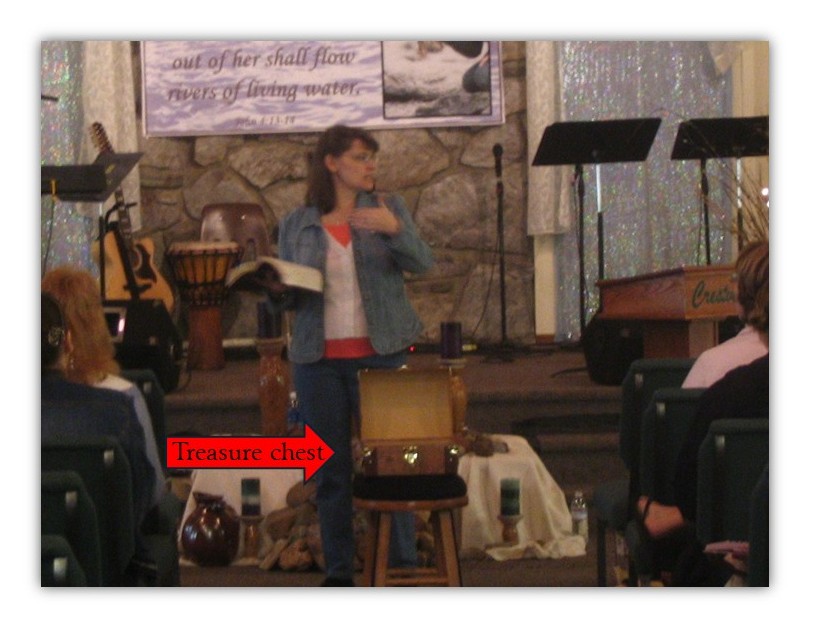
(Side Note) I spoke this a few years ago at a women’s retreat, in the middle of the aisle I had a treasure chest full of stones. I felt God wanted us as women to identify our river. We, standing on one side, and NEEDING to cross over into what God wanted for us. The gals were encouraged to take a stone and write on it (pen provided) what was ‘too hard’, what they wanted–NEEDED from God. There was a boatload of crossing over that day.
Do A Little Spurring
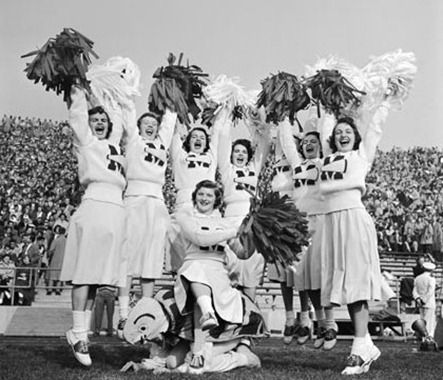
It’s the last football game of the season. The fourth quarter. The score is tied. A timeout is called. All eyes turn to the cheerleaders lined up with pom-poms flying. Smiles spread across their faces, and, with a deep breath, they shout, “Ready and…”
Knowing what comes next, we rise to our feet.
“We have spirit, yes we do! We have spirit, how ’bout YOU?”
Suddenly, the crowd comes alive. The cheers grow louder and louder. Like a swarm of bees, we unite our voices and erupt with deafening cheers across the stadium.
You can see it and feel the excitement, can’t you?
This is similar to the picture the writer of Hebrews paints when he says, “Consider how we may spur one another on toward love and good deeds” (Hebrews 10:24). Now, we may not want to picture someone like Paul wearing a cheerleader’s sweater, but these words carry the kind of enthusiasm that could rally anyone.
The previous verses call us to hold fast to our faith and hope. Now, our attention turns outward. We are called to cheer others on—to urge them to love. Faith, hope, and love: the triune graces of the Christian life.
I love the word spur. It sounds a little dangerous, doesn’t it? But before any spurring takes place, we are first told to “consider.” Consider the motive. Consider the method. Each scenario different.
One resource defines spur as “the endeavor to excite one another.” It isn’t kicking folks around; it is meant to stir up good and encourage. Like the cheerleaders rallying a crowd, may we inspire one another with excitement—to love God, love others, and (we’re not done yet!) live lives marked by beautiful behavior.
And imagine this: What would your life look like if the person who came alongside, encouraging you during a difficult season—had chosen to remain silent?
SPUR on folks!
In Him, DeDe (“Let us consider how we may spur one another on toward love & good deeds” – Hebrews 10:24)
Hungry

You’ve heard the old saying: ‘Never go grocery shopping hungry.’ Hunger has a remarkable ability to convince us that everything on aisle seven is a necessity!
Although the adage is a good plan for shopping and our budget, yet it does not apply when coming to the Lord. Across the pages of Scripture, God speaks through many authors and metaphors, calling His people to come to Him hungry and thirsty.
Jesus teaching the crowd says, “Blessed are those who hunger and thirst for righteousness, for they will be filled.” (Matthew 5:6) This is not only a promise but an invitation. And again, in John 7, “If anyone is thirsty, let him come to Me and drink.” (v37) King David declares, “O God, You are my God, earnestly I seek You; my soul thirsts for You.” (Psalm 63:1a)
Have we noticed after dinner, full and content, when relaxing and watching TV, when a commercial comes on of a giant juicy burger, dripping with sauces—it has no real appeal! So, taking that concept, if we are not hungry or thirsty for God and His word—WHAT fills us? What throughout our day are we snacking on? What or who ruins our appetite for God? A good way to gauge when something is wrong or not healthy is when we lose our appetite altogether. It is the same with the presence of God and our lack of interest in His word.
What are we filling ourselves with?
Genesis 2:7 “And the LORD God formed man of the dust of the ground and breathed into his nostrils the breath of life and man became a living soul.” Our bodies were made of dust, earth—organic matter. The soul was not made of the earth. So, earthly things cannot quench the hunger of the soul (close that fridge door!) It is ONLY the breath of God that feeds and nurtures the spiritual man! It is divinely birthed and divinely maintained. God initiated this for mankind, now we by invitation, in turn, seek that breath—His Presence and His word.
Paul wrote, “All Scripture is God-breathed and is useful for teaching, rebuking, correcting and training in righteousness, so that the man of God may be thoroughly equipped for every good work.” (2 Timothy 3:16-17)
Well, there ya go!
How’s our God appetite? (Point to ponder).
In Him, DeDe (“Let us consider how we may spur one another on toward love & good deeds.” – Hebrews 10:24)
Hosting the Presence of One
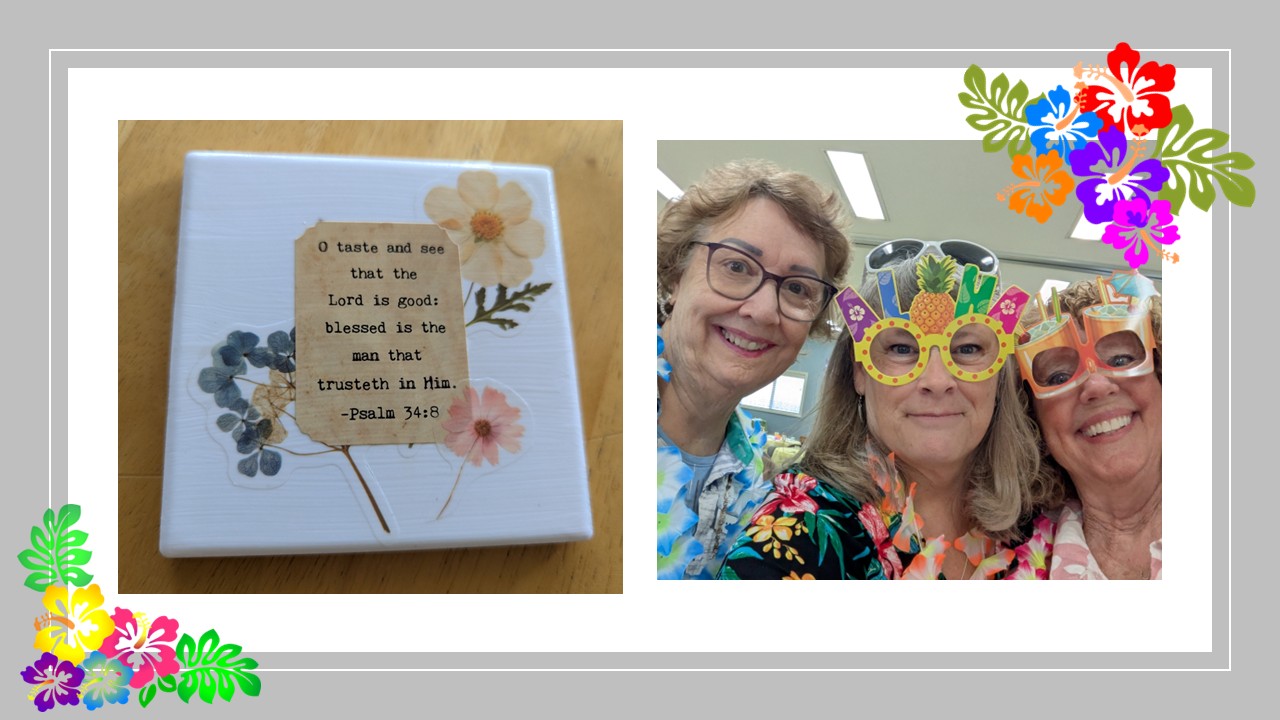
This weekend we met with our ladies for one last (official) women’s breakfast before we ran into summer. Our goal for the morning was a 3-letter word, “FUN.” Having a Hawaiian theme, gals came decked out in bright floral attire, island music playing in the background, leis and funky glasses were worn, there was even sand thrown on the tables (before the food was presented mind you). A colorful beach ball was tossed around with fun questions to answer aloud to the group when caught, (I.e.) “What was your worst hair cut?” Yes, fun was had by all. But there was more.
We slowed down for a brief moment to consider one thing before we jetted out into multiple directions. I shared with the women, now that summer is here with all the activity, travel, schedules, and busyness it brings—comes gatherings with family and friends.
Hospitality is more than entertaining guests or preparing a perfect home. In Scripture, hospitality is about being generous and making room for people—in our homes, our schedules, and our hearts.
Paul wrote,“Therefore, as we have opportunity, let us do good to all people” (Galatians 6:10). In Proverbs, “A generous person will prosper; he who refreshes will himself be refreshed (11:25). Being hospitable blesses both the giver and receiver.
It doesn’t require wealth, perfection, or a spotless house (although it does aid in whirlwind cleanup activity). Sometimes the greatest act of hospitality is a listening ear. Going for coffee or lunch, offering an encouraging word, or simply making someone feel included.
True hospitality does not begin at the front door of our home—it begins in the presence of God.
Before we can genuinely welcome others, we must first spend time with the One who welcomes us. May we intentionally make time to be with Jesus first—hosting the Presence of One.
We didn’t stop there. We arranged a craft of making one coffee coaster (just one) representing their time with God. I encouraged them, if they don’t drink coffee or tea, to light a candle. Set the moment.
Among the laughter and the constant buzz of conversation there were beautiful coasters made, each unique and creative. I sensed anticipation of its use to come.
As we spend time in His presence and allow Him to renew us, may He lead us to open not only our homes but also our hearts, extending His love and grace to those around us.
First, hosting the Presence of One.
(Yes, that’s me in the middle, above)
In Him, DeDe (“Let us consider how we may spur one another on toward love & good deeds.” – Hebrews 10:24)
Walking the Deck

I sat quietly reading in my comfy chair when my son called out rather energetically. “Mom hurry I NEED you!” As I came into the living room, he handed me a controller to PlayStation (Like I know what to do with it). Excited, he begins to yell out commands, which I assume I am supposed to be following. I took a seat and thus began the hysterical game playing. I was laughing so hard, I began to wheeze, tears were filling my eyes and the controller nearly falling out of my hands as I bent over.
We were playing Star Wars (I feel so hip just saying that). He kept saying “Follow me!” I was TRYING! I didn’t know which buttons to push, so I pushed them ALL. Somehow, I was supposed to get my man up on that scooter thingy. Much to MY own amusement, I kept crashing into trees. My job (as I found out later) was to be a distraction so his guy could be successful and finish his mission. Before I knew it, Matthew said, “Ok, you can stop now.” Had I even begun? The theme to Star Wars came on and I knew he was victorious. This was years ago, yet still makes me laugh (out loud).
Amazing what part we play in others’ lives isn’t it? A great example are those massive ships in the military. One in particular is an aircraft carrier. There is a department that is lovingly called the Yellow Jackets (Flight Deck Officers). These are men and women who, yes, wear yellow jackets and spend much of their time directing pilots as they prepare to take off and in their landings. One of their duties is known as “walking the deck.” As a pilot is either preparing for takeoff or landing, they and many other personnel line up across the deck and slowly–meticulously look for any debris. The debris if left on the flight deck could be very hazardous to the plane, pilot–the mission.
I find it very interesting as I liken it to our own relationships found in the Kingdom of God. We have many roles we play in others’ lives: Cheerleader, counselor, confidante, mentor, teacher and friend. But we are also to “walk the deck” and do our part helping to remove any debris or obstacles along the way. Do lovingly what it takes to help another to be successful in their journey with Jesus. We are called to encourage. Much of the time our encouraging a brother or sister takes action.
Paul shares in 1 Thessalonians 5:11 “Therefore encourage one another and build each other up.” Encourage meaning to come along side, to aid with help, even to beseech with a stronger force. We are to exhort to better things in God. Build, obviously is an architectural term, yet in context to what Paul is saying conveys more: to build up in the faith. Synonymous too with creating and shaping—to cause to advance in the right direction. Painting the picture (if you will) we help by redirecting, helping to build (back to or stay on) their path with Jesus.
May we too, put on yellow jackets (metaphorically speaking of course) link arms with others and join the heavenly forces. May our words of encouragement be met with our acts of love. May we love enough to point out, help pick up, and remove any debris, even wave them off if the next maneuver is deemed unsafe. I am fully persuaded there WILL be times when it is messy, but it is worth it—to see them soar! Perhaps we too would hear the theme to Star Wars, (well, personally I prefer the theme to ROCKY!)
Walking the deck with and for others.
In Him, DeDe (“Let us consider how we may spur one another on toward love & good deeds” – Hebrews 10:24).
This is Why

In my quiet time I have been reading through the book of Galatians. I am fascinated of Pauls telling of his encounter with Jesus. Paul, zealous in the traditions of his forefathers, advancing ahead of his colleagues, and once a persecutor of the Christians. Then dramatically calls it like it is “But when God” (Galatians 1:15, NIV) —everything changed. Don’t you just love it! We all need a “but when God” in our life! He goes on to say God called him by His grace and revealed His Son to him (v16).
When Jesus presented Himself to Paul (remember the bright blinding light). He knocked Paul on his backside and was appealing first to His senses. He had to get Paul’s attention! Paul was a highly educated man, a thinking man. Perhaps God was getting past his head so he could not attempt to rationalize the encounter, (thus three days of blindness). The verse goes on to say, this revelation—all was done ultimately “so that” he might preach Him. (See Galatians 1:11-16 and Acts 9).
I appreciate that the Word of God is so practical. The phrase “so that” (used 80x in the NKJV) not only gives us a connecting clause but also is powerful and insightful—this is why. Not that God needs a reason, but graciously and divinely, the writers included it and the Holy Spirit breathes understanding through it.
- “Walk in the ways of the LORD your God so that you may live and prosper” (Deut. 5:33).
- All Scripture is God-breathed and is useful for teaching, rebuking, correcting and training in righteousness, so that the man of God may be thoroughly equipped for every good work” (2 Timothy 3:16,17).
- Paul prays “I keep asking that the God of our Lord Jesus Christ, the glorious Father, may give you the Spirit of wisdom and revelation, so that you may know Him better” (Ephesians 1:17).
- “Let us then approach the throne of grace with confidence, so that we may receive mercy and find grace to help us in our time of need” (Hebrews 4:16).
- “Put on the full armor of God so that you can take your stand against the devil’s schemes” (Ephesians 6:11).
- “Pray for us (Paul & crew) that God may open a door for our message “so that” we may proclaim the mystery of Christ (Col 4:3)
May we spot the “so that’s” in scripture, aware there is a reason, and the reason is intended to be known. May we also see the “so that” in everyday life. Being mindful of moments (i.e.) realizing perhaps a delay was divinely designed “so that” we were able to see God move, or God move through us. Or, the slow tractor on the road is a blessing, so that I may avoid an accident up the road a bit.
Noting too, like Paul, God may find the need to get our attention and knock us on our backside, (He has me a couple-three times and expect there will be more). When He does, let’s look for the reason, “So that ______________________” (you and Holy Spirit fill in the blank).
The graciousness of God, “This is why.”
In Him, DeDe (“Let us consider how we may spur one another on toward love & good deeds” – Hebrews 10:24).
Sawdust Listening

There is a story of a farmer that had an icehouse. During the winter he and his workers would cut ice blocks from the nearby pond and then place them on a bed of sawdust in the icehouse, covering the blocks with more sawdust. At one point the farmer noticed he lost his beloved pocket watch in all his work. He and his workers went in frantically raking through the sawdust, moving ice blocks to find the watch, but to no avail—it was not found. The farmer’s son, about age ten, heard of the situation. While the workers were out on another project, he slipped into the icehouse and after a little time he came out with the watch in hand giving it to his father. The father was so excited, he asked, “How did you find it?” The boy answered, “I laid down in the sawdust, laying there quietly. I just listened.”
What a beautiful example of purposeful positioning WITH expectation. King David penned. “In the morning, O LORD, You hear my voice; I lay my request before you and wait in expectation” (Psalm 5:3, NIV). David didn’t sit there filling the conversation. He leaned in, leaned forward in eagerness, expecting God’s response. He knew if he was quiet enough, patient and waited, like the little boy—he would hear Him.
How often do we too go looking for God, yet noisily, raking around, turning things over. Or we jet off into our day, not even waiting for a response, when indeed God wants us to hear Him. What would expectant positioning look like for us? For you?
Maybe God is waiting for us like He was Moses. Exodus 3, Moses is out tending to the sheep when he sees a bush on fire. It wasn’t until Moses gave his full stop and attention, positioning himself at the bush that God spoke: “When the LORD saw that he had gone over to look, God called to him from within the bush, “Moses! Moses!” (v 4) Moses doesn’t say anything. In his quiet, he takes his sandals off and listens.
For some of us, showing up is our first step. May we too be purposeful, attentive, full stop, eagerly waiting—quietly.
Sawdust listening.
In Him, DeDe (“Let us consider how we may spur one another on toward love & good deeds.” – Hebrews 10:24)
YOU Made the List

Remember back and for some of us WAAAAY back, when we were in the 4th or 5th grade. Out on the playground we would divide up into teams for a ball game. That had to be some of the most frustrating moments of childhood. Nervous thoughts of “Will I be picked?” Or remember when the list was posted for those making the team following tryouts? We stood a slight distance away, yet just close enough to see if our name was there, but not too close to being faced with rejection by our name’s absence.
Making the list. Go ahead admit it, we all want to be wanted, picked and deemed valuable! We all have areas of our life where we fall short, lack the skill or just can’t seem to get it right. In these, we begin to see ourselves as less valuable than others. Perhaps even become resentful, envious of those who do seem to have it all together. (They really don’t by the way).
Ever notice that we may take these perspectives, or might I say insecurities into our relationship with God? Often, we may find our head bowed, not necessarily in reverence, but out of frustration. Words painfully escape our whispering lips, “Will You, can You … use … ME!” Then continue to list all our shortcomings, these becoming our excuses and before we know it, we are telling God why He shouldn’t want us.
In short, dear friends, have we ever considered the ‘list’ that God compiled? The list of Biblical proportion. These folks did stupid things, (STUPID). Made BIG mistakes, when told to do something God’s way, they chose the DIY and ran. Some were too small, too old, too ugly and too worrisome.
Eve listened to the Devil *Rahab was a prostitute *Adam blame shifted *Jeremiah and Timothy were too young *David had an affair and was a murderer *Abraham was too old *Elijah was suicidal *Isaac was a daydreamer *Isaiah preached naked (oops) *Jacob was a liar *Jonah ran from God *Leah was ugly *Naomi was a widow *Joseph was abused *Job went bankrupt *Moses stuttered *John the Baptist ate bugs *Aaron watched the idol-making *Peter denied Christ *Gideon was afraid *The Disciples fell asleep while praying *Sampson had long hair and was a womanizer *Martha worried about everything *The Samaritan woman was divorced, (more than once) *Zacchaeus was too small *Paul was too religious AND Lazarus was dead! DEAD I tell you!
Here it comes … (Wait for it) … HOWEVER. God used ALL these people! They were part of His plan. They all had weaknesses of some sort. Do you find yourself among this list? Do you worry, then beat yourself up for lack of faith? Do you fall asleep when you pray, then believe the lie you don’t love God enough?
God moved in and through these people’s lives. Aren’t you glad God didn’t hide the background history from these folks? God is the Redeemer of our soul, life and YES mistakes, failures, and shortcomings. Have you been divorced, afraid, abused, bankrupted or drunk or eat weird things. And let’s face it, said things before your brain was engaged? (Yay Peter). God is God. He compiles the List! YOU made the list, the list of redeemed mankind. (Group hug!)
Because of Jesus, YOU are sons & daughters of the Most High God! YOU are valuable! YOU are loved! YOU made the List! HIS list! Regardless.
Big plans for YOU!
In Him, DeDe (“Let us consider how we may spur one another on toward love & good deeds” – Hebrews 10:24)
Post Easter – Now What?

Earless chocolate bunnies and leftover hard-boiled eggs in the frig (or out lost in the yard somewhere). Post-Easter. Now what? Do we rummage through the calendar for the next available holiday? Or plan an event to look forward to? What excites us about the future? What about—daily? May I be so bold in asking, what causes our inside to burn with excitement? What or who consumes our mind and emotions? What drives our behavior?
Post-Easter.
Jesus’ resurrection is AMAZING! WONDERFUL! DIVINE! REDEEMING! However, let’s not stop there. There is MORE! Let’s unpack this in a brief summary. Stay with me, this is good!
Luke 24, it speaks of the women going to the tomb, once there they find two angels who notify them that Jesus was no longer there. He’s risen from the dead! The gals go back to tell the others. Peter, as energetic as he was, runs to go see and confirms.
Just following that, (v13) it says “Now that same day…”
The story continues to unfold. Two were walking to Emmaus, who unknown to them at first, encounter Jesus. They are flabbergasted that this Stranger didn’t seem to know what had just transpired in Jerusalem. Sharing their disappointment, “We had hoped that He was the one who was going to redeem Israel.” Going on they explained how Jesus’ body was not found. Verse 27, “Then He (Jesus) started at the beginning, with the Books of Moses, and went on through all the Prophets, pointing out everything in the Scriptures that referred to Him.” WOW! I’d love a one-on-one instant Bible study from the lips of the Master!
It wasn’t until Jesus was in their home, seated at their table, they accepted the bread He offered, that their eyes were opened. It was here they had a revelation of Who He was. Could it be, just perhaps that as Jesus reached forward, giving the bread, the sleeve of His garment slid up as He served, and they could see His nail scarred hand? The next exact moment, Jesus disappeared. I LOVE their response, they said to each other, “Didn’t our hearts burn within us as He talked with us on the road and explained the Scriptures to us?” (v32)
Their hearts burning within them. I want spiritual heartburn! I want my soul, my mind, and thoughts, my passions, desires, and appetites to burn with Him and His Word! The word Luke chooses to use for “burning” is very colorful. It doesn’t mean to simply strike a match and light the kindling and watch it slowly give off heat. No, it RAVISHES through the wood and consumes it! Burn Lord! Burn away the stuff. May the flame burn pure and only for You.
Notice Jesus didn’t lay hands on them or put mud on their eyes for the revelation. He didn’t drift from the shore in a boat to speak to them. He didn’t even send them to the Priest for verification! He simply—walked with them. Walking and talking. Sharing and eating. The narrative says they got up at once and went back to Jerusalem testifying that Jesus has indeed RISEN.
For us? The next time we open our Bible for devotion and study time, let’s not daydream off to another place. Let’s do some focused walking and talking. Time with God! We just need to show up for the lesson. Pay attention, take notes, and ask questions—engage in conversation. This (THIS) is the event—the daily event we will look forward to. Like the other two disciples, He will show us how His written Word pertains to HIM!
For our growth and His glory! Burn Lord, BURN within us!
Post-Easter.
In Him, DeDe (“Let us consider how we may spur one another on toward love & good deeds” – Hebrews 10:24).
“It Is Finished!” A Red Letter Day!

Have you ever sat and read the New Testament and read ONLY the words in red—Jesus’ words? For a completely new perspective, I challenge us to do just that. I know context is everything, but let’s step out of the exegesis box (interpreting the scriptures) for a brief moment, to get an amazing snapshot of Jesus; His strength, authority, His love, and compassion.
Without all the narrative, those stand-alone red words pack a powerful punch. There are dramatic statements, strong commands, and tender words. “Let it be so.” (Matthew 3:15) “It is written.” (Matthew 4:4) “Get up.” (Matthew 9:6) “Take courage it is I.” (Matthew 14:27) “Quiet, be still.” (Mark 4:39) “Come forth.” (John 11:43) “Don’t be afraid.” (Mark 5:36) “What do you want Me to do for you.” (Mark 10:51) “Who do you say I am.” (Luke 9:20) “Then neither do I condemn you.” (John 8:11) “I am.” (John 18:6).
These are just a few, but there is one more that stands out among the rest. Especially for THIS weekend. Here I do want to set the context. Jesus is agonizingly set between two thieves. His feet and hands are nailed to a wooden cross. There at the foot of the cross, many mocked, some cried, and I am confident there were those in complete silence. After the vinegar water was offered to Jesus, He said, “It is finished.” (John 19:30) He then bowed His head and gave up His spirit. The scene is heavy—but it is also holy!
“It is finished.” Those beautiful words in red. The word in Greek is amazing! Stand back and take in the whole Technicolor filled screen. I don’t think even Steven Spielberg with all his creative genius could convey the scene that was unfolding upon humanity. “It is finished” (Tetelestai) to bring to an end—to fulfill payment. To complete something, not merely to end it, but to bring it to perfection or its destined goal. What is done corresponds to what has been said, ordered or commanded. “Not My will, but Your will be done” (Jesus, Luke 22:42). Grammatically, it is in the “perfect tense.” Meaning, the action was completed in the past. Done. Yet with results continuing in the present. Basically, “This happened, and it is still in effect TODAY.” The gift that keeps on giving! Jesus’ physical work on earth was completed, and Scripture was fulfilled.
As Jesus said this, His blood flowing down His forehead, from His hands and His feet. His sacrifice now eliminates the debt owed by mankind (you and me). May we take careful notice, Jesus didn’t say “I am finished.” That would imply He is a mere man and dies defeated. What was finished was not Jesus’ life—it was everything keeping us from God, the Father. What a gift! (Receive it!)
“It is finished.”
Jesus is ultimately laid in the tomb. Where God spares NO detail. Looking back, instructions for building the Tabernacle and the divine furniture, “Make the atonement cover of pure gold… Make two cherubim out of hammered gold at the ends of the cover. Make one cherub on one end and the second at the other end” (Exodus 25:17-19). HERE the blood sacrifice was placed by the Priest (Leviticus 16:14). Fast forward, John 20:12, Mary “saw two angels in white, sitting where the body of Jesus had lain, one at the head and one at the feet.” Because of blood—Jesus’ blood, God’s requirement of sinful man is now satisfied. HE is the Lamb of God. HE is our High Priest.
When Jesus rose from the dead and the stone was found rolled away, it was NOT so He, the Son of God, Who walked on water, could get out. It was so mankind could get in! Get in and see “He isn’t here! He is risen from the dead, just as He said would happen. Come, see where His body was lying” (Matthew 28:6).
Jesus rises from the dead triumphantly (Happy Easter) the bridge back to the Father is perfected. The plan, the process of God. He engages and commissions the disciples. He returns to heaven to reign (But He’s coming back!) Does it end here for us? No. Now we the church with the authority given by Jesus Himself, and with Holy Spirit power, we carry on with the red-letter commands, statements, and tender words.
Move over Easter Bunny, here comes the risen King! Let’s all stand! With loud shouts of praise, and enthusiastic applause! “It is Finished!
Jesus said He’d rise again—He did. He said He’d come back again—He will.
Blessed Resurrection (Greek: Makarios Anastasis “Mak-ar-ee-os On-aw-staw-stis”)
Blessings,
In Him, DeDe (“Let us consider how we may spur one another on toward love & good deeds” – Hebrews 10:24).
HOSANNA – Palm Sunday

Tomorrow we celebrate Palm Sunday:
“Six days before the Passover…” Mary took a pint of perfume and poured it on Jesus’ feet—the house filled with the fragrance (See below—the perfume, “myrrh”). The narrative describes the triumphal entry (Palm Sunday) “The next day” (John 12). It is safe to say Jesus still smelled quite fragrant from the oil. This being of Jewish telling, in Jewish culture, whilst Jewish people stood on the road as Jesus passed by, they (potentially) smelling the fragrance, resonated the Kingly procession, as they shouted, “Hosanna! Blessed is He who comes in the name of the Lord! Blessed is the King of Israel (v13).
Anointing was a priestly and kingly custom: Moses pouring oil on Aaron’s head (Lev 8:12) and Samuel over Saul (1 Sam 10:1) and the anointing of David (1 Sam 16:13). Interestingly, Mary anoints Jesus’ feet. Could it be (just an observation) the anointing of His feet, not His head, was displaying the declared Majesty of God—on earth. His Kingly walk among man, “The Word became flesh and made His dwelling among us. We have seen His glory, the glory of the One and Only, who came from the Father, full of grace and truth” (John 1:14).
Later as Jesus rides through the cobblestone streets, the crowd begins to yell “Hosanna,Hosanna in the Highest” waving palm branches with enthusiasm. It was common practice in the ancient world to welcome home a king or war hero by laying down branches in front of them, an emphasis similar to our ticker tape celebrations today. Hosanna is the Greek version of the Hebrew saying “yasha na” meaning “Save now we pray.” This is taken from what is known as the Hallel, (Jewish prayerful readings of Psalms 113-118) specifically here, “O LORD, save us; (HOSANNA!) O LORD, grant us success. Blessed is he who comes in the name of the LORD” (Psalm 118:25, 26, emphasis mine). Can we grasp the impact of what they were seeing and saying? Jesus was fulfilling the prophetic words of Zechariah, “Rejoice greatly, O Daughter of Zion! Shout, Daughter of Jerusalem! See, your king comes to you, righteous and having salvation, gentle and riding on a donkey, on a colt, the foal of a donkey” (9:9).
However, just four chapters later, people were yelling again, but this time; “Crucify Him! Crucify Him!” (Mark 15:12-14). Little did they know they were basically yelling the same thing. Both times! For you see, for Jesus to “save we pray” they had to “Crucify Him!” —He allowed it. He laid down His life for YOU and for me. By this act and His resurrection from the dead (YAY! Easter is coming!) with all Kingly authority and power, He bridged the gap between man and His God. He is the Restorer of fellowship—God and His children, mankind.
This weekend, may we not allow this moment to pass us by, as we whole-heartedly consider the impact and fulfillment of Hosanna. JESUS! He rides an untamed colt in a King’s procession, “SAVE WE PRAY!” THAT He did!
In Him DeDe (“Let us consider how we may spur one another on toward love & good deeds” – Hebrews 10:24).
For more about the perfume: Myrrh | Inspired Fountain
What You Believe & Why (Part 2)

Recently I had the honor of speaking from the pulpit at my church. We have been in a series called “Strong in Faith” and going through the Nicene Creed* (See defined below). It is impactful to slow down and take a fresh look at “What you believe—and why.”
Last week I wrote about the three points (I call) Mission, Majesty and Man, explaining the line from the creed: “Who for us and for our salvation came down from heaven and was incarnate by the Holy Spirit of the virgin Mary and was made man.” Please read part one What You Believe and Why? (Part One) | Inspired Fountain
WHY did Jesus HAVE to come down from heaven and become man under divine circumstances? (Sorry, this is long, but good to know!)
Going back to the very beginning. When Adam (and Eve) disobeyed God, sin entered the world. Adam being the 1st man, now set the condition for all mankind (the sin nature).
Adam’s sin and guilt are imputed to us and becomes our guilt. Meaning, the guilt and penalty of their disobedience was now credited to all humanity. (Thanks guys!) We are born with sinful nature. In God’s gracious move, He sent Adam and Eve out of the Garden, barring them from re-entry. If He had allowed them to stay and they ate from the Tree of Life, they would FOREVER live (stuck) in their broken state with God.
God established a sacrificial system to temporarily cover man’s sin and atone for wrongdoing, highlighting a life must be given for sin. Satisfying the sin-filled offense to God. “For the life of the body is in its blood. I have given you the blood on the altar to purify you, making you right with the LORD. It is the blood given in exchange for a life, that makes purification possible” (Levitus 17:11, NLT). The Bible is very clear that without the shedding of blood there is no forgiveness of sin. We may not understand it, but it is God’s way!
God spares NO detail. Track with me, this is good! In Exodus 25, God gives the instructions for building the Tabernacle, where God’s presence would dwell. “Make the atonement cover (Also known as the MERCY SEAT) of pure gold… Make two cherubim’s out of hammered gold at the ends of the cover. Make one cherub on one end and the second at the other end” (v18). It was to be placed on the other side of the veil, in the Holy of Holies: Priests, once a year would place the blood sacrifice on the lid between the two cherubim (Leviticus 16). Forgiveness of sin was made here between the two cherubim.
Fast forward to John 20:On the 3rd day after Jesus’ death, Mary’s at the tomb, she looks in “She saw two angels in white, sitting where the body of Jesus had been, one at the head and one at the feet.” (v12) Forgiveness of sin was made here between the two angels. The (final) blood sacrifice had indeed been placed! Nothing more needed on our part, except… see below.
Why Jesus?
Since something was broken between God and man, a fix was needed that represented both God and man. In any mediation, themediator must be acceptable to both parties. Jesus being FULLY man and FULLY God could represent both sides. Jesus came to mediate between man and God.
That is why the redemptive plan needed Jesus to come from a virgin woman. A human + human could not work; the representation would be only one sided. Genesis 3:15 God speaking to the serpent right after the fall: (I summarize) “I will put hostility between you and the woman, Her SEED “he will crush your head, and you will strike his heel.” This is the 1st Messianic prophecy in scripture. They aren’t even out of the Garden and God is unfolding the plan.
Interesting it speaks of the seed of a woman rather than the seed of a man. This unusual wording indicates that the woman’s offspring would not have an earthly father (pointing to the virgin birth, Matthew 1:20–23, fulfilling Isaiah 7:14). When in context to the human reproductive system, “seed” is generally attributed to whom? The man. There is NO human seed involved—ONLY divine agent. The Holy Spirit acts as the divine agent who causes the conception of Jesus in the virgin Mary.
All other men bore Adam’s image/likeness, stained with sin, but Jesus—by virtue of the conception by the Holy Spirit—did not. FULLY God in human form. This allowed Jesus to be the sinless mediator necessary for humanity’s salvation, breaking the inherited cycle of sin from Adam.
Here’s where you and I come in.
God created man in His image and likeness (Genesis 1:26). Image = appearance/ Likeness = function. Fast forward (after the fall) Adam and Eve have children. Genesis chapter 5 specifically says Adam’s son was in his (Adam’s) likeness, and his image (v3). And so goes mankind (in Adam’s fallen nature).
Then Jesus…
John 3, remember Jesus talking to Nicodemus. Stating man cannot see the Kingdom of Heaven unless he is “born again.” Man, is 1st born with Adam’s sinful nature—needs to be born again, born of the Spirit (From darkness to light). Jesus continues to explain it, running right into the well-known John 3:16.
Remember when we are born (of the human race) we are born with the inherited offense of Adam. When we are spiritually born-again, accepting Jesus’ sacrifice, His Lordship, His grace, we get the full Jesus package, His blood sacrifice covers US! God credits Jesus to our account.
The gospel is simply-complex. God knows what’s required for access to Him, the eternal Son of God stepped into our world. He lived, died and rose again so that we—could be brought back to Him.
It’s not our “good”, our skill, title, talents, achievements, not even our great “try”—NOT one. It’s only Jesus.
This takes us right up to Easter! Oh, be mindfully aware of this season. It’s all about Him!
In Him, DeDe (“Let us consider how we may spur one another on toward love & good deeds.” – Hebrews 10:24)
(Above is an excerpt from my Sunday Service teaching, I got to be geeky and talk theology! Yes, I know there are so many verses I could bring in, I tried to keep this simple to understand, “what and why” Jesus did for YOU!)
*The Nicene Creed is a foundational statement of Christian faith, founded solely on scripture: Due to circulating false teaching, church leaders (in 325 AD, Nicaea) and updated in 381 AD (Constantinople) worked to define core doctrines. It declares belief in the Trinity (Father, Son, Holy Spirit), the divinity of Jesus Christ, His incarnation, crucifixion, resurrection and the Church.
What You Believe and Why? (Part One)

This last weekend I had the honor of speaking from the pulpit at my church. We have been in a series called “Strong in Faith” and going through the Nicene Creed* (See defined below). It is impacting to slow down and take a fresh look at “What you believe—and why.”
A.W. Tozer wrote, “What first comes to mind when you think about God is the most important thing about you.” [“Knowledge of the Holy.”] Our understanding of God frames our life compass. If our view of God is one of anger and punishment, we may live trying to be good, as to not make Him mad, we become a works performance follower. Or if we feel He is uninterested (with a shrug of the shoulder) we too are uninterested. If our view of God, is He is holy and FULL of mercy, He is King of all! We are grace recipients—our life looks much different.
Our thoughts and beliefs dictate the way we live. We live what we believe about God. We all have known folks (or have been one) who are living a reckless life (poor decisions, willful disobedience) living out their belief system.
What do we believe?
“Who for us and for our salvation came down from heaven and was incarnate by the Holy Spirit of the virgin Mary and was made man.” [My portion of the Creed]
This beautifully summarizes the coming of Jesus Christ into our world. In just a few phrases it tells us: Why He came. Where He came from. How He came to us. Reminding us that the birth of Jesus was not just an event or another name listed in history, “There once was a man named Jesus.” It was rather the unfolding of God’s gracious great plan to rescue humanity.
We can understand these phrases, with three simple words: Mission, Majesty and Man.
First: The Mission: “Who for us and for our salvation.” He came to save. He came with a clear and deliberate mission. The prior lines in the creed declare the Person of Christ (begotten and equal with the Father) now we look at the work of Christ.
Jesus said, “For the Son of Man came to seek and to save the lost” (Luke 19:10). Paul writes “Christ Jesus came into the world to save sinners” (1 Timothy 1:15). THAT was Jesus’ mission. Every miracle, every teaching, every step toward the cross, His wonder-filled resurrection and beyond was part of that mission.
Second: The Majesty – “Came Down from Heaven.” These words remind us that Jesus did not begin His existence in Bethlehem, as a lil baby in the manger. Before He was born of Mary, He already existed with the Father. John 1:1: “In the beginning was the Word, and the Word was with God, and the Word was God.” Jesus said, “For I have come down from heaven, not to do My own will, but the will of Him who sent Me” (John 6:38).
Think about what this means. The One who walked the dusty roads of Galilee was the same One who shared the glory of heaven. The King of Heaven stepped down into our broken world.
Majesty indeed!
“Who, being in the form of God, did not consider it robbery to be equal with God, but made Himself of no reputation, taking the form of a bondservant, and coming in the likeness of men. And being found in appearance as a man, He humbled Himself and became obedient to the point of death, even the death of the cross” (NKJV). That is the majesty of Christ’s coming—the eternal Son of God humbled Himself for our sake.
Make no mistake, this was NOT an exchange of deity for humanity. Jesus is both Creator and Savior. He is not one or the other, He is both. Was He God or was He man? Yes.
Third: The Man: Jesus was “incarnate by the Holy Spirit of the Virgin Mary and was made man.” Incarnate, simply is Latin for “in the flesh.” He Became one of us. This is the great mystery of the Christian faith; God was now flesh.
The angel told Joseph: “Joseph son of David, do not be afraid to take Mary home as your wife, because what is conceived in her is from the Holy Spirit.” All this took place to fulfill what the Lord had said through the prophet: “The virgin will be with child and will give birth to a son, and they will call him Immanuel”–which means, “God with us” (Matthew 1:20–23, quoting and fulfilling Isaiah 7:14)
Jesus remained what He was and took up what He was not. Fully human and yet fully God united in one person. “And the Word became flesh and dwelt among us” (John 1:14). “For in Christ lives all the fullness of God in a human body”(Colossian 2:9). He experienced human life—hunger, sorrow, temptation, fatigue (Naps! Jesus took naps). He was even angry—yet without sin.
The Mission. The Majesty. The Man. Sounds like a good movie. But the Book is much better. He came down from heaven, becoming one of us—for us, for our salvation.
NEXT WEEK: WHY did Jesus HAVE to come down from heaven and become man under divine circumstances?
In Him, DeDe (“Let us consider how we make spur one another on toward love & good deeds” – Hebrews 10:24)
(Above is an excerpt from my Sunday Service teaching, I got to be geeky and talk theology!)
*The Nicene Creed is a foundational statement of Christian faith based solely on scripture: Due to circulating false teaching, church leaders (in 325 AD, Nicaea) and updated in 381 AD (Constantinople) worked to define core doctrines. It declares belief in the Trinity (Father, Son, Holy Spirit), the divinity of Jesus Christ, His incarnation, crucifixion, resurrection and the Church.
The Gift of One Another

The Redwoods are a spectacular sight. If you’ve driven down Highway 101 from the Oregon coast down into California—you can’t miss them. Redwood trees grow to be over 300 feet high and up to 20 feet wide. Many of the trees, scientists say, have grown to be over 2,500 years old. THAT is a mighty tree!
Have you noticed they tend to grow in clusters? It’s due to their root system. It’s not so much they grow down—as they grow out. They extend out 100 feet from the base, intertwining with the roots of other redwoods. This increases their stability during strong winds and floods. It’s their intertwining with one another that is their source of strength and helps keep them standing. Standing strong together.
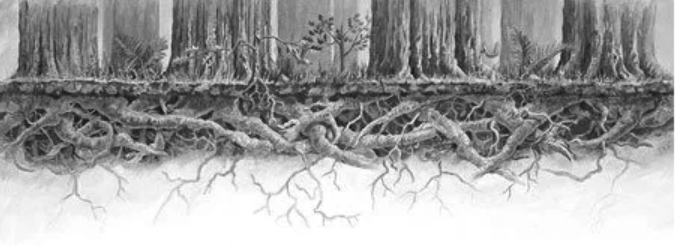
They need one another.
The two word phrase “one another” is mentioned nearly 50 times just in the New Testament alone.
Love one another. Be devoted to one another. Encourage one another. Pray for one another. Live in harmony with one another. Serve one another. Be kind and compassionate to one another. Forgive one another. Be patient with one another. Do whatever it takes to live in peace with one another.
Just to name a few.
Yet, how many of us disqualify ourselves, thinking, “What do I have to offer?” How can I? So goes the list of doubt and hesitation. Don’t disqualify yourself from impacting others for Jesus.
I liken it to opening a cupboard full of mismatched mugs. Each one holds a special memory. Each one is unique. Unique in material, shape, size, pattern and color. We are all unique.
This weekend I spoke (this) to the fun women from my home church* Prior to the meeting I handed out a few mugs to some gals who sat scattered throughout the room amongst the women (and I gave them a lil instruction).
One gal stood, sharing her mug, it was lacey pink and pretty, but it was stained on the inside. Another stood proudly showing off her dainty floral China cup and saucer set (with great enthusiasm). Then quietly, with a big thick, bulky wide handle shared, raising her eyes to the China set, “I’m not as pretty as her.” One gal excitedly stood, hers was a Christmas mug, and the life of the party. We had a clear mug who was too transparent and often got herself in trouble. Another was older and faded, which frequently gets overlooked or kept in the corner. Another was an itty-bitty mug, who felt small and insignificant. There was even a paper coffee cup, though highly functional, she felt disposable and easily replaced. There was one who had evidence of being terribly broken yet was divinely being pieced back together (I held this one).
What do ALL these have in common? (Yes, even the paper cup). It wasn’t the material they’re made of, or the color, or the shape. The commonality? They are ALL designed to hold what is put inside them. Their purpose is to be poured into, hold and pour out its contents. Then—repeat. What a wonderful cycle.
I’ve also observed there are two kinds of cup enthusiasts (if you will, considering the cups represent our lives). Those that look into your cup to see if you have more than they do. And those who look into your cup to see if you have enough and seek to help fill it.
What angle do we use our mug? Do we get so excited about being an encouragement; we, full of energy, pour out “God loves you!” over here, “You are special!” over there. GREAT! But when we look and see our cup is empty, we reach our cup out expecting others to fill it (held at a 45-degree angle). The cup isn’t designed for filling at that angle; it’s designed to be sitting up—filled from above.
WE belong to this community of mismatched mugs. We are designed to hold the Holy Spirit, to hold and pour out. What a beautiful purpose. We all belong to the same crazy cupboard we call the church.
God uses us to help strengthen one another when the storms and floods come (and they will). In our helping (intertwining) we too are strengthened.
May we give the gift of “one another.” Get yourself a good Godly cluster. Standing strong together.
I bet you don’t look at your cupboard the same again, may it be a reminder that YOU are a unique container for the Holy Spirit! Let Him fill you up, cherish the hold and then get pouring! Aren’t we a fun, creative purpose filled cupboard!
In Him, DeDe (“Let us consider how we may spur one another on toward love & good deeds.” – Hebrews 10:24)
*Abundant Life Center in Jefferson, Oregon. Love you gals! Thanks for being my cluster of strength and lining my crazy cupboard!


