
Speak to the Corners
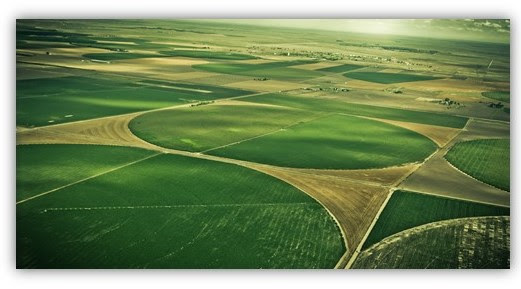
I am reminded in this season of life of a trip I took a few years ago, traveling across parts of Oregon heading to a family wedding. There was plenty of time to watch the scenery pass on by. Observing the geographical change from plush green, to gorge, to dry, to waving fields of wheat. Quietly, I sensed the Lord whisper to my heart, “Speak to the Corners.” Hm. Speak to the corners? Having no idea what He was referring to at first, I asked Him to SHOW me the corners.
I was made aware of the circular irrigation systems of the fields just outside my window. Studying those, I saw the corners. Green stalks of young corn, grown in a circular pattern. Then there were the dry, intentionally unattended corners of the fields. Assuming the farmers “did the math” and determined it wasn’t cost-effective to plant or water there. I sensed God saying, “THIS is not what I intend for your heart. No hidden, unhealthy, unwatered, unproductive, unfruitful—corners.”
We all have corners. Stuff tucked back, WAAAAY back into the corners of our heart. Corners, where hidden, nothing healthy and good can grow there. Concepts, perspectives, views of ourselves and unhealthy views of God. Stuffed places of wrongdoings, habits or—hurts. How do we handle the corners?
1 Samuel 24.
King Saul is in hot pursuit of David. David and his men are hiding in a cave. Far back, in the corner (if you will) they sat quietly. Saul comes into the cave for some privacy, to relieve himself. David’s men encourage him with hushed whispers, “THIS is your chance! Go ahead!” (I paraphrase). Can you imagine the split-second thoughts that may have run through David’s mind? “Yes, you are right, I am called to be King, I end this NOW! This man has lashed out at me! What have I done to deserve this?”
But NO! There wasn’t deathly violence involved. Yet, there in the dark corner of the cave, David instead, stealthily crept forward, cutting off a small corner of Saul’s robe. In this, David was quickly convicted of what he had done (*cutting at the lineage of Saul’s family, see below). I am learning, Godly conviction can be a tremendous gift. Do not deny or avoid it—lean into it! David proceeded telling the men he was wrong to do so, and they too were not to harm Saul. Taking it further, he stepped out into the light. He called out and revealed his presence to the King. In short, Saul is humbled by the “I chose not to” opportunity by David. Saul genuinely shares, “May the LORD reward you well for the way you treated me today. I know you will surely be king” (vv19, 20).
May we too be rewarded well for the (good) choices we make in the corners. Sure, there may be brief missteps here and there. Yet may we consider our thoughts, motives and actions, and make quick adjustments (like David). Knowing God knows our corners—watches our responses, awaits and invites (may I use David’s example) healthy stepping into the light—into the Presence of the King. May we take a divine pause and listen to the conviction. Not those around us, not the screaming hurt-filled voice inside our head—listen to what is right in GOD’S eyes.
God knows ALL. Regardless of how well we try to deny the reality of our corners and tuck it, shove it, even barricade it way in the back. Until one day and it will—it all spills out!
God boldly states, “Can anyone hide from Me in a secret place? Am I not everywhere in all the heavens and earth?” says the LORD” (Jeremiah. 23:24, NLT). And the Pastor of Hebrews wrote: “Nothing in all creation is hidden from God. Everything is naked and exposed before His eyes, and He is the one to whom we are accountable” (4:13).
Corners.
May we speak to our corners. Our intentionally unattended corners. May we echo the tender words of King David, “O Lord, You have examined my heart and know everything about me” (Ps. 139:1). He continues, “Search me, O God, and know my heart; test me and know my anxious thoughts. Point out anything in me that offends You and lead me along the path of everlasting life” (vv 23,24).
God wants ALL our heart, corners and all! He wants it healthy and profitable, fruitful—all for His good pleasure.
Corners count.
*The hem: It goes way back to ancient(er) days. God instructs the Israelites to wear garments with specifically designed borders, hems or fringes also known as tassels. (Nu. 15; Deut. 22; Ex 28). These fringes came to represent authority, personality, their place in society and even lineages were sewn into the hem. Noblemen of the day would sign their name, authenticating, by lifting their robe and pressing the hem into wet clay tablets—specific stitching indicating family and function. Scholars believe David was convicted because he CUT Saul’s lineage and symbolically cut the identity and authority of the Lord’s anointed. It was not God’s instruction. It was not God’s timing. Saul and David understood what had just taken place. (Read the conversation, 1 Samuel 24:8-22)
Speak to the corners.
In Him, DeDe (“Let us consider how we may spur one another on toward love & good deeds” – Hebrews 10:24).
Sacred Spaces

Sacred Spaces. Those places and moments when you block out the world, the noise, the chaos and quietly bow your head. The moment offering a spiritual breath. Exhaling the exhaustion of the day or the season and inhaling His strength. A place and moment of divine recognition.
When God moves and speaks, revealing Himself to us, what is our response? Do we mark those moments on the timeline of our life, like we do when measuring the growth of our children. Or do we just give a quick nod of the head and continue on our way?
I admire those of ancient times, Abraham, Isaac, and Jacob. They had many things in common, but one, in particular stands out to me—they built altars (Genesis 12:7, 26:25, 35,14).
Moses too marked God moments. Exodus 17, he’s found sitting on top of a hill, below him the battle wages on. Joshua leads the Israelites against the Amalekites; they were winning as long as Moses kept his hands raised. When he grew tired? Aaron and Hur placed a stone under him to sit and then stood beside him, holding his arms up. They did win the battle miraculously with God ability, “Moses built an altar and called it ‘The Lord is my Banner’” (v15). It doesn’t say it in the narrative, but I can imagine Moses taking rocks and placing them on top of the large stone he sat on during the battle, marking the fight—marking the victory. A place and moment of divine recognition indeed.
An altar is a landmark of God’s presence. It declares a sacred space, sacred due to the moment, the Presence and hunger of our heart. May we be like the Patriarchs of old, may we too be altar builders. Although there may be no need to take our sandals off and culturally no longer gather various rocks and pile them in our backyard. Yet may we make some kind of recognition.
Recently while driving to work, I was impacted by my surroundings. A combine was cutting hay on my left and a field of foot tall corn on my right. Further I passed alpacas, cows, horses, and goats. Why impacted? For the last forty plus years I have lived primarily in the city in the Portland Metropolitan area. Now I drive through the country. The blessing was so overwhelming, I built an altar right there in the moment (and no, I didn’t pull over and wander through the farmers field looking for rocks) but I marked the moment by thanking God for this (out loud) and determined to remember.
Altar building: recognizing, remembering and declaring THIS is where God met with me. Honoring and worshipping He Who is faithful—He Who is worthy.
Sacred spaces.
In Him, DeDe (“Let us consider how we may spur one another on toward love & good deeds.” – Hebrews 10:24)
Holy Reverence

Having read the bible for many years, have you noticed like I have, there are a few scary verses. SCARY I tell you! Like those words in red, “I tell you, on the day of judgment people will give account for every careless word they speak” (Jesus, Matthew 12:36). Wide-eyed and hands over mouth! Or of ancient(er) days, Exodus 35:2, “The seventh day shall be your holy day, a day of sabbath rest to the Lord. Whoever does any work on it is to be put to death” (immediately dropping laundry basket). *
Yet, what about James 2:19 “You believe that God is one, you do well. Even the demons believe—and shudder!” James is speaking of faith and works; OH, but the principle! “The demons believe—and shudder!” This is the only time in scripture this word (shudder) is used, it means to tremble (with fear) fear of the outcome. We (the redeemed) are not to freak out in fear, thinking our God is going to step on us like an ant, but we are to have a FEARFUL-HOLY-REVERENCE!
Multiple times scripture tells us the demons knew Who Jesus was. Recognizing what He was. There were extreme responses (crying out, falling at His feet, pleading). The correct response. They knew their outcome. What is interesting, the opposite of the fear James mentions is confidence. Over confidence can lead to pride. I once heard pride defined as flexing before a holy God (that didn’t work out well for Lucifer).
I am fully persuaded in the world today, we are OVER confident as a whole. We are a flexing culture. We reach and grab for what is considered owed to us. We march waving banners and simply walk away when not getting our way. We (the global church) have in some ways embraced this and pulling the package into our perception of the Godly Kingdom.
We are whitewashing the relationship between Creator and creation—God and man. We tend to exercise our boldness (inappropriately) at times and consider the God of the Universe our pal and approach His presence liken to a buddy, an equal: We go into His throne room, throw our stuff on the floor and fling ourselves across the celestial couch. With one leg hanging over the arm, while reaching forward, grabbing a fist full of food from the banquet table and popping it in our mouth and speaking (with our mouth full), “Heh, how are ya?” (metaphorically speaking—yet true). I echo a dear friends’ words, “May I never allow that kind of casual brashness in my behavior.”
YES! A thousand yeses, our Holy God made provision for fellowship with Him—Jesus. His smile is mercy filled. His grace the welcome mat and we CAN come boldly to His throne.
YET!
Father forgive us, forgive me! May we, (I) never become so confident that I miss the mark of coming before You—reverently. Taking pause before I open Your Word and thumb through its pages. May my only boldness that is freely offered, take me to Your feet! No need to shudder, this outcome is GOOD, but may I truly recognize Who and what You are!
Holy reverence.
In Him, DeDe (“Let us consider how we may spur one another on toward love & good deeds” – Hebrews 10:24).
*Please note, YES, context is everything and Jesus brings forgiveness and New Covenant terms, the above verses were stated for emphasis.
But God

Have you ever stood on the edge of the pages of your life and just shake your head in complete bewilderment and think one simple word, “HOW!” Then the rest of the frustration tumbles out, exclaiming, “But God, this … and …” continuing with a list of “can’t do’s – won’t work – not happening” statements. I know I have, especially these last couple of years. It has been the most trying and pain filled time of my life.
Even in the frustration, confusion, and pain, there is always—God. May we keep turning the pages. Believe it or not, “But God” (or “But the Lord”) is mentioned 325+ times in the Bible, in GOD’S favor. Looking at these verses (ALL of them) I was captivated. In the story, in the context, I saw God’s character being placed in the forefront. There were loud moments of reassurance and yet quiet whispers of His love. This is what I found; this is what I learned. In short, briefly stating, just a few from Genesis. Hang with me, this is good.
I begin with Genesis 3, Adam and Eve are in the garden, the presence of God so intimate that He literally takes walks with them. They have made decisions that resulted in significant long-term consequences (thanks guys). God is heard walking through the garden and the couple hides. “But the LORD God called to the man, “Where are you?” (v9). God calls. He knew very well where they were, the question was intended for Adam, to consider his location, his position, and his condition before Him.
Then there’s Noah and crew, out in the big boat, floating. Floating. More floating. A man and his family all alone among the precious cargo. Obedience led them to this completely unknown. Genesis 8:1 “But God remembered Noah and all the wild animals and the livestock that were with him in the ark, and he sent a wind over the earth, and the waters receded.” God remembers. This doesn’t mean Noah temporarily slipped His mind, it means He will act on His promise. This principle rings eternally true. He will send a wind to our circumstance, His wind and resolve the flood in our life.
Next, a man by the name of Jacob, he worked hard as requested and then was treated unfairly by his father-in-law. Genesis 31:42 “But God has seen my hardship and the toil of my hands.” In the original Hebrew, the word seen is an imperative, meaning, we add a strong EXCLAMATION mark next to it. Not only that, but it is in the prolonged form, God has seen and will continue to see. God sees. He sees us where we are, how we are and how we are being treated. He cares. He will act. Just like He did in Jacob’s circumstance.
Joseph, the cocky favored son, who was thrown into a pit and sold as a slave by family members! Genesis 50:20 “You intended to harm me, but God intended it for good to accomplish what is now being done and the saving of many lives.” God accomplishes. He redeems the bad and transforms for good to accomplish—His plan.
Amazing, just amazing! The Word is full of examples like these and more, many, many more. “But the LORD was my support” (2 Samuel 22:19). “But God is the strength of my heart” (Psalm 73:26). “But God promised” (Acts 7:5). “But God had mercy” (Philippines 2:27). “But God is the builder of everything” (Hebrews 3:4).
God is incredible! He is never late, never ignores and is extremely attentive to detail. Although involved with all areas of our life, He prioritizes our spiritual well-being over our comfort, opinion, or preferences (think, Jonah). He goes to extraordinary effort at times to make sure we hear Him.
If our circumstance seems frustrating, just keep turning the pages. God is still calling, remembering, seeing and accomplishing and SO much more!
For our growth and His glory.
But God.
In Him, DeDe (“Let us consider how we may spur one another on toward love & good deeds” – Hebrews 10:24).
Extol – Pass the Crown

I love the Psalms. The poetic sway of song and praise, thankfulness and yes, even repentance. Some give heavy pen so passionately, you can almost feel the author lean from the pages and grab you with a fisted hand, look you in the eye and with a raspy voice: “Turn from evil and do good!” (37:27). Ok, perhaps not the raspy voice. But be assured you will be grabbed. If not, you’re not leaning in enough.
Yet of all the Psalms, what most causes me pause is the exalting of God.
King David wrote: “I will extol You, my God, and King, and I will bless Your name forever and ever” (Psalm 145:1, ESV). To launch the twenty-one verses, he opens his worship with humility and adoration. As a king himself, with a surrendered heart–he passes the crown, “my God and King.”
“I will extol You.” Extol, the word is pretty much obsolete these days. When was the last time we used it in a sentence? It isn’t active in our speech, prayers, or worship. (Or should it?)
There are two main emphases when praising and worshipping God in scripture: We praise Him for what He does and has done; powerful, mercy filled, His divine action to His beloved children. We worship for Who He is. Declaring Him as Superior: He is more, He is beyond, He is above all. He is!
In the Hebrew extol conveys movement, the act of raising. When extolling God, we are not only raising Him in high status over our life, but we lift His attributes as well. We grab all we know about Him and raise it as high as we can. Doing this, we are under–we are acknowledging we are lower. This is done both in word and deed. Not just in church as we raise our hands, but in how we conduct our lives. Wouldn’t it be great if it were contagious to others, as if standing and looking up and those around us are so caught by our behavior, and our focused direction, that they too, stop and look up.
When we worship and extol WHO God is, we are indeed in the act of surrendered lifting, we too–pass the crown. Raising Him high. We raise Him higher than the stuff, higher than our mess. HIGHER. David continues the psalm extolling God in His greatness, glorious splendor, majesty, His abundant goodness, righteousness and oh, (OH!) He is abounding in steadfast love!
May our life, in word and deed–extol Him. Giving Him the glory due and getting others to look up! (Sounds kinda psalmish)
In Him, DeDe (“Let us consider how we may spur one another on toward love & good deeds.” – Hebrews 10:24)
The Quiet Place of a Mother’s Heart

There is a cute and heartwarming story of a young mom putting her son to bed. He would wake up the next day a whole year older. As she tucks him in, she comments this is his last day to be four. All year he had been cheerfully showing folks four fingers on each hand. Asking if he understands, he enthusiastically replies, “YES! Tomorrow I’ll be a handful!” Stretching his arm up with five spread out fingers. Yes, yes indeed, a handful.
Motherhood.
Our hearts ache, agonize, celebrate and PRAY. There are hours of holding and scolding, cleaning and crying. Yet at the end of the day, as our head lies on the pillow, our heart swells with LOVE—regardless of the age, stage or distance of our children.
Mary too knew of this. Following the ever so zealous shepherd’s visit, “Mary treasured up all these things and pondered them in her heart” (Luke 2:19). Our children by no means compare to the Savior of the world, nor is the circumstance the same, and yet, we moms, on our own level, in our own way, like Mary, treasure and ponder our children. We dream, we guide, we protect what is so precious.
Motherhood.
Remember later, (Luke 2:41-51) Joseph and Mary realize they had misplaced Jesus on their trek back from Jerusalem. Can you image Mary’s heart! Finding Him three DAYS later! I remember when my son was five years old while visiting Mt Rushmore and lost sight of him for a mere sixty seconds in the crowd, only to find him no more than five feet from me. The panic, the fear—the instant pleating with God. This nurturing and caring design within us—can be the death of us!
Motherhood.
The quiet place of the heart, treasuring and pondering.
Happy Mother’s Day
In Him, DeDe (“Let us consider how we may spur one another on toward love & good deeds” – Hebrews 10:24).
* For Mom, “Give Jesus a hug for me!” (My sister, mom & myself). I had the most wonderful honor of leading my mom to Jesus. Three years later, she met Him face to face.
It is Finished! A Red Letter Day.

Have you ever sat and read the New Testament and read ONLY the words in red—Jesus’ words? For a completely new perspective, I challenge us to do just that. I know context is everything, but let’s step out of the exegesis box (interpreting the scriptures) for a brief moment, to get an amazing snapshot of Jesus; His strength, authority, His love, and compassion.
Without all the narrative, those stand-alone red words pack a powerful punch. There are dramatic statements, strong commands, and tender words. “Let it be so.” (Matthew 3:15) “It is written.” (Matthew 4:4) “Get up.” (Matthew 9:6) “Take courage it is I.” (Matthew 14:27) “Quiet, be still.” (Mark 4:39) “Come forth.” (John 11:43) “Don’t be afraid.” (Mark 5:36) “What do you want Me to do for you.” (Mark 10:51) “Who do you say I am.” (Luke 9:20) “Then neither do I condemn you.” (John 8:11) “I am.” (John 18:6).
These are just a few, but there is one more that stands out among the rest. Especially for THIS weekend. Here I do want to set the context. Jesus is agonizingly set between two thieves. His feet and hands are nailed to a wooden cross. There at the foot of the cross, many mocked, some cried, and I am confident there were those in complete silence. After the vinegar water was offered to Jesus, He said, “It is finished.” (John 19:30) He then bowed His head and gave up His spirit. The scene is heavy, but it is also holy!
“It is finished.” Those beautiful words in red. The word in Greek is amazing! Stand back and take in the whole Technicolor filled screen. I don’t think even Steven Spielberg with all his creative genius could convey the scene that was unfolding upon humanity. “It is finished” (Tetelestai) to bring to an end—to fulfill payment. To complete something, not merely to end it, but to bring it to perfection or its destined goal. What is done corresponds to what has been said, ordered or commanded. “Not My will, but Your will be done” (Jesus, Lk 22:42). Grammatically, it is in the “perfect tense.” Meaning, the action was completed in the past. Done. Yet with results continuing in the present. Basically, “This happened, and it is still in effect TODAY.” The gift that keeps on giving! Jesus’ physical work on earth was completed, and Scripture was fulfilled.
As Jesus said this, His blood flowing down His forehead, from His hands and His feet. His sacrifice now eliminates the debt owed by mankind (you and me). May we take careful notice, Jesus didn’t say “I am finished.” That would imply He is a mere man and dies defeated. What was finished was not Jesus’ life—it was everything keeping us from God, the Father.
“It is finished.”
Jesus is ultimately laid in the tomb. Where God spares NO detail. Looking back, instructions for building the Tabernacle and the divine furniture, “Make the atonement cover of pure gold… Make two cherubim out of hammered gold at the ends of the cover. Make one cherub on one end and the second at the other end” (Exodus 25:17-19). HERE the blood sacrifice was placed by the Priest (Leviticus 16:14). Fast forward, John 20:12, Mary “saw two angels in white, sitting where the body of Jesus had lain, one at the head and one at the feet.” Because of blood—Jesus’ blood, God’s requirement of sinful man is now satisfied. HE is the Lamb of God. HE is our High Priest.
When Jesus rose from the dead and the stone was found rolled away, it was NOT so He, the Son of God, Who walked on water, could get out. It was so mankind could get in! Get in and see “He isn’t here! He is risen from the dead, just as He said would happen. Come, see where His body was lying” (Matthew 28:6).
Jesus rises from the dead triumphantly (Happy Easter) the bridge back to the Father is perfected. The plan, the process of God. He engages and commissions the disciples. He returns to heaven to reign (But He’s coming back!) Does it end here for us? No. Now we the church with the authority given by Jesus Himself, and with Holy Spirit power, we carry on with the red-letter commands, statements, and tender words.
Move over Easter Bunny, here comes the risen King! Let’s all stand to our feet! With loud shouts of praise, and enthusiastic applause! “It is Finished!
Jesus said He’d rise again—He did. He said He’d come back again—He will.
Blessings,
In Him, DeDe (“Let us consider how we may spur one another on toward love & good deeds“- Hebrews 10:24).
Hosanna – Palm Sunday

This coming weekend we celebrate Palm Sunday:
“Six days before the Passover…” Mary took a pint of perfume and poured it on Jesus’ feet—the house filled with the fragrance (See below—the perfume, “myrrh”). The narrative describes the triumphal entry (Palm Sunday) “The next day” (John 12). It is safe to say Jesus still smelled quite fragrant from the oil. This being of Jewish telling, in Jewish culture, whilst Jewish people stood on the road as Jesus passed by, they (potentially) smelling the fragrance, resonated the Kingly procession, as they shouted, “Hosanna! Blessed is He who comes in the name of the Lord! Blessed is the King of Israel (v13).
Anointing was a priestly and kingly custom: Moses pouring oil on Aaron’s head (Lev 8:12) and Samuel over Saul (1 Sam 10:1) and the anointing of David (1 Sam 16:13). Interestingly, Mary anoints Jesus’ feet. Could it be (just an observation) the anointing of His feet, not His head, was displaying the declared Majesty of God—on earth. His Kingly walk among man, “The Word became flesh and made His dwelling among us. We have seen His glory, the glory of the One and Only, who came from the Father, full of grace and truth” (John 1:14).
Later as Jesus rides through the cobblestone streets, the crowd begins to yell “Hosanna, Hosanna in the Highest” waving palm branches with enthusiasm. It was common practice in the ancient world to welcome home a king or war hero by laying down branches in front of them, similar to our ticker tape celebrations today. Hosanna is the Greek version of the Hebrew saying “yasha na” meaning “Save now we pray.” This is taken from what is known as the Hallel, (Jewish prayerful readings of Psalms 113-118) specifically here, “O LORD, save us; (HOSANNA!) O LORD, grant us success. Blessed is he who comes in the name of the LORD” (Psalm 118:25, 26, emphasis mine). Can we grasp the impact of what they were seeing and saying? Jesus was fulfilling the prophetic words of Zechariah, “Rejoice greatly, O Daughter of Zion! Shout, Daughter of Jerusalem! See, your king comes to you, righteous and having salvation, gentle and riding on a donkey, on a colt, the foal of a donkey” (9:9).
However, just four chapters later, people were yelling again, but this time; “Crucify Him! Crucify Him!” (Mark 15:12-14). Little did they know they were basically yelling the same thing. Both times! For you see, for Jesus to “save we pray” they had to “Crucify Him!” —He allowed it. He laid down His life for YOU and for me. By this act and His resurrection from the dead with all Kingly authority and power, He bridged the gap between man and His God. He is the Restorer of fellowship—God and His children, mankind.
This weekend, may we not allow this moment to pass us by, as we whole-heartedly consider the impact and fulfillment of Hosanna. JESUS! He rides an untamed colt in a King’s procession, “SAVE WE PRAY!” THAT He did!
In Him DeDe (“Let us consider how we may spur one another on toward love & good deeds” – Hebrews 10:24).
For more about the perfume: Myrrh | Inspired Fountain
It’s About the Lamb!

“This is real love—not that we loved God, but that He loved us and sent His Son as a sacrifice to take away our sins” (1 John 4:10, NLT).
Remember as a child sliding the crayon on a white piece of paper, from one dot to another until getting to the last dot, excited to see a picture form? This is often how we come to understand certain things—connecting the dots. Have we considered the “dot connection” (if you will) of the Lamb of God? As we draw near to Easter, let’s pick up our crayon and begin connecting as we see the progression of the Lamb.
Genesis 22: God declares to Abraham to take his son Isaac, his only son to the mountain and offer him as a sacrifice. As Abe and son begin their hike up the mountain, father placing the wood on the shoulders of the son, Isaac says, “The fire and wood are here,” then asks, “But where is the lamb?” Abraham confidently responds, “God Himself will provide the lamb.” As the story progresses, Isaac is on the altar, Abraham obeys to the fullest. God knowing his heart, stops him and in substitution, provides a male lamb for the sacrifice. The lamb provided.
Exodus 12: God prepares the Israelites to leave the captivity of Egypt. Instructions were given as the Angel of Death would soon be unleashed. “Take the lamb” slay and place the blood of the lamb on the doorpost of the home. The blood now over them—death avoided. The lamb protected.
John 1: John the Baptist, known as an eccentric evangelist and prophet, sees Jesus approaching; he openly declares, “Look, behold the Lamb of God, who takes away the sin of the world.” John purposely points to Jesus, the shift of attention—to the divine. The Lamb proclaimed.
John 19: Jesus is hung on a cross, just before His last breath, He states, “It is finished” (v30). Jesus, the Lamb of God is the propitiation (atonement) for our sins, (1 John 2:2, Ro 3:23-25) meaning that through His death on the cross, God’s wrath is satisfied, and forgiveness and reconciliation is offered to mankind. The Lamb propitiated (Big fancy theological word).
Revelation 5: The heavenly citizens declare before the throne, “Worthy is the Lamb who was slain to receive power and wealth and wisdom and strength and honor and glory and praise” (v12). THAT verse! Read it again as Holy Spirit breathes on you with His Majesty! Let’s all stand to our feet! The Lamb PRAISED!
As we enjoy dark chocolate with cream filled eggs (I SO love Easter candy) let’s take these next few days building up to Easter—our dots connected, as we wholeheartedly consider the Lamb of God. The blood stained cross. The empty tomb. Focusing, seeing, understanding and participating in the celebration of Jesus. What a powerful reminder of God’s love and grace, as well as the profound cost of our redemption.
It’s not about the bunny—it’s about the LAMB!
The lamb provided, protected, proclaimed, propitiated and praised.
Worthy is the LAMB!
In Him, DeDe (“Let us consider how we may spur one another on toward love and good deeds” – Hebrews 10:24).
For more of what Jesus did for YOU …
Perception

Genesis 22, Abraham and Isaac are on the mountain. Here in the narrative, woven in this story: love, worship and obey are first used in scripture. The law of first mention often sets the tone for all other uses.
I noticed today that the word used for “fear” (22:12) God stopping Abe mid-air when he was fully obeying and ready to sacrifice Isaac, responds saying, “I know that you fear God, and have not withheld your son from Me, your only son.” This is the first time fear (yare) is used as an adjective (other uses are verbs). Why spotlight this? I am challenged! Here’s why. In Abe’s story, it wasn’t so much that he feared (although KEY to note) but that “he” feared. The emphasis is on the one doing, describing Abe’s perception of his God (in the moment, moral reverence). Reverence is fear mingled with respect and utmost awe. May we be aware of our “utmost” usage!
Perception.
Perception can often be interchangeable with discernment. See and understand with a weighing process. Wisely distinguishing value and worth and responding accordingly. Perception profoundly shapes our thoughts, feelings, and behavior, influencing how we interact with others—with God. How we react in circumstances and the decisions we make. Abraham valued his God, and his behavior tethered alongside.
Our perception of God dictates our obedience.
A.W. Tozer wrote, “What first comes to mind when you think about God is the most important thing about you.” [Knowledge of the Holy]. Abraham revered God; it was evident. God met him in the moment. “YOU, Abe, I know you fear Me” (paraphrased).
Like Abraham, what and how does our behavior display our perception of God? If we could hear God audibly in the moment, what would God’s response be to us? (OH! That is so challenging!)
Perception.
In Him, DeDe (“Let us consider how we may spur one another on toward love & good deeds” – Hebrews 10:24).
Be Kind

“You intended to harm me, but God intended it for good to accomplish what is now being done, the saving of many lives. So then, don’t be afraid. I will provide for you and your children.” And he reassured them and spoke kindly to them.” (Joseph, Genesis 50:20-21)
Joseph. What an amazing story (Genesis 37-50). The events that groomed him. The people that mocked him. The God who delivered him. His story journeys from the pit—to prison—to the palace.
When reading his story, “kindness” is not the first word that comes to mind. Although it is mentioned three times. The first, “When his brothers saw that their father loved him more than any of them, they hated him and could not speak a kind word to him” (Genesis 37:4). Second, later, when Joseph is in prison (Genesis 40) and the cupbearer is released. He says to him, “But when all goes well with you, remember me and show me kindness; mention me to Pharaoh and get me out of this prison.” (v14). Noting, the cupbearer did mention Joe—but two YEARS later. Two more years of prison.
The third is mentioned above, when the brothers are concerned now that Jacob (their father) has passed away, Joseph would retaliate due to their mistreatment of him (see Genesis 37). At the end of the narrative of Joseph’s story, he states, “You intended to harm me, but God intended it for good to accomplish what is now being done, the saving of many lives. So then, don’t be afraid. I will provide for you and your children.” And he reassured them and spoke kindly to them” (Genesis 50:20-21).
Do we posture ourselves for kindness?
Posture (besides the way a person holds their body—sitting or standing) is a particular way of dealing with something or someone with our approach AND attitude. God has been speaking to me about my posture this last year or two.
What is our response when we too have been mistreated? When others won’t speak kindly or what is promised is either delayed or denied. Or like Joseph, others’ choices set the trajectory of events for our life. Do we purposely “throw caution to the wind and give’m what they deserve!” or do we pause (or a season of pausing) and consider our response posture.
Kindness.
Kindness is defined as moral excellence, but more literally (biblically) as useful, profitable. Which can be expressed in multiple ways. Here’s a modern example of one: A man is walking on a sidewalk beside a busy street. He hears footsteps fast approaching behind him. As he glances over his shoulder, he sees a young boy running and begins to veer off and into traffic. As the boy passes him, he quickly steps out GRABS the boy, twirling him back safely onto the sidewalk. In the moment, the boy may think he wasn’t being treated kindly with such an intense grab. But was the man indeed being kind? Yes! He was useful in saving the boy’s life. Being useful is being kind. Kindness is a gift.
Tie this in with what Joe said to his brothers. “YOU intended to harm me—God intended it all for good.” Everything that happened to Joseph, his response is NOTABLE! Was his intent and speech useful at that moment with his brothers? Yes! Was he retaliating by being mean? No, his approach and attitude were kind. He was leaning in (his response was) with kindness. It de-escalated, re-assured and encouraged. Useful for sure!
Kindness. Paul wrote, “The fruit (or evidence) of the Spirit is love, joy, peace, patience, KINDNESS, goodness, faithfulness, gentleness, and self-control” (Galatians 5:22-23, emphasis mine). May we lean in being mindful of how we approach a situation, (lean into the qualities Holy Spirit has deposited in us) aware of how we posture our heart in our attitude—Let our response be kind EVEN IF others treat us differently. It may take some dying to self, but God is working to make us holy not happy. Joseph shows us, wrapped up with what God intends—be kind.
In Him, DeDe (“Let us consider how we may spur one another on toward love & good deeds” – Hebrews 10:24).
Above is an excerpt of my recent teaching at the “Bloom” Women’s Conference, “Even if.”
Find Strength in Knowing

Recently someone dear to me shared their struggle with feeling unworthy. Unworthy in the sense that they weren’t close enough to God. Feeling they weren’t DOING enough for Him. This person has a past that waves heavily if looked upon. Yet they are setting aside time, focus, obedience and energy right NOW in this season of their life for HIM, His word, His people, like they never have before.
This morning, I awoke with this verse on my heart, “The joy of the LORD is your strength” (Nehemiah 8:10). This verse is quoted often as encouragement, and rightly so. A few years ago, I read an article written by a Messianic Rabbi, all I remember was his pitch on a different twist—a new perspective on this verse. So, I grabbed my mug of hazelnut cappuccino (with sweet cream) and began to dig. My results? I too agree with the Rabbi. Let me explain in my own little way:
In the day of Ezra and Nehemiah, a group of Jewish exiles numbering around 50,000, had returned to their homeland of Jerusalem. This after the lengthy captivity in Babylon—where they settled in. They blended. They lived. Now home, Nehemiah’s role was to lead the people in rebuilding the walls of the city. There was great (not so kind) opposition from the neighboring folks. Causing half the men to stand guard while the other half worked on the wall. It was an ‘all hands on the wall’ event. Each family working on their assigned section.
Upon the completion of the wall, Ezra brought out the written law of Moses. As he opened it, all the people stood up. They hadn’t heard this in ages—LITERALLY! They were so overwhelmed; they bowed their faces to the ground and worshipped. In this worship—they wept. What an amazing sight that would be to see, so many tender to God and His word. They were realizing just how far gone they were from their God.
THIS is when Ezra and Nehemiah declare to them, “This day is sacred to the LORD your God. Do not mourn or weep.” The narrative continues, (read this slowly) “Go and enjoy choice food and sweet drinks, and send some to those who have nothing prepared. This day is sacred to our Lord. Do not grieve, for the joy of the LORD is your strength” Nehemiah 8:9-10.
A people who were once far off, had now come home. Not only geographically, but home to their God. They labored side by side for one cause. Their hearts rendered open when hearing God’s word. HERE, God was pleased. He found joy in their unity, in their renewed awareness of Him. God in His everlasting love and mercy was waiting. He is a covenant keeping God. They were telling the people, (I paraphrase) “Grieve no more! Oh, find strength in knowing God is pleased with you, He finds JOY in YOU!” Holiness and joy together! His joy—your strength.
How many of us, too, deem ourselves unworthy. We glance over our shoulders and see the mess behind us, the failures. We see our straying, our settling, our lack of—God. We think our past somehow forfeits what God has for us now. When we do come home, (even after repentance) we want to bow our head in disgrace. The narrative was written, documenting God’s word to the wall builders, but also for us! God is our God of NOW! God of grace.
To my friend, to others: Turn around! Walk forward. Yes, posture yourself in WORSHIP. Don’t worry about doing. Just be. Be strengthened, God is pleased with you! He finds JOY in YOU!”
If you know someone who is discouraged, still beating themselves up regarding their past, please forward this to them, be to them a voice of encouragement and declare, “The joy of the LORD is your strength.”
In Him, DeDe (“Let us consider how we may spur one another on toward love & good deeds” – Hebrews 10:24).
The Around of God

This week at bible study we looked at the great exodus, emphasizing how God took the Israelites out of Egypt and then around the Philistine territory instead of the shorter through route. God took the Israelites around, so they could experience the miraculous through (of the Red Sea). He is the God of around and through.
There is a time or season for a divine through journey, where He walks with us for a specific purpose. Yet, God often takes us around life scenarios. In this story the around of God is frequently dismissed or downplayed. We learn from our early flannel graph days the miraculous parting of the Red Sea and God taking the Israelites through on dry ground. Miraculous indeed! However, tucked in two short verses we have the potential of missing a quality of God.
In Exodus 13, we see God take the Israelites around, around a potentially devastating outcome. He had just delivered them from bondage in Egypt—Pharaoh finally releasing the people. Once out and about, the narrative states: “God did not lead them on the road through the Philistine country, though that was shorter. For God said, “If they face war, they might change their minds and return to Egypt.” So God led the people around by the desert road toward the Red Sea” (vv 17,18 NIV – emphasis mine).
God took them around so they wouldn’t encounter the Philistines (yet). They weren’t ready. This was their first road-trip with God; He didn’t want to freak them out, didn’t want them to bolt and run. Once deep in the wilderness, what is one of their main complaints, “WHY did you take us out of Egypt.” When things got tough, they reached for what was familiar—what seemed safe. It is also said of the Philistines that IF they had encountered the Hebrews at that time, they would see them as escaping and would not hesitate to attack them and make them slaves again.
If they had not gone around and toward (and experience) the Red Sea, they would have missed God’s purpose for His glory: The Egyptians would now know HE is God, and the Israelites saw His mighty power and were in awe (Exodus 14:17,18,31).
God took them around. The principle for us, just like the Israelites, we may never know the around of God. What He protects us from and what we may not be ready for. He gives us a divine, “Nope, we’re not going that way.” God knows! It is HIS path, HIS when and where. He leads—He protects.
When we see God pointing in one direction, in our freedom, may we not stop and look for the short-cut! What is ahead on that path, we may not be ready for and there may—just may be another seeing us in our vulnerability desiring to take us captive.
The around of God. A holy road trip.
In Him, DeDe (“Let us consider how we may spur one another on toward love & good deeds” – Hebrews 10:24).
You Define the Depth

Have you ever felt compelled to get all spiffed up, put on your best clothes or perhaps slide into a nice warm jacket, then realize you really have no destination in mind—all dressed up and nowhere to go?
Our relationship with God can be like that at times, we read our Bible, write in our journal, say our prayers, attend church, (check, check, check and CHECK!) Yet that is as far as we get. As deep as it goes. Possibly only snorkel-surfacy stuff. I’ve been guilty of this, standing only ankle deep as if I am waiting for God to make the first move. Not that I am waiting for a burning bush experience or the Damascus blinding light. But yes, I think I have waited for God at times to shower me with love and blessings (said with arms thrown wide and head tilted back). Don’t get me wrong He does! But. Come on, be honest, today we expect things to always come our way effortlessly. We treat our approach to God like a divine-vending machine, push the button and expect blessings to tumble out at our feet.
James clearly says, “Draw near to God and He will draw near to you.” (4:8) One of God’s attributes that I strongly appreciate is that of His patience. Oh, His patience! He longs for us to come to Him—He is waiting.
We look to Jesus, (Matthew chapter 26). He leaves the crowds. Now with the beloved trio, Peter, James, and John, He tells them to stay and keep watch. Continuing, the narrative says, “Going further still, He fell to the ground and prayed.” (v 39) Yes, His circumstance was extremely different, “But Jesus often withdrew to lonely places and prayed.” (Luke 5:16) He intentionally prioritized deep alone time with the Father.
Further still!
Do we simply wear the snorkel and mask for an expected quick dip or do we prepare—position, suit up for a depth of divine proportion (YES! I have a great imagination). But do we even attempt to go beyond our norm? Purposely sit quietly to listen. When it’s our turn, do we share openly, honestly, and earnestly? I recently heard some great advice; If your mind tends to wander while praying, don’t shame yourself, where it goes is probably what you need to talk to the Father about.
YOU define the depth! Go deeper! May the narrative of our life say we too went further still.
Intentionally prioritizing deep alone time with the Father.
In Him, DeDe (“Let us consider how we may spur one another on toward love & good deeds.” – Hebrews 10:24)
As the Deer Pants

“As the deer pants for streams of water, so pants my soul for You, O God.” (Psalm 42:1). Lovely, poetic, so full of longing. Have you ever wondered why the Psalmist compared his thirst for God with a deer? Why not, say—a camel, there were camels in the region as well.
Yet taking a much closer look, the reason is beautiful. Why NOT the camel: The camel is designed to be self-sustaining; they store all the water they need in fatty tissue, conserving the water by self-regulating their body temperature. With self-sustaining, self-regulation they can last up to not only weeks but MONTHS without drinking water simply by eating green vegetation and without even that they can survive up to 2 weeks. Water is not a daily concern for them.
The Psalmist wrote as the deer. The deer. We would first think, well, the deer is young, they need leading to water, but the word used as deer, (in the Hebrew) is a mature male, not a doe or even a fawn. This isn’t Bambi. This is his dad, the Great Prince of the Forest. The stag (or buck) knows where the water is, and if he doesn’t’—he will find it! According to “Realtree Hunting” a 200-pound buck will typically drink 3 to 5 quarts of water per day and as observed, will go to water before going to food. Water is their prime desired source of survival—every day.
The panting done by the deer is not likened to that of a dog panting. Dogs don’t necessarily sweat, so panting is a form of regulating their body temperature. The panting of this deer is a passionate, life-threatening desperate plea for survival! And most often the panting is a result of having been chased, he’s coming out of a pursuit. The first thing he looks for is water.
Think about it, what is our survival pattern? Do we tend to be more like the camel at times; self-sustaining, self-regulating, thinking we can make it on last month’s water or longer? Or are we (should we) be more like the deer. In his maturity, seeking, longing—PANTING for daily water and going to the water before anything else.
Perhaps you too, are coming out of a predator’s pursuit. Don’t heed to instinct, seeking to outsmart or even blend into the environment. Instead, run. RUN to the brook of survival.
“As the deer pants for streams of water, so pants my soul for You, O God.”
You?
In Him, DeDe (“Let us consider how we may spur one another on toward love & good deeds.” – Hebrews 10:24)
Suspicious Kindness

It was the summer of 1983; I was home between semesters of my bible college days. Standing behind the counter of my father’s fast-food restaurant, when a small boy reaching his arm up, released a fist full of coins onto the counter. Raising his eyes to mine, with a cherub-like smile, he simply stated: “A vanilla cone please.” Looking at the coins still rolling on the counter, I knew he didn’t have enough. Taking my index finger, I began to count the coins. When there was none left to be counted, the boy’s face grew very solemn. He too knew it wasn’t enough. I reached into my pocket and pulled out a couple more coins and placed them alongside his own.
His response shocked me. With a suspicious look, he again reached forward and began to pull his coins away. I told him it was okay, he now had enough, while trying to match the tone in my voice with that of the kind gesture. With a slight pause as if struggling against his better judgment, his smile returned, and I quickly scooped the coins up and proceeded to make him the LARGEST small cone I have ever made complete with a curly-Q top.
Suspicious kindness—sad isn’t it. Much of the time we are not used to receiving kindness. Our first reaction is a pause, question the motive, and then refusal. With instant worry, there MUST be something wrong, or WAIT, what do you want in return? Our society has become so “ME” oriented, to think on behalf of another with goodness takes great concentration, not to mention the mindset of potential risk. For some, to be kind is a sign of weakness.
The Apostle Paul speaks directly to the qualities that do not tend to come naturally to us; “Therefore, God’s chosen ones, holy and loved, put on heartfelt compassion, kindness, humility, gentleness, and patience.” (Colossians 3:12) He also lists the godly attributes produced and nurtured by the Holy Spirit, such as love, joy, peace, patience, kindness, goodness, faithfulness, gentleness, and self-control (Galatians 5:22-23). Both verses convey they are a CHOICE, a day-to-day, moment by moment put on surrendering choice.
Kindness is the God in us peeking through with love and mercy. It is described by scholars that kindness is the inner heart attitude of tenderness, gentleness, and then goodness takes over and acts on the heart attitude. I see it in the word picture of one walking by a blind man holding a charitable cup for money. The HEART sees the man, the heart feels for the man, the heart responds with God to the man—filling his cup. Love, kindness and goodness all go together. Love sees, kindness feels, and goodness does.
Abraham Joshua Heschel, a leading Jewish Theologian had this to say about kindness, “When I was young, I used to admire intelligent people, as I grow old, I admire kind people.” Godly kindness does not require a return on our investment. It is self-less-ness. We see, we feel, we do. With so many differences among us, I fully applaud the words of Mark Twain, “Kindness is the language which the deaf can hear and the blind can see.”
May we all be challenged to be kind beyond ourselves, remembering that WE have been bathed in God’s kindness and goodness. We take an extra moment to listen. Find more coins in our pocket, open more doors. Like the little boy with ice cream at the counter, he now has ENOUGH! God uses US in the enough equation.
In Him, DeDe (“Let us consider how we may spur one another on toward love & good deeds.“ – Hebrews 10:24)
Scale it

Recently I was again pondering the phrase, “What do you spend yourself on?” In other words, where does all your energy—go? For many of us, we tend to spend more time and energy in our thought life. We daydream, we ponder, we assume, fantasize, stress, worry AND we fear.
Paul of the Bible was a man of lists; he loved his lists. Lists explaining the godly elements of love, the fruit of the Spirit and the armor of God. Just to name a few. Paul again dips his pen and lists out elements to “think about.”
“Finally, brothers, whatever is true, whatever is noble, whatever is right, whatever is pure, whatever is lovely, whatever is admirable–if anything is excellent or praiseworthy— think about such things.” (Phil. 4:8, NIV)
Because thought is such a vital aspect of our lives, Paul places a huge emphasis on what goes on in our head. Which affects our heart, perspectives, opinions; these shaping our behavior—our obedience. We are to exercise our mind in such a manner that leads to Godly behavior and responses.
What a challenge!
The word Paul uses, “think” is an accounting term. Meaning to reckon, reason, impute. In accounting, imputation is the process of assigning a value.
The imagery to help paint the picture is like the old gold mining scales. The miners would come in with their lil bag of gold. The banker would place the gold on one side of the scale and a “standard” on the other. The standard was a prescribed authorized weight of value. If the gold was balanced it was deemed worthy of the amount. If it was under, it was found lacking and the payout extremely disappointing.
When we consider our mindset or pattern of thinking, or even flash thoughts, are we calculating and scaling it? Does it match GOD’s standard of what is true, noble, right, pure etc. If not—it is lacking value and not found worthy. Quickly take it off the scale and replace it with something of value. God’s word is the prescribed authorized weight of value. Seek to balance with it.
Many lean into “positive thinking” yet that alone can be left to a random and haphazard (weighted) standard. The standard that often flows from feelings and filters through what makes us happy, rather than what honors and glorifies God. Nowhere in the word of God does it say we are to follow our heart, think positive thoughts (not to mention, but I will) send positive vibes. These fall to the floor, deemed fool’s gold* and do not even make it into the bankers’ office.
May we not settle for undervalued thinking, and say, “Oh, it’s good enough.” Don’t cheat yourself of the value of God’s best! If so, the payout is extremely disappointing.
Scale it.
In Him, DeDe (“Let us consider how we may spur one another on toward love & good deeds.” – Hebrews 10:24)
*Fool’s gold: All sparkly and resembles genuine gold, but at closer inspection, it is of a different material. It is brassy and dull and does not contain any real value.
Resolution or Revelation

Happy New Year! As the calendar rolls to a new year, we flip through the photos, whether it be of puppies, sunset images or as I just hung mine, a simple calendar with a teal marble border. The empty squares indicate days yet to be lived. Those twelve pages can either propel us or paralyze us.
The change of the New Year has traditionally become a re-setting, if you will, of our life compass. We evaluate the past and plan for the future. For some of us, this means sitting down and writing out our Resolutions. Money to be made, exercise routines, diet plans, buy that new house, get that promotion, clean those closets, get organized. The list goes on. Don’t get me wrong, these are all good plans of attack.
A New Year’s Resolution can be defined as “a firm decision to do or not do something, a course of action designed with the intent to keep a vow.” Statistics claim, one in three Americans makes a New Year’s resolution of some sort, yet only about 75% of these folks stick to their goal for at least—a week. Aren’t we a committed group.
Yet there is more.
Have we considered that instead of a resolution to do better, get more, and perhaps try to be something other than we are designed for, that we seek—revelation? As we stand at the door of 2025, may we take pause and truly position ourselves to seek a fresh revelation of our God.
Revelation. The act of disclosing or discovering what was before unknown. I would offer; we may have read it, even know it (the story) but let’s reach beyond. Let’s be intentional as we read through our Bibles. Invite Holy Spirit to read with us, revealing and pointing out incredible and wondrous things. Don’t read His word to see what it says about us, but what each page declares about the unwavering and astounding qualities of God’s character.
Paul wrote, “Don’t copy the behavior and customs of this world, but let God transform you into a new person by changing the way you think” (Romans 12:2a, NLT). That is my plan, this is my goal. I seek to be transformed more—for my growth and His glory. Not only doing/being what is in my finite human power to do but making a sacred space for HIS transforming. Making a firm decision to take action to learn and accept and walk in more of His love, trust His hand and bow more in gratitude of His mercy and grace. Sitting quietly to hear Him and releasing the breath I didn’t even know I was holding. May He be our exhale.
Revelation.
I pray over us as Paul did, “I kneel before the Father, from whom every family in heaven and on earth derives its name. I pray that out of His glorious riches He may strengthen you with power through His Spirit in your inner being, so that Christ may dwell in your hearts through faith. And I pray that you, being rooted and established in love, may have power, together with all the Lord’s holy people, to grasp how wide and long and high and deep is the love of Christ, and to know this love that surpasses knowledge—that you may be filled to the measure of all the fullness of God.” (Amen) – Ephesians 3:14-20 (NIV)
A hardy blessed (full of revelation) Happy New Year. For our growth and His glory.
In Him, DeDe (“Let us consider how we may spur one another on toward love & good deeds.” – Hebrews 10:24)
You are the Reason for the Season

(Got your attention, didn’t I?) This holiday season I have been pondering and rolling around in my head the little seasonal rhyme, “Jesus is the reason for the season.” It fits well as a lapel pin, even hangs proudly as an ornament on our trees. I like it! The message is clear and points to Jesus!
Yet. I began to think of this in theological terms, the accuracy of it. I know—I KNOW you are rolling your eyes at this point. But bear with me. Today as I navigated the ever so packed isles at the grocery store, stepping (with nowhere else to go) in front of someone, I politely said, “Excuse me” as I again maneuvered through the gauntlet of carts. All these people. Each one is on a mission. Each one loved by God. I wondered if THEY know Jesus.
“THEY are the reason for the season!”
The season is Christmas. Christmas is JESUS—His birth. “For God so loved the world that He gave His one and only Son, that whosoever believes in Him, should not perish but have eternal life.” (John 3:16) The best gift ever! Jesus came to earth, the divine embodied in human form. His life message pointing to Kingdom stuff. His death cleaning us up. He resurrected in full power and authority and now sits enthroned on the right hand of the Father—for US! He came to fix the man-made mess. WE are the “whosoever.” WE are the reason for the season! YOU are the reason for the season! (Ok, group HUG!) Yes, it’s all about Jesus, what He did for YOU! He came for YOU! THE best gift giving possible.
Even with all the self-interest, self-immersion, self, self, self and all the “I” focus today, this Christmas as you sit among friends and family, look into their eyes and consider THEM! What a great opening line to the gospel, said with heartfelt humility as you tenderly lean forward “Did you know YOU are the reason for the season.” Then tell them about Jesus. Tell them why He came. Most know about the baby in the manger, and most often, folks leave Jesus there—in the manger. They ignore beyond. Now tell them about the grown-up KING.
“The Word became flesh and made His dwelling among us. We have seen His glory, the glory of the One and Only, Who came from the Father, full of grace and truth.” – John 1:14
Blessed Christmas,
In Him, DeDe (“Let us consider how we may spur one another on toward love & good deeds.” (Hebrews 10:24)
Peace
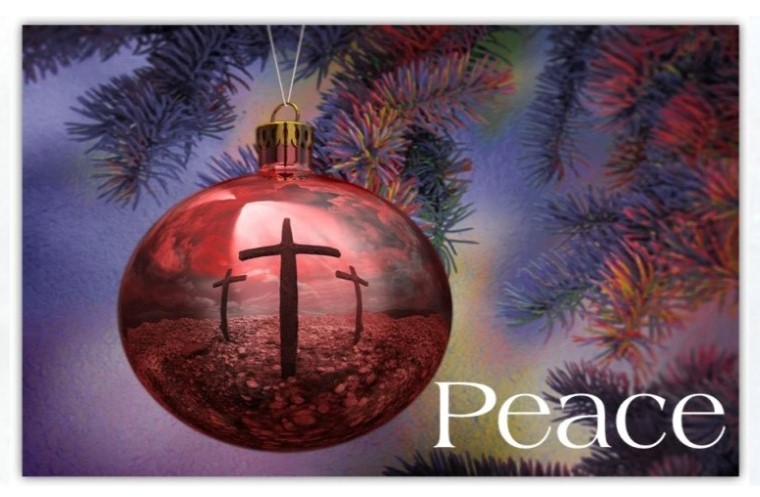
Peace. Just the word alone brings a soft glow to the soul. In this season of warm crackling fires, hot chocolate while we open Christmas cards with gold lettering.
Peace.
In the Old Testament, the word for peace (Hebrew) is shalom. In short, it means soundness, well-being, harmony, and wholeness. Everything is as God intended it to be. Peace is not necessarily in what we do not have, frustration, stress, unrest. But in what we do have.
The New Testament (Greek) defines peace as “to set at one again.” Painting the picture that something had once been erected (as intended) yet has toppled over. Chaos, strife, irritation, even war are the results. Once it is set back, PEACE is the result—all is in its rightful place.
Remember God and man (and Eve) in the Garden, their relationship was good and whole (peace-filled) as designed. Then there was a sin outbreak, the fellowship was broken—toppled over. Gone were the daily walks together in the garden, what was—is no longer. For generations (begetting) generations there was a missing element.
Fast forward to Luke chapter 2, the angels announce, “Glory to God in the Highest and on earth peace” (v14). Peace was back on earth among mankind. Jesus is the missing piece (peace). He came bridging the gap (which was big and ugly) between man and his God. He set it all back in place. Fellowship restored. Peace had indeed come to earth.
Peace is a Person.
Peace is not only a Person, but a position. “But now in Christ Jesus you who once were far away have been brought near through the blood of Christ. For He Himself is our peace …for through Him we both have access to the Father by one Spirit” (Paul, Ephesians 2:13,14). We are now back, positioned where we were originally designed to be—full accepted access to God. Again, able to come into His presence. Paul declares this point, “Since we have been justified through faith, we have PEACE with God through our Lord Jesus Christ” (Romans 5:1).
Peace is a position.
Isaiah 9:6, “For unto us a child is born, unto us a son is given, and the government will be on His shoulders…Prince of Peace.” Now consider Colossians 3:15, Paul wrote, “Let the peace of Christ RULE in your hearts, since as members of one body you were called to peace. And be thankful.” Does Christ take the rightful place on the throne of our life? If we are not prioritizing God ruling on the throne of our heart, be assured another will occupy it! Something. Someone. We will know peace only to the degree that we YIELD to Christ, the reigning Prince of Peace.
Peace is a priority
Paul again, “Do not be anxious about anything, but in everything by prayer and petition, with thanksgiving, PRESENT YOUR REQUESTS TO GOD, and the peace of God which transcends all understanding will guard your hearts and minds in Christ Jesus” (Phil. 4:6-7, emphasis mine). Presenting to God means, we are NOT to go looking for solutions elsewhere. If we do, we can potentially be placing things on the throne that shouldn’t be there. May we not be throne hoarders (loading up unwanted, unneeded messy stuff). Finding peace is not just the raising of a white flag, ultimately it is a banner of occupation! It is His design, His throne. His place. He reigns. Bow!
Peace is a posture.
Wait, there is more!
Because of our sinful nature and our perpetual continuing to do so, John strongly declares “If we confess our sins, He is faithful and just to forgive us our sins, and to cleanse us from all unrighteousness” (1 John 1:9). As we confess, we are saying the same thing about our situation that God does. We are now in full agreement; we concede and realign and adjust our course with what God says. In this process, we are taking what was toppled over and returning to the original design and bringing Jesus back to His rightful peaceful place—in the center. We mess up—we get cleaned up. Peace restored. Biblical peace isn’t just the lack of conflict; it is the presence of the rightness of God. Remember, “Peace is like a river” (Isaiah 66:12). NOT a pond, stagnant and settled. Unlike the river, that flows from the mountain top, always moving, always refreshing, always pure.
Peace can be a process.
Is this all easy? “NO!” (Sorry to yell). Life is tough, loud, and viciously swirling, but we can do some throne inspection and respond appropriately. I know I do. I have to. Daily. Even in and through tears. It HAS to be Jesus! Does He take the rightful place on the throne of my life? Do I place HIM in the very center of my circumstances? Does my life behavior reflect-declare Jesus as King?
What about you?
“May the God of Peace who makes everything… holy and whole, make you holy and whole, put you together–spirit, soul and body” (1 Thess. 5:23, paraphrased, The Message). If you’re lacking peace, look to see if HE has been kicked off and replaced. Seek being set at one again. God the Maker—God at the center—God on the throne. God of peace. Peace is pleasant!
Peace.
In Him, DeDe (“Let us consider how we may spur one another on toward love & good deeds” – Hebrews 10:24).
Mary Pondered

There is a story of four young Jewish Yeshiva students, (Jewish seminary). One afternoon in a study session, one student gave a book to one of the men asking him to take a look and “Tell us what you think.”
Later that night, curious about the book, in eagerness, he sat down and opened to chapter one. He started to read, “In the beginning God created the heavens and the earth.” (Pause). “What?” he thought. He read it again “In the beginning God created the heavens and the earth.” Excited, he stood up, exclaiming, “NO!” And continues, “God’s not finished!” And closed the book!
You see, in the ancient writings, originally there were no chapters, no verses and no punctuation. According to Hebrew reasoning (and method) they never paused until the complete thought was finished, they read to the edge of the story. The book handed to this young man was the English King James version of the Bible. “In the beginning God created the heavens and the earth(.)” Period. God had only begun creating and He finished and rested on the seventh day (Genesis 2:2). THAT is where they’d pause or mentally put a period.
The very first verse is just part of a story. That story is part of a bigger story —the historical account of God. We often read, pause, or stop before the whole of a particular story is in sight and move on to something else.* Or we come to a famous or familiar portion of scripture, so familiar with an “Oh I know this part” we run our finger down and turn the page.
We read the story of Christmas in both Matthew and Luke. We know this story as well—very well. Both Mary and Joseph are told great things, divine things through angelic visits. Mary, although never being with a man, would become pregnant, conceived of the Holy Spirit. This baby boy would “save the people from their sins” (Matthew 1:21). At one point, Joseph and Mary head to Bethlehem for the national census. There are some rooming issues. Once settled, soon the baby, who is to be called Jesus, is born.
Luke chapter 2 tells of the shepherds living in the fields taking care of the sheep. They too get an angelic visit, declaring good news, “Today in the town of David a Savior is born to you; He is Christ the Lord” (2:11). The shepherds are told what to look for. Then the backup singers appear, angels singing “Glory to God in the highest and on earth peace…” (v14). When the angels exit, so do the shepherds. They go and find Mary and Joseph and baby Jesus. As they do, they tell any and all who will listen to what they saw and were told.
Glorious and full of splendor!
Yet we tend to stop here. But the story isn’t over. Keep reading. All who heard what the shepherds reported were—amazed. Then v19, this verse is challenging, “But Mary treasured all these things, pondering them in her heart.” This young gal took all that had been said to her, to Joseph and now the shepherds and did some pondering.
The Jewish people were (are) a storytelling culture. From a noticeably young age, they are told the story of God and of their people. From the very beginning when Adam and Eve were in the Garden, where mankind broke fellowship with their God. Throughout many, many generations, God used prophets, law and the lives of people to tell His story—the story of restoring fellowship. The created in His image and likeness, back to the Creator.
Mary pondered the miraculous virgin birth, the coming of the Savior, and the declaration of “peace on earth.” It ALL slipped into the ongoing story line and fit perfectly! The story of restoring fellowship, restoring peace. Biblical peace isn’t just the lack of conflict; it is wholeness, the presence of the rightness of God. It literally means “to set at one again.” Conveying what once has been toppled over was now righted and set at one again—peace.
Mary took ALL this and she pondered it. Her pondering isn’t merely tucking it away and thinking about it now and then. The word Luke uses conveys “putting together.” She connected all the dots. She lined it all up. When all strung together, all the pieces fit. Each piece has beauty. But what a glorious bigger picture. Mary, the shepherds (and those amazed) were told their whole life, the Jewish people were waiting to be rescued—the Messiah, the Rescuer. God had just sent the answer to their waiting—His Son, Jesus.
When reading our bibles, don’t stop or skim over the famous or familiar parts. Keep reading, like the young Jewish men—beyond to the edge of the story. Paul wrote “Every part of Scripture is God-breathed and useful one way or another—showing us truth, exposing our rebellion, correcting our mistakes, training us to live God’s way” (2 Timothy 3:16, paraphrased, The Message). Invite Him to read with us. In this Christmas season, may we truly treasure the bigger story. Take the time to lean into the familiar. May we ponder, putting together all the divine stuff—God’s gracious, loving restoring of fellowship. “Today in the town of David a Savior is born to you; He is Christ the Lord… “Glory to God in the highest and on earth peace.”
Mary pondered.
In Him, DeDe (“Let us consider how we may spur one another on toward love & good deeds” – Hebrews 10:24).
*We often read, pause, or stop before the whole of a particular story is in sight and move on to something else. (Example:) Mark 8, Jesus heals the blind man. Putting His hands on him once—still blurry. A second time Jesus touched him; his sight was restored. Jesus has purpose. Just prior to the progressive healing, Jesus talks to the disciples about having eyes “but fail to see” and not understanding Who He is. What is the very next thing they encounter? A blind man. May we like Mary, line it all up. String together, all the pieces fitting.
Be Still and Know

“Be still and know that I am God” (Psalm 46:10). Yet if I put such a phrase alongside the reality of my life, most of the time my life reflects, “Be busy and stressed and know that I am tired!” Anyone? Psalm 46:10, one of the most beloved verses of the Bible. But do we really understand its context or meaning? Scholars propose it was written surrounding the tense warfare between Judah and the Ammonites and Moabites. Jehoshaphat and crew were terrified of the reported impending war. In short, Jehoshaphat called the people to pray and fast, God’s response was “Do not be afraid or discouraged because of this vast army. For the battle is not yours, but God’s” (2 Chronicles 20:15). Men were appointed to sing and praise. In their worship, God intervened, and Judah was victorious.
Psalm 46. The Psalmist writes 10 of the 11 verses from the 3rd person, talking about God. The wet ink encourages that even in natural disasters and national uproar, “Come and see the works of the LORD. He makes. He breaks” (vv8-9). Then in verse 10, the writing changes. It is now from the 1st person—I. It is as if God caused the writer to pause, whispering in his ear, tell them, “Rapah yada Elohim” (Hebrew) “Be still and know I am God.”
Powerful.
When studying the scriptures, looking at the original language and grammar gives us great insight and some amazing principles to pull forward and help apply to our own circumstances. This phrase holds two imperative verbs, meaning they are both commands. Be still! Know!
If it’s good for the nations, it’s good for the individual.
God commands us to know Him. That means it is entirely possible, desirable AND (wait for it)—expected. But not only this, but the 1st verb (be still) points to the 2nd (know). We are still IN ORDER to know God. It isn’t just slowing down, or I’ll get to it when it is convenient. When life is crazy, stressful or filled with pain. STOP. God loves full stop. It is in the STOP He has our attention. I am learning our (my) stop isn’t retreating—it is surrendering. Stopping my pointless human effort to fight a battle bigger than myself.
Another interesting point: (Hang with me, this is good). Of the uses of rapah (be still, cease or let go, let drop) the (BDAG*) defines rapah as “to stand empty.” Rapah (raw-faw) it is often connected with yad (hand). Some scholars suggest (this verse) could convey the idea: What is it that you hold in your hand? Let go. Let it drop. Drop your weapons. I would offer, for some of us, we hold with a fisted hand(s). Perhaps God wants us to open our hands—palms down. Palms down does not offer a hesitant release; it is immediate. Standing empty.
God is not asking us to be quiet (although that DOES help) when surrendering. Location is not a huge factor (however, a quiet place contributes). Nor is our physical posture the make it or break it element (Yet face down, does have “I can’t see the distractions” with my face on the carpet, benefits). But He does tell us, it’s not about our circumstance. It is all about HIM. “The fear of God came upon all the kingdoms of the countries when they heard how the LORD had fought against the enemies of Israel” (2 Chronicles 20:29).
In our surrender, palms down, may we (I) know the power and security of our God. Be still and know that I am God.
In Him, DeDe (“Let us consider how we may spur one another toward love & good deeds” – Hebrews 10:24).
____________________
*BDAG is an abbreviation for a Greek-English Lexicon of the NT (Bauer-Danker-Arndt-Gingrich). Greek? The Septuagint is the Greek version of the OT.
Pivotal Thankfulness

Recently I had to pivot. You know that moment when you stop dead in your tracks and know you need to head back in the other direction for various reasons.
There was a man in the Bible that did a similar thing. Luke 17:11-19; Jesus heals ten men with leprosy. He tells them to go show themselves to the priests (knowing they’d be clean and healed when they got there, the priests would verify the clean bill of health). All took off. All were healed. But one stopped. One pivoted and returned. When he got to Jesus, he threw himself at His feet thanking Him. Jesus asked, “Where are the others?” Nine were missing. Only this one man returned to thank and praise Jesus. This man’s action not only acknowledged what Jesus did, (praise). But acknowledged Who Jesus was (worship). Jesus merely gave instruction. What power! HE is worthy of the stop, worthy of the pivot, worthy of the return. Worthy of thanksgiving.
Notice too, the healing took place once the men began to walk (to the priests). Their faith, their obedience—their participation in the healing. Jesus spoke. They obeyed. They were healed. What would have happened if one mischievous guy threw his hands on his hips and defiantly declared, “What good will THAT do!” Defiance only brings delay (See 2 Kings 5). Don’t be defiant. Often simple obedience can make a world of difference.
The narrative goes on, Jesus tells the one man, “Stand up, your faith has made you well” (v19, NASB). The context conveys Jesus heals all but shares His disappointment in the others lack of thankfulness. The man returning, falling at His feet—Jesus gave him a healing, a wholeness beyond the physical the others did not receive. The one man cherished the Giver—greater than the gift. Jesus didn’t heal with the expectation (or required) response of gratitude. He healed out of love. He healed due to mission (Jesus went about teaching, preaching and healing – Matthew 4:23. See also John 6:38-40, Mark 10:45, John 3:17).
There is one more thing where I want to run my finger over the text. The narrative found it important enough—JESUS too pointed it out. The returning thank-filled man was a Samaritan. In short, Jews and Samaritans didn’t get along. Jews thought the other were unclean and distanced themselves, the mindset and behavior conveying—unworthy. Yet. Jesus heals. The Samaritan obeys. The Samaritan returns. What a great principle: Jesus does NOT discriminate. (See too, the woman at the well, John 4).
I too pivoted the other day. Following this principle of thankfulness. I, like the one man—stopped. I went back to Jesus, threw myself (metaphorically) at His feet and thanked Him. Realizing my current circumstance is not ideal or by far even favored. BUT. What am I thankful for? What has Jesus told me to do? Am I obedient? Am I focusing on the Giver? Am I thankful for what I do have? May I not be counted among the “where are the others?”
Thankfulness.
As we step into this seasonal focus of thanksgiving, may we not make it more difficult than it is, or over think it to where we merely give up. Fall at His feet. HE is worthy of the stop, the pivot, the return. Worthy of praise-filled thanksgiving.
Happy Thanksgiving.
In Him, DeDe (“Let us consider how we may spur one another on toward love & good deeds” – Hebrews 10:24).
Disciple

Christian. If I were to go downtown Portland and ask a few folks how THEY would define “Christian” I would get as many different responses as those I asked. Did you know Christian is NOT defined in the New Testament, and it is only mentioned 3 times (Acts 11:26; 26:28; 1 Peter 4:16). It was those outside the Jesus community that gave the name or label “Christian” to the Jesus followers. These followers did not refer to themselves in this way. The nickname was motivated by sarcasm and mockery, much like our “Jesus Freak” today. Remember, these Greek-speaking Romans citizens were not looking for the Messiah (Christ) and found these “Followers of the Way” quite odd, and thinking, they associate with this “Christ”—so they must be “Christ-ians”
If I were to ask a Jesus follower of Peter’s day, of the early church, how they would define their life, they would answer in a very convicting, a very pointed way, “I am a disciple of Jesus Christ.” Disciple is not a word commonly used these days, due primarily to the whole “I am my own person, and no one tells me what to do” mentality. A disciple is a learner, follower, an apprentice; it is someone who seeks to know and gives full life attention to their Rabbi (Teacher/Mentor). Within the Jewish culture in Jesus’ day, (and some aspects continue today) there was a whole process of life discipleship.
Hang with me, God has something for us.
Discipleship (in general) was designed in such a way that the student (or disciple-wanna-be) would seek out the Rabbi (Teacher) and make a formal request to be their disciple. If the Rabbi agreed to the request, (finding them worthy: within family, status and education) allowing them to become his disciple, they were now chosen (hold on to that word). The disciple was then required (not optional) to totally submit to the Rabbi’s authority in all areas of his life. The Rabbi’s teaching was therefore binding, everything the disciple did or how he viewed things were all filtered through the Rabbi. There was no curriculum or agenda, it was a continual daily relationalliving experience—that took YEARS in the making.
The Rabbi would ask questions of the disciple as he closely observed him. ANY life experience was open for an opportunity for the Rabbi to speak truth into the disciple. The Rabbi was persistent in his questioning, “Why did you do that?” In context of what the disciple did, what he said, what was the motive? The emphasis was always on forming Godly behavior responses, not just the imparting of wisdom. The Rabbi was concentrating on developing discernment in the mind of the disciple, instructing him how to process in the best manner of honoring his God.
The disciple would initiate a discussion by asking questions. BUT (here’s the KEY) the mindset, and the heart condition of the disciple as he asked questions was this, “Before you answer, before you tell me what to do, or point me in any direction, my answer is ‘Yes.’” The response of a disciple is Yes! It was a radical life of submission.
THEN. Jesus comes on the scene, turning the Rabbi/disciple connection upside down. There was no time for discipleship applications to be submitted in triplicate form. The traditional format: Disciple sought out the Rabbi, now Jesus sought out the disciple. Jesus, The Rabbi, called out not the well-educated or those of high status. To fishermen He said, “Follow Me.” These two words were discipleship terminology. They were CHOSEN. Could this be folded into the context of why Jesus said, “You did not choose Me, but I chose you and appointed you that you should go and bear fruit” (John 15:16). What a most wonderful reality.
Jesus spent intense training time with His disciples. His last night with the disciples He says: “A new command I give you: Love one another. As I have loved you, so you must love one another. By this, all men will know that you are My disciples, if you love one another” (John 13:34-35, NIV, emphasis mine). If we want to know what Jesus meant by what He said—watch what He did. He LOVED! His love is filled with acceptance, forgiveness, restoration, mercy, grace (on and on). Following Jesus does not mean following His followers (although helpful, Godly influence is vital—again, vital) but we are to follow HIM. I don’t think the “WWJD” from years past is too far off, it really is “What would Jesus do.”
Friends, WE are chosen, WE are deemed worthy! WE are His. This Christian walk is a walk of discipleship. It is a continual daily “Yes” to our Rabbi, through relationalliving experience—that takes YEARS in the making. The Holy Spirit concentrates on developing discernment in OUR mind, instructing us how to processin the best manner of honoring God. For our growth and His glory.
May we give full life attention to Jesus.
Disciple.
In Him, DeDe (“Let us consider how we may spur one another toward love & good deeds” – Hebrews 10:24).
______________________________________________
Resources: Andy Stanley’s sermon “Christian”; Christianity Today; “First-Century Disciple” (Article: Bible.org 2007 written by Doug Greenwold); The Complete Word Study Dictionary of the New Testament; Holman Treasury of Key Bible Words; Thayer’s Greek-English Lexicon; Expository Dictionary of Bible Words; Strong’s Greek & Hebrew Dictionary. Bible Translations referenced: NIV, NASB, Interlinear, ESV, NLT, KJV, NKJV, NET. (And any other place I stopped and passionately read about this and forgot to document).

 Inspired Fountain