
Peace

Peace. Just the word alone brings a soft glow to the soul. In this season of warm crackling fires, hot chocolate while we open Christmas cards with gold lettering.
Peace.
In the Old Testament, the word for peace (Hebrew) is shalom. In short, it means soundness, well-being, harmony, and wholeness. “Everything is as God intended it to be” (Brad Gray, Walking the Text). Peace is not necessarily in what we do not have, but in what we do have.
The New Testament (Greek – eriene) defines peace as “to set at one again.” Painting the picture that something had once been erected (as intended) yet has toppled over. Chaos, strife, irritation, unrest, even war are the results. Once it is set back, PEACE is the result—all is in its rightful place.
Remember God and man (and Eve) in the Garden, their relationship was good and whole (peace-filled) as designed. Then there was a sin outbreak, the fellowship with God (and each other) was broken—toppled over. Gone were the daily walks together in the garden, what was—is no longer. For generations (begetting) generations there was a missing element.
Fast forward to Luke chapter 2, the angels announce, “Glory to God in the Highest and on earth peace…” (v14). Peace was back on earth among mankind. Jesus is the missing piece (peace). He came bridging the gap (which was big and ugly) between man and his God. He set it all back in place. Fellowship restored. Peace had indeed come to earth and He-is-KING. Peace is a Person.
Peace is not only a Person, but a position. “But now in Christ Jesus you who once were far away have been brought near through the blood of Christ. For He Himself is our peace …for through Him we both have access to the Father by one Spirit” (Paul, Ephesians 2:13,14). We are now back where we were originally designed to be—full accepted access to God. Again, able to come into His presence. Paul declares this point, “Since we have been justified through faith, we have PEACE with God through our Lord Jesus Christ” (Romans 5:1). Peace is a position.
Isaiah 9:6, “For unto us a child is born, unto us a son is given, and the government will be on His shoulders…Prince of Peace.” Now consider Colossians 3:15, Paul wrote, “Let the peace of Christ RULE in your hearts, since as members of one body you were called to peace. And be thankful.” Does Christ take the rightful place on the throne of our life? (Pause, read that life question again). If God is not ruling on the throne of our heart, be assured another will occupy it! Something. Someone. We will know peace only to the degree that we YIELD to Christ, the reigning Prince of Peace.
It is NOT about peaceful circumstances, it’s about the APPLIED authority of Christ. Remember the children of Israel, there would be (short lived) peace, but then, they would turn their face toward another (another—anything). Peace lost. Paul again, “Do not be anxious about anything, but in everything by prayer and petition, with thanksgiving, PRESENT YOUR REQUESTS TO GOD, and the peace of God which transcends all understanding will guard your hearts and minds in Christ Jesus” (Phil. 4:6-7, emphasis mine). Presenting to God means, we are NOT to go looking for solutions elsewhere. If we do, we can potentially be placing things on the throne that shouldn’t be there. May we not be throne hoaders (loading up unwanted, unneeded messy stuff). He doesn’t come to take sides (agreeing with opinions); He comes to TAKE OVER. That is what Lordship is. Packing with Him, love, mercy, and grace. Finding peace is not just the raising of a white flag, ultimately it is a banner of occupation! It is His design, His throne. Peace reigns. Peace is a posture. Bow!
Wait, there is more!
Because of our sinful nature and our perpetual continuing to do so, John strongly declares “If we confess our sins, He is faithful and just to forgive us our sins, and to cleanse us from all unrighteousness” (1 John 1:9). As we confess, (Greek, “homologeo”) we are saying the same thing about our situation that God does. We are now in full agreement; we concede and realign and adjust our course with what God says (NOT what He may feel or what He may mean) what He says! In this process, we are taking what was ‘toppled over’ and returning to the original design and bringing Jesus back to His rightful peaceful place—in the center. We mess up—we get cleaned up. Peace restored. Biblical peace isn’t just the lack of conflict; it is the presence of the rightness of God. Remember, “Peace is like a river…” (Isaiah 66:12). NOT a pond, stagnant and settled. Unlike the river, that flows from the mountain top, always moving, always refreshing, always pure. Peace can be a process.
Is this all easy? “NO!” (Sorry to yell). Life is tough, loud, and viciously swirling, but we can do some throne inspection and respond appropriately. I know I do. I have to. Daily. Even in and through tears. It HAS to be Jesus! Does He take the rightful place on the throne of my life? Do I place HIM in the very center of my circumstances? Does my life behavior reflect-declare “Jesus as King?”
What about you?
“May the God of Peace who makes everything… holy and whole, make you holy and whole, put you together–spirit, soul and body” (1 Thess. 5:23, paraphrased, The Message). Being set at one again. God the Maker—God at the center—God on the throne. God of peace.
Peace.
In Him, DeDe (“Let us consider how we may spur one another on toward love & good deeds” – Hebrews 10:24).
God in the Detail

Growing up and into my late teen years, I had a reading disability. I could read but didn’t understand what I read. There was little to no comprehension. I learned to listen. Listen for details. While the teacher reviewed the prior night’s homework in class (while the rest of the students messed around) I was paying attention. In my lack, I learned the skill to mark the who/what/where/why and how. Fast-forward. God healed my mind, divinely making the connection a couple of months into my first year at Bible college, unfolding the night I finally surrendered fully to His call on my life. Healed, but packing with me the tools I learned over the years. God doesn’t waste a thing. He uses it for our growth and His glory. Thank You, Jesus. Thank You for the process of skill learning. Thank You for healing me.
We often miss details. Details in the big picture. Detail God put there on purpose, for a reason. I would offer we slow down when reading the Bible. Invite Holy Spirit to read with us. Specifically asking to see the detail of who/what/where/why and how in the context. I think we would be amazingly astounded at God’s creative, glorious display of His character! God in the detail.
I have been looking at Miriam, (Moses’ older sister) her early years in the book of Exodus. I know the story, but something stood out to me this time as I rabbit trailed down a delightful path. As I read, (asking, “Holy Spirit show me!”) Pharoah, the King of Egypt attempted to destroy the growing nation of Hebrews, ordering the midwives to kill the baby boys. When that didn’t work, he decreed “Every boy that is born, you must throw into the Nile” (Ex 1:22, NIV). He was drowning the Hebrews.
Fast-forward to Exodus 14. The Hebrews were delivered from slavery and now standing on the edge of the sea. They crossed on dry ground. But the Egyptians did not. “The Egyptians were fleeing, and the LORD swept them into the sea. The water flowed back and covered the chariots and horsemen. Not one of them survived” (vv 27b-28). God drowned the Egyptians.
Wow.
What detail. In the big picture of God’s delivering plan. The bad guys were drowning the lil Hebrew baby boys and God takes out the whole army of men. Not to mention, but I will, He took out everything. The men and their fancy means of war (chariots & horses). Interesting, God did not allow the men to run (the baby boys couldn’t run) “Let us get away from the Israelites!” (v25)… “the LORD swept them into the sea” (v27). God doesn’t miss a thing. Drowning? Let ME show you drowning!
God doesn’t just exert His power, to exert power. He told Moses, “I will gain glory through Pharaoh and all his army” (v17). Verse 31, “When the Israelites saw the great power of the LORD displayed against the Egyptians, the people feared the LORD and put their trust in Him.”
There is purpose in detail, purpose in power.
May we learn from this true event about the character of our God. Do-NOT-Mess-With-Me-Or-My-People! God doesn’t miss a thing. He knows the details of OUR lives. He will and does interject Himself in our story. If not now, it’s coming. Someday. I, like you, (by faith) await the time, we will say, “Fast-forward” when telling our story. May we continue to turn the pages.
It doesn’t take a two-three letter degree behind our name or a nicely framed certificate on our wall, “The unfolding of Your words gives light; it gives understanding to the simple” (Ps 119:130). Unfold Lord! Thank You in advance for all the visual aids You will use. Holy Spirit give us ears to hear and eyes to see–YOU! May what we see and learn cause us to be in awe of You and most importantly–bring YOU glory!
God in the detail.
In Him, DeDe (“Let us consider how we may spur one another on toward love & good deeds” – Hebrews 10:24).
Consider Current Affairs

Consider current affairs.
Word Study: The Hebrew word “Hamas” is used 60+ times in the Old Testament.
“Hamas” meaning violent, wrong, malicious, cruelty, lawlessness, and injustice. It is almost always in connection with sinful violence. It is often the title for extreme wickedness. It does not, however, refer to the violence of natural catastrophes (I.e. violent wind or waves).
Consider current affairs. The headlines are using this word we’re looking at. Although the “claim” is the use of an acronym (A word created by combining the first letter of each word in a title or phrase). But. If it looks like a duck.
“Basically, biblical hamas connotes the disruption of the divinely established order of things” [The Vine’s Expository Dictionary of the OT].
“Pray for peace in Jerusalem. May all who love this city prosper. O Jerusalem, may there be peace within your walls and prosperity in your palaces” (Ps 122:6-7, King David, NLT). Jerusalem, the current capital of Israel.
Pray.
“May God arise, may His enemies be scattered; may His foes flee before Him” (Ps 68:1).
________________________
[Resources: Strongs Hebrew Dictionary; Complete Word Study Dictionary of the OT; The Vine’s Expository Dictionary of the OT; Theological Wordbook of the OT; Expository Dictionary of Bible Words; The NASB Hebrew/Greek Dictionary. And any other biblical geeky place I read and forgot to write down].
Boundary Line
Recently in my quiet time, I was again drawn to Mark chapter 4. I love the Parable of the Sower. There are so many principles and applications on so many levels. The farmer scatters the seed on the path, the rocky place, among weeds and then—good soil (vv1-20, please read those beautiful words in red). Praying as I read through these verses over and over (in different translations) I felt Holy Spirit point.
He was pointing at the rocky place.
If the good soil is the place that contains a healthy environment to grow the best and abundant yielded harvest, then “good soil” is the goal. Good soil, the soil of my heart for Jesus.
So, what about the rocky place?
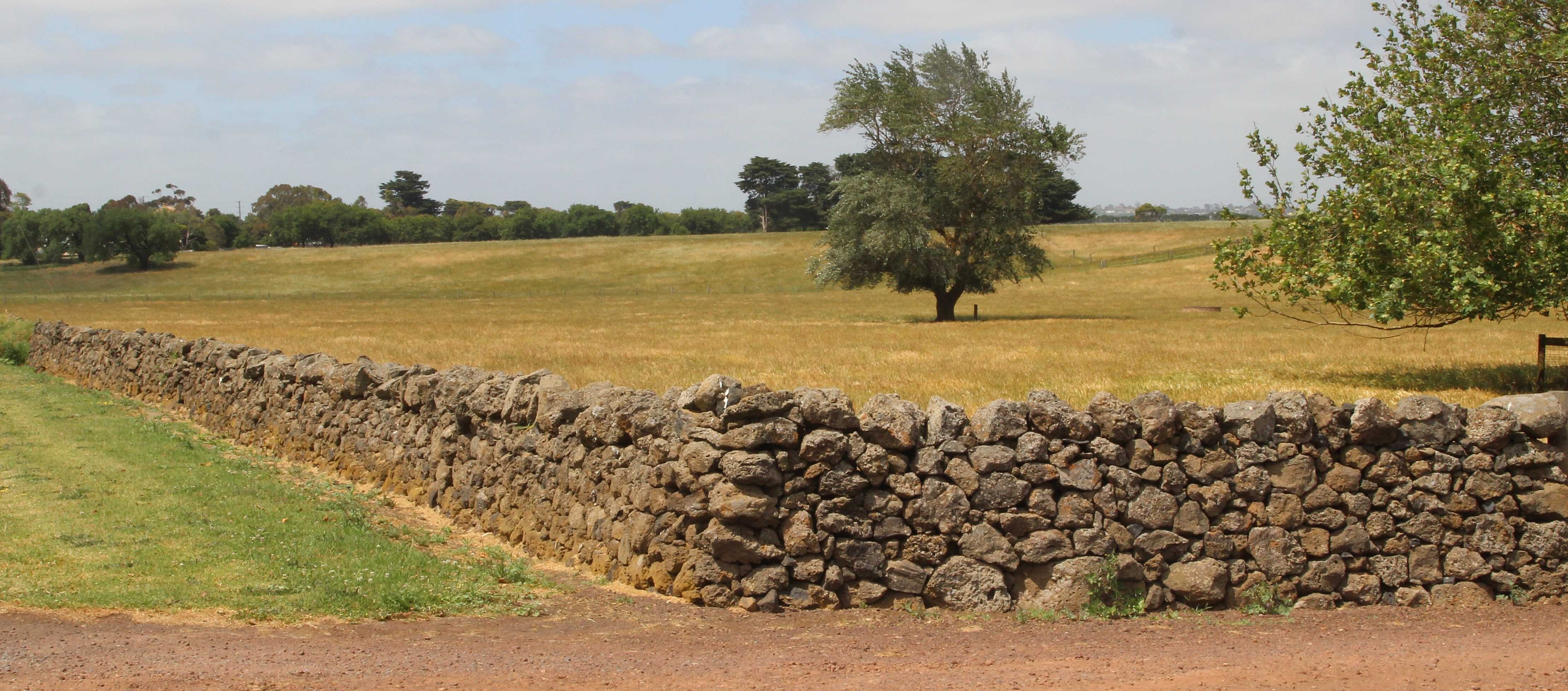
In my research I found some amazing things. The rocks found in fields are known as fieldstones (I know, “Duh” but that’s their technical name) and lie at or near the surface of the ground. They are regarded as a huge nuisance to the farmer. Great labor is taken to remove it. Interestingly, in the early days (prior to modern fencing) those annoying stones were then picked up and stacked not only as fencing—but boundary lines. What once littered the field, hindering the farmer to full harvest, now stands as a clearly marked boundary line.
As I pondered this I had to smile, and quietly whisper “Those stupid rocks.” Just when I think my field is good to go, I trip over yet another rock and face plant right there in the middle of the field. Instead of getting up and just kicking it aside, I know now, if I truly—genuinely desire a good healthy field (besides a good tilling and weed pulling) I need to pick up those growth hindering rocks.
I appreciate God’s practicality. He didn’t just say, “Move’m.” He told me what to do with them. It’s not only hard work, but heart-work! Not to mention (but I will) may we not be super meticulous about how we stack those rocks (I know a few will stress over that) just get them out of the field and on the heap. Those stones representing anything that hinders my receiving God’s word, His instruction, HIS standard for my life. Some of those stones will post as a declaration of what once tripped me up, now stands as boundary line of awareness, “THAT is no longer allowed in my field.” Rock built, boundary line.
Boundary lines are not to contain us, they are to protect and prevent what comes in. The psalmist wrote, “I walk about in freedom, for I have sought out Your precepts” (Ps 119:45). There is freedom in knowing God and His word. And knowing and preventing what hinders us.
God is worthy of our clean-up project. Will you join me in cleaning up our field, picking up and stacking rocks! We will be amazed what God can do with those empty, prior stone filled places. Good soil.
Boundary lines.
In Him, DeDe (“Let us consider how we may spur one another on toward love & good deeds” Hebrews 10:24).
Peacemaker

Peace. What a commodity. We value it. We want it. We long for it. Peace as mentioned in the New Testament literally means, “to set at one again.” The picture is something that was once set in place has either been removed or toppled over (think of the game Jenga, remove foundational pieces and over it goes). Chaos, strife, irritation, even war are the results. Once it is set back in place—PEACE.
Remember God and man (and Eve) in the Garden? Their relationship was good and whole (peace-filled). Then there was a sin outbreak, and the fellowship was broken—toppled over.
For generations (begetting) generations there was a missing element, what was—is no longer. Later Isaiah speaks of the coming of the Prince of Peace and the government resting on His shoulders (9:6). Fast forward to Luke chapter 2, the angels announce, “Glory to God in the Highest and on earth peace…” (v14). Peace was on earth. Jesus is the missing piece (peace). He came bridging the gap between man and his God. He set it all back in place. Fellowship restored. Peace has been re-set.
When there is a lack of peace amongst us (chaos, strife or irritation) we have a choice. We can either be a peacekeeper or a peacemaker.
Many years ago, I sensed Holy Spirit had me take a deeper look at the difference between the two. I found it to be rather eye-opening. Whenever God puts something in front of us, it may not be for “now.” He may be preparing us for someday.
A peacekeeper’s motivation is hoping to NOT rock the boat. Running from one person to the other, trying to keep everyone happy. Calm and happiness over here (rock). Please be happy and calm over there (rock). But as they bounce from one to another—they add to the rocking. Not to mention (but I will) the waves they make.
A peacemaker doesn’t run. (Phew!) How exhausting. A peacemaker stands. They stand right in the middle. Remember what biblical peace is? Setting at one again. It is speaking and raising truth IN the chaos. It isn’t raising a white flag as to surrender. It is the flag of occupation. Peace making is resetting. Bringing truth into the moment.
Five years ago, I was officiating my grandmother’s funeral. After the service while walking through the potluck line, some family members began to get into it. As it got rather HEATED, I stepped forward and (lovingly) but very boldly told them “Not here. NOT now.” We are here today to honor Grandma. Holding my ground, they calmed down and dished themselves more taco salad casserole.
You see just a few months prior, one of our family members committed suicide. As you can imagine it tore the family apart. So. Much. Pain. In the pain there were opinions and voiced perspectives. These ripped a few family members out.
As I stood holding my plate, I heard the Holy Spirit say, “There it is—peacemaker.” I didn’t run from side to side. I stood and spoke truth. In the center of it all. “Not here. Not now.”
Jesus calls us to be peacemakers. “Blessed are the peacemakers, for they will be called sons of God” (Matt 5:9). What a reward to be called a son or daughter of God, as we reflect His character in promoting well-being through Jesus Christ. As we take a stand. A stand of light, of salt, authority—of speaking truth—bringing GOD to a situation, we are instruments of peace in the world, to the world.
Peace stands.
This last spring my niece got married, it was an extremely wet and rainy day. But under that big white tent was a most beautiful thing. My other niece, whom we hadn’t seen in five years—she came to the wedding. She showed up.
Sometimes peace is a process.
Peacekeeping runs. Peacemaking stands! Standing in the middle and speaking—truth in the situation. Setting truth back in the center—Peace.
Stand.
Above is an excerpt (more to come) from my teaching on the Fruit of the Spirit at a recent women’s retreat. It was my honor to be with the great group of women from Riverside Community Church, in Rainier, Oregon. If you’re in their area, stop in and see them. You’ll be blessed.
In Him, DeDe (“Let us consider how we may spur one another on toward love & good deeds” – Hebrew 10:24).
A Day I Can Forgo

It’s here, THAT season. It’s already in stores. Halloween. Stores have freshly stocked shelves with 30% off ticket items by the rows. There are black cats, witch hats, spiders, eerie tombstones and yes, the ever-dreaded skulls.
I LOVE the fall; it is my favorite season. Apples, pears, and all varieties of squash, along with beautiful towering sunflowers. The colors are so rich and vibrant. I decorate my home seasonally with warm orange, burgundy and brown tones. But Halloween does not roll this gal’s socks. Nope.
I am often asked why I have chosen not to celebrate Halloween. Why I don’t find it “all in fun.” What is fun about it? Regardless of how we attempt to cutesy it or slap a smile on it, if you take a step back and look at the basic themes, it is of fear, death, and darkness.
Before I get all kinds of comments, emails, texts, and smoke signals, please let me explain why (for me) I choose not to. My family used to do the Halloween thing when I was little. Sure, I wore the thin fabric climb in costumes with the sweaty plastic masks. But after I came to understand and was adopted as a daughter of the Most High God and learning of His Majesty and His glorious light—I do not participate in the day of darkness.
I have seen and experienced too much from the dark side (you can’t un-see or un-know) to play with it like a child’s toy or pretend in dress up. While the parties take place, and the candy bowls filled and children running from door to door—unbeknownst to us in the background, far in the dark corners, there are cultic activities taking place. Those deeply into the occult take this scheduled day very seriously and yes, the dark forces they are dealing with are very real! (*See the history of Halloween below).
We must remember, “our great enemy the devil prowls around like a roaring lion looking for someone to devour” (1 Peter 5:8). It won’t stand up in the crowd vigorously waving, “Over here, I’m here.” It will stealthily peek in with the ugly and the demonic. It will come again and again for any crack or sliver of compromise on our part. Darkness always has an agenda. ALWAYS. Seeking ANY and all opportunities to oppose the gracious love, beauty, and majesty of our God.
Yes, an emphasized day I can forgo.
Alrighty. Gently climbing down off my soapbox (as not to hurt myself) and dragging it back to the corner. No condemnation, just offering insight. You are loved.
In Him, DeDe (“Let us consider how we may spur one another on toward love & good deeds” – Hebrews 10:24).
*History of Halloween: “Halloween’s customs are thought to have been influenced and dated back to the ancient Celtic festival of Samhain (pronounced sow-in) the celebration of their New Year on November 1. They believed the night before the new year (Oct 31) the boundary between the worlds of the living and the dead became blurred and the ghosts of the dead returned to earth. To commemorate the event, Druids built huge sacred bonfires, where the people gathered to burn crops and animals as sacrifices to the Celtic deities, this done in attempts to appease them. During the celebration, the Celts wore costumes, typically consisting of animal heads and skins, and attempted to tell each other’s fortunes.” (History.com). In addition, according to Wiccans, Halloween is the time when the veil between the living and the dead is considered to be the thinnest. They celebrate and take advantage of such status. I used to work with an openly devout Wiccan (we sat next to each other). I was so distracted by her unholy demeanor—I could feel the darkness on her. As I began to pray for her and over her—within a week, she was gone, and her desk was cleaned out.
Left-Handed

Happy “International Left-handers Day.” Yes, it’s an annual celebrated day, established in 1976. Studies suggest that approximately 10% of the world’s population is left-handed.
Lefties…
• Use the right side of the brain the most.
• Twice as likely to be a man.
• Better at multitasking.
• Of the eight most recent U.S. Presidents, four have been left-handed.
• Less able to roll their tongue than a righty (fun facts to share with your friends).
What does the Bible say about being left-handed? In the Hebrew “left-handed” is itter and only mentioned two times in scripture (Judges 3 & 20) and literally means “not of the right hand”—thus, left-handed.
Judges 20: In short: There was a very icky situation and due to it, war broke out between the tribe of Benjamin and all the rest of the tribes of Israel. “Among all these were 700 chosen men who were left-handed…” (v16). These lefties were in addition to 26,000 gathered men of the tribe of Benjamin. “Chosen” is a keyword. The Benjamites went looking for left-handed men.
WHY?
Back up to Judges 3. Israel had again went about doing “evil in the eyes of the Lord” (Boooo!) God allowed the bad king Eglon of Moab to help teach the Israelites a lesson. A lesson through warfare. Israel cried out to God, and He sent Ehud (of the tribe of Benjamin) who just happened to be left-handed. Left-handed Ehud goes on to defeat the bad king. (YAY!) Moab became subject to Israel and there was peace in the kingdom for 80 years. (Ahh!) All of Israel knew the story of the left-handed Benjamite—Ehud!
THAT is why the Benjamites went looking for lefties—in hope of having a military advantage. They were known for being able to “sling a stone at a hair and not miss” (Judges 20:16). But the Benjamites, however, did lose the battle. Guess the lefties missed. (Oops!)
Although interesting left-handed facts, what a lesson for us, a true principle to help guide us. We can’t always reach from our past in hope that what worked before will work now. God used the left-handed man to show the Israelites that when they are in fellowship with Him, He takes the least (one man) and makes the MOST. His lessons take on a new angle with each battle. Left-handed or right-handed, new battle, new battle plan. God’s plan.
Side note: Throwing in Jewish custom/culture: Right opposed to left: When offering a blessing, the right hand is extended (I.e. Genesis 48, Jacob blessing Joseph’s sons, he crossed his arms). Also, the “right” parts of the body play an important role in sacrifices (see Leviticus) such as the right thigh, right ear, right thumb. The “right” generally expressed strength such as the “right hand of God” (Ex. 15:6, 12; Isa. 62:8; Ps. 17:7) and which was worthy of the Psalmists’ praises (Ps. 98:1; 118:15, 16).
If the left is considered weak (as opposed to the right/strength) it is quite ironic that after the Israelites turned back to God, He chose the weak handed man Ehud to deliver them.
*Empathetic Disclaimer: Please know, being left or right-handed does not determine value! Left-handed vs right is more symbolic than anything.
In Him, DeDe (“Let us consider how we may spur one another on toward love & good deeds” – Hebrews 10:24).
Distracted
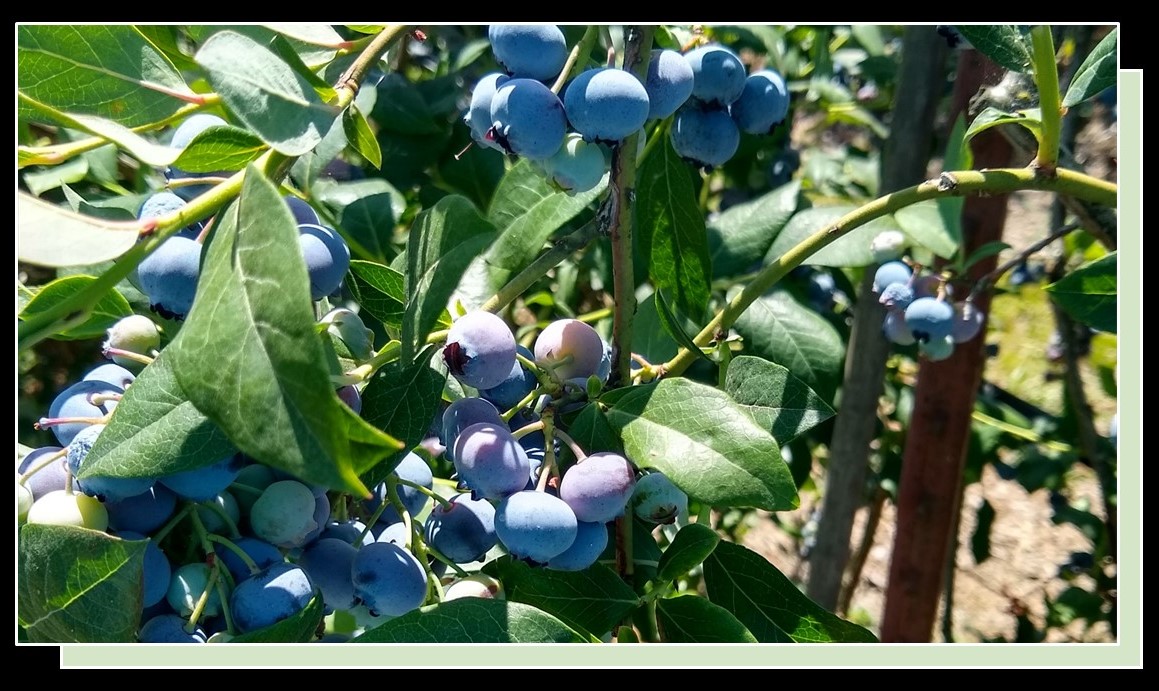
Recently I heard a most profound statement. While out blueberry picking, the farmer handed me a bucket and waved me off down the trail, pointing out beyond where I stood. He told me where the best picking was. He closed with “And don’t get distracted on the way.” Meaning, you’ll see berries, but if you want the BEST, and lots of them–keep going. Stay focused!
It was true. As I walked the dusty isles between the mounded rows of bushes, yes, there were beautiful blueberries scattered here and there. But as I took a closer look, they had been picked over. I could tell other folks stopped here, at the very beginning of the field and picked. So did the next picker and the next. They didn’t journey out, they stopped at the first sight of berries. I would venture to say, some may have grown frustrated, thinking, the berries weren’t ripe yet (since primarily only green berries were left where they stood) and not going forth caused their perspective of the field to be lacking.
As I picked handfuls of plump berries (at the other end of the field) I thought about how true his statement was. How often in our daily lives are we venturing along and “Oh, looky there.” Full stop.
Distracted.
Before we know it, we have dropped our (metaphorical) road map and we are all over the place. Distractions give way to swerving. Swerving gives way to detours. Yielding to distraction burns up time, energy and not to mention (but I will)—loyalty. How many of us can look back and grieve wasted time, breach of loyalty to our God? Distractions keep us and delay us from the best!
King Solomon, the wisest biblical guy wrote: “Look straight ahead and fix your eyes on what lies before you. Mark out a straight path for your feet; stay on the safe path” (Proverbs 4:25-26, NLT). What wonderful imagery. The idea isn’t a quick glance but conveying someone who studies what is ahead. Once understanding what is ahead, the plan is weighed out and the best route is calculated. Solomon goes on to say, “Don’t get sidetracked.”
Distracted.
The Pastor of the book of Hebrews wrote: “Let us run with endurance the race God has set before us. We do this by keeping our eyes on Jesus, the champion who initiates and perfects our faith” (12:1b-2, NLT). THIS is our specifically designed, God set before us “mark out a straight path” —plan.
What is it that distracts us most? What distracts us the quickest? What time waster consumes us? How, where are we spending our energy? Do we too stop and attempt to fill our bucket, all the while there is abundance further out in the field?
Point to ponder.
Life is like a berry patch. Look straight ahead. Fix your eyes. Mark out the straight path. Jesus.
Don’t get distracted.
In Him, DeDe (“Let us consider how we may spur one another on toward love & good deeds” – Hebrews 10:24).
Sovereign

When we think of the book of Jonah, what first comes to mind? Jonah and a big puking whale? As miraculous as that was, (not the puking part mind you, but the “in the belly of the fish three days and three nights” survival part – 1:17, 2:10). There is something much more spectacular if we were to take one step back and see the story framed from a distance.
To sum it up in one word, “Sovereign.” Supreme or ultimate in authority and power.
God is Sovereign.
He does what He wants. When He wants. How He wants and with whom He wants. And yes, where He wants. God has it all covered!
Jonah.
Jonah was a reluctant missionary prophet, (a contemporary of the book of 2 Kings). He was initially unwilling to go and do as God said. He didn’t like the Ninevites. God was sending him to the capital of the pagan, Gentile, powerful, Assyrian empire—his enemies (big bad, icky, mean, and evil people). After the thrown overboard and fish excursion, (scholars believe the fish deposited Jonah right back where he started—God didn’t offer a shortcut) when he finally got to Nineveh, he simply declares his 5-word sermon, “40 days and Nineveh shall be overthrown” (3:4).
The Ninevites repent and God honored their repentance, and they find His mercy.
In this story, these four short chapters (48 verses) declare how God commissions. How He patiently waits. Shows His divine steering. Displays His “I mean what I said.” Then eventually His lavishing 2nd chance. Not to mention (but I will) how He provides visual aids to get Jonah’s attention (disastrous storm, throwing sailors, fish, repentant city, plant, worm, and a scorching east wind). All flowing out from His character of compassion and gracious, slow to anger, abounding in love and faithfulness (Ex 34:6b). And yes, His justice to a person—and ultimately, a people group.*
God moved.
How many times have we been reluctant for any reason to obey God? Oh, we have our rationalizations* – our excuses. We draw out the lengthy diagramed blueprint of “WHY” we can’t or why (without saying it out loud)—we won’t. “FINALLY,” one of the key words to help summarize the story of Jonah. Perhaps we too need a finally in our story! May we (like Jonah) know, God means what He says, “You can do it My way or My way.” It is His way.
Yet may we notice too, God writes ‘turn around’ narratives and He graciously offers second chances within re-commissioning (3:1-2). When God calls us to something, He is faithful to see us through. To be frank folks, others are depending on our obedience!
God’s commissioning. Patience. Divine steering. His most gracious 2nd chances. His beautiful (non-coincidence) visual aids. If we are in what seems to be a weird season, look. Look for His visual aids, look for His hand pointing.
Does this resonate? It does for me.
God is Sovereign.
In Him, DeDe (“Let us consider how we may spur one another on toward love & good deeds – Hebrews 10:24).
*The Ninevites chose to go back into their sinful lifestyles, despite the very generous reaching of Yahweh. He patiently waited for them to return—for a bit. He waited 150(ish) years. Then He sent another prophet, Nahum. Jonah was initially unwilling, going to a willing people. Nahum who was willing, went to (a grown to be) unwilling people. Nineveh was eventually destroyed. God is Sovereign.
*Rationalizations are invented explanations that hide or deny true motivations, motivations that eventually lead to action. They are excuses people give while embracing grey areas, to the extent in attempting to avoid judgement. Simply, rationalizing, is the action of attempting to explain or justify our behavior or mindset. (Summary from Psychology Today)
Maturing Process

Anyone besides me, feel like their timeline has been messed with? It’s like playing “Pin the Tail on the Donkey” as we struggle trying to find when something happened, “Was it before, or maybe during Covid… I don’t remember.” This and the economic and political climate. The moral downward spiral of our country. And personal happenings in our families. We’ve had a few rough years! Years that if we were honest, we could say—it changed us.
But in this time, I am confident we all have learned something new about God or something re-affirming about His character. What about learning something about ourselves? If we are truly honest, we’ve seen a strength, a challenge, a weakness or even maybe, a sinful life pattern.
Tough times are an opportunity to learn. An opportunity to grow.
A proverb is a stated truth or offering of advice. “Without wise leadership, a nation falls” (Pro 11:14a – couldn’t resist). There is one modern proverb familiar to us all, “When life gives you lemons—make lemonade.” When life comes at us fast. When the unknown stares us in the face. When life is bitter. Make—lemonade. Use it. Make something good out of it.
We have a choice. We can attempt to hide or run. We can ignore it all or deny it’s happening. Or we can position ourselves for opportunity. Joy-filled opportunity.
James talks about this, “Dear brothers and sisters, when troubles come your way, consider it an opportunity for great joy. For you know that when your faith is tested, your endurance has a chance to grow. So let it grow, for when your endurance is fully developed, you will be perfect and complete, needing nothing” (James 1:2-4, NLT – emphasis mine).
Notice James emphasizes “let it grow.” Do-not-stop-the-process. Don’t stop it pre-maturely. In our current society, endurance (perseverance or steadfastness) is not a strong point. When things get tough, we bail out. We quit. We just sit down. Not to mention (but I will) how many of us have sabotaged the growth process because we knew it could be painful. It could be a boatload of emotional, physical, and spiritual work.
Joseph of the OT is a great example of making something good out of bitter lemons. His brothers (out of jealousy) threw him in a pit and later sold him as a slave (yup, bitter tasting). It gets even more sour for him; he is falsely accused, imprisoned, and forgotten. Rough times indeed. He himself didn’t grow bitter; he grew—better. What do I mean by that? Joseph embraced the process. Stayed obedient to his God. He didn’t let the trials ruin him.
Testimonies are birthed in trials.
God is a God of detail. He sees it ALL. Knows it all. I would offer, He says, “I can use this in your life, I can use it – if you will let Me.” Embrace and work the process. God used it all. All the ick. All the trying times to mature Joseph. He ultimately used Joseph to save Egypt in the big famine. He used Joseph to graciously restore his family. Remember what he said to his brothers “You intended to harm me, but God intended it all for good.” (Genesis 50:20. Read his whole story, chapters 37-50). What would have happened if Joseph gave up in the middle of it all? (Point to Ponder).
James didn’t stop when saying, let it grow, the maturing process God is working in and through you, he continues; (I’m paraphrasing) “but if you lack wisdom in the process, you need help in handling the trials? Ask God for wisdom.” Wisdom is God-given and God-centered discernment regarding the practical issues in life. I’ve heard it said that true wisdom is applying God to my situation. The bible refers to Solomon as the wise guy, the guy who wrote all those wise proverbs. Why was he so wise? He asked for it (1 Kings 3:5-12; 2 Chron 1:7-12).
I am challenged by this. May we see each season with joy as an opportunity to learn and grow from it. May we not be lazy in the maturing process. Don’t stop. Let it grow! Seek God’s wisdom. I am not belittling ANY pain, but what we learn from THIS tough season, what is grown in us, we take into the next one. Jesus is enlarging our capacity for Him, enabling us to see HIM more clearly. Live Him more clearly —all for His glory!
When life gives you lemons (count it all joy) and make some lemonade!
In Him, DeDe (“Let us consider how we may spur one another on toward love & good deeds” – Hebrews 10:24).
*There is so much more to be said, this is an excerpt from the teaching I brought at our June Women’s Breakfast at church. Each gal was given a “Joy Jar” to remember all that was shared, summarized, “When life gives you lemons, make lemonade.”
Pitched

I do puzzles on my iPad, it’s less messy and I can easily store the puzzle away. The part I enjoy most is when I slide the pieces around, looking for just the right fit. But then—they click into place. With a little effort, one piece at a time, all the pieces creating a beautiful picture.
This is what I love about the Word of God. God so wonderfully orchestrating the fitting of pieces, “all the pieces creating a beautiful picture.” Not long ago in my study time I saw the pieces click into place—amazing! I was looking at Leviticus 9:7, Moses to Aaron “Come to the altar and sacrifice your sin offering and your burnt offering and make atonement for yourself and the people” (NIV). Looking at the word “atonement” I went directly to the law (or principle) of first mention. Meaning, I went to the first time that word (doctrine or concept) is mentioned. The first mention often sets the tone for further usage.
Here’s what I found. Here’s what I love.
Atonement (“kapar” in Hebrew) is used 102x in the OT. The 1st time it is used is in Genesis 6—the flood story. “Wait. What?” I know, right? The flood. When God gave Noah the building instructions, He was very specific in the wood and to “pitch” it inside and out (v14). Pitch is kapar. What beautiful imagery. To pitch means to cover, to smear, even to caulk, waterproofing, sealing any gaps or seams. To “pitch” is prevention against water and unwanted pests and erosion from entering or affecting the material. Pitching changed the nature of the Ark; it was now waterproof inside & out. When God had Noah pitch the Ark, he was protecting and covering the remnant that He was making covenant with.
THAT literally is atonement. In Leviticus it speaks of Aaron the Priest who took a bull (killed it) then took the blood and atoned with it on the altar. The blood covers. It appeases. It pacifies the anger of a holy God against sinful man.
JESUS. He came to take care of it all. His blood covers and fills any gaps. His blood fully satisfies God—we are fully reconciled to God. And yes, our nature too is changed. We are covered and protected in the covenant. All this making us—fully pitched. Wouldn’t it make a great bumper sticker “Got Pitched.”
One piece at a time, all the pieces creating a beautiful picture.
Pitched.
In Him, DeDe (“Let us consider how we may spur one another on toward love & good deeds” – Hebrews 10:24).
*See: Gen 6:14; Lev 4, 17:11; Ro 3:25; Heb 9:12,22; 1 Jn 2:2, 4:10; Rev 1:5.
Giants to Slay

“Saul said to David, “You are not able to go against this Philistine to fight with him, for you are but a youth, and he has been a man of war from his youth” (1 Samuel 17:33, emphasis mine).
I LOVE the story of David and Goliath. Big nasty dude yelling stupid things about God and God’s people. But one day a boy comes to camp. Goliath continues yelling, “This day I defy the armies of Israel! Give me a man and let us fight each other” (v10). Goliath is not just asking for any opponent; he wants a man. A grown, trained, mature, “give me a challenge” —man.
There is but one response. David. Scholars believe him to be about seventeen(ish) when he told King Saul “Send me.” Saul’s response basically says, “You are but a boy, an adolescent. The situation is beyond you—beyond what you are.”
Saul tries to get David to wear his suit of armor. “I cannot go in these” he says (v39). There was no hesitation on David’s part. There was no “give me a minute while I figure this out.” He takes his sling, stick and smooth stones and RUNS toward Goliath. I must add, Goliath’s shield-bearer was out there too (v41). Not so tough now big guy! David swung his sling, the stone hit the target. Down went the opposing giant of a man. Goliath called for a man. King Saul declares a mere boy. David did what God called him to do. Victory!
What is God calling us to?
May there be no hesitation in us when we are called beyond what we seem to be. Perhaps too young, untrained, too small. Or possibly too big, or too old. And maybe, like myself, as I was the former student with the “reading disability.” Graduating High School with a 4th grade reading level. Even so, I surrendered to His call on my life to teach His Word—calling me to the Book. He has healed my mind, what once didn’t make sense, now makes sense—and then some.
Chances are we’ll run into a Saul now and then, but don’t let them pull out their measuring stick and attempt to size us up, it has nothing to do with what God can do through us! Let us not begin a wardrobe change, trying to fit into someone else’s stuff. But take up what we know. His word. His presence and RUN toward what God calls us to. I’m sure if you wish to yell, “For Narnia!” God will understand.
We all have giants to slay. Now go.
In Him, DeDe (“Let us consider how we may spur one another on toward love & good deeds” – Hebrews 10:24).
Presence

God has been showing me and teaching me about His countenance—His Presence. Through David, the Psalmists, God instructs us to “seek His face.” We find this specifically in Psalm 27:8 “You have said, “Seek my face.” (David responds…) My heart says to you, “Your face, LORD, do I seek” (ESV, emphasis mine). We find it again in Psalm 105:3-4, “Let the hearts of those who seek the LORD rejoice! Seek the LORD and his strength; seek his presence continually!” In these latter verses we see “seek, seek, seek.” Seek Him. Seek His strength. Seek His presence continually. It isn’t a one and done deal, it is ongoing. What an exciting, yet in this wild and crazy busy world—a challenging command. A challenging demand.₁
David uses two Hebrew words to stress we are to “seek” God. Although the words differ, the sense is the same and could be paraphrased, “Carefully search for the LORD and His strength; continually and eagerly seek Him.
Now that we have the method (seeking). WHAT are we after? We are to seek—His face. Face means (as some Bible translations refer to it) as presence. Paniym (in Hebrew) interestingly represents not just the “face” but the whole person. When we seek God’s face and stand before Him, face to face, (metaphorically, spiritually) we get His “wholeness.” We have access to His countenance. ALL His qualities and features.
I felt God showed me it’s like those board cut outs we see at the fair, life size with a humorous picture on the front. As you stand behind it, you lean forward and put your face in the cut-out hole, all that is genuinely seen of you is your face, the rest is a sketched illusion.
May I offer to help paint the picture, God is conveying in the above verses; He wants us to step around the board cut-out (possibly our sketched perspective) and receive ALL of Him. This isn’t an irreverent move, or rash intrusion, but an invitation. Being in His presence, full-on front, with no barrier, the whole God package—we have His love, mercy, grace, wisdom and yes, His justice.
James wrote, “Draw near to God and He will draw near to you” (4:8a). The context is replacing our desire to sin with our desire to experience God’s presence and His availability and power to purify us. It is in His presence (slipping behind the board cut-out beyond just the face image) we have access to His wholeness. It is likened to when I stand face to face with a friend, I have access to their eyes, ears, mouth and even their hands. I have and see all their features. Yet, with this in mind, many of us take on the sketched illusion that God is mad at us and when in His presence, we only have His back—He is faced away. God is not mad at you; He is madly in love with you. We must look behind the perceived illusion and truly see Him.
It is amazing how (and expect it) the enemy knows we’re heading to “seek Him” – he’ll do anything to keep us from God’s Presence. We need to be Presence seekers, abiders and “fight for it” kingdom members!
Presence.
In Him, DeDe (“Let us consider how we may spur one another on toward love & good deeds” – Hebrews 10:24).
*I recently spoke on “Emotional Freedom” at our women’s conference, this is an excerpt from that teaching. (Click this link for part one: https://inspiredfountain.com/2022/03/13/before-you-pray-them-away/ and part two: https://inspiredfountain.com/2022/03/18/storm/ ).
____________________________
1A command is an order and comes with authority. Demand is a firm request that does not come from a position of power. God gave the command; we demand of ourselves; it in our response and behavior—we seek HIM! So yes, in this wild and crazy busy world—a challenging command. A challenging demand.
Promotional Picture above from Oriental Trading
Remember

Remember.
We might say we need to remember that Lincoln is the capital of Nebraska for the seven across answer on a crossword puzzle. Or remember that in “1492 Columbus sailed the ocean blue” to help our children with their homework. Facts. Mere facts.
However, remembering in the Bible is different. It is mentioned some 235+ times. Jewish culture treats remembering as a behavioral response. Conveying that hearing and obeying are synonymous. In the Hebrew, it literally means “to properly mark, so as to recognize.” The recognizing demands a response. The first mention is found in the story of Noah. God puts Noah, his family, and the animals in a big boat. Outside, the rains are in a downpour. The waters rise and the boat stays afloat for many days. “But God remembered Noah and all… and He sent a wind over the earth and the waters receded” (Genesis 8:1). God remembered. Did He temporarily forget? No. The Omniscient God (All-knowing) does not forget. His plan was implemented and in process. He remembers, He rescues, and He acts. God marked Noah. Genesis 9, the ark now sits on dry ground. Noah and family are out, and the animals disperse. God promises to not do THAT again—promise to not destroy everything with water. Sealing the deal, He gives a rainbow as a reminder.
“I have set My rainbow in the clouds, and it will be the sign of the covenant between Me and the earth. Whenever I bring clouds over the earth and the rainbow appears in the clouds, I will remember My covenant between Me and you and all living creatures of every kind. Never again will the waters become a flood to destroy all life. Whenever the rainbow appears in the clouds, I will see it and remember the everlasting covenant between God and all living creatures of every kind on the earth” (9:13-16 NIV, emphasis mine).
The sign of the rainbow was a reminder—to GOD. Even though mankind seems to always keep mucking it up, continuing in disobedience—yet when the bow appears, He remembers. His response will be consistent with His covenant.
Remember.
Isaiah speaks on behalf of God, “I, even I, am He who blots out your transgressions, for My own sake, and remembers your sins no more” (Isaiah 43:25). He Himself declares before Moses, “The LORD, the LORD God, merciful and gracious, longsuffering, and abounding in goodness and truth” (Exodus 34:6). Oh, the glorious mystery of His mercy, of His grace! God’s response is consistent with His character.
God often directs His people in the Old Testament to remember their past and all that He had said and done for them: “Remember that you were slaves in Egypt and the LORD your God redeemed you… Remember the Sabbath… Remember the law…” Why? So, their behavioral response would reflect relationship, they are His. Remember.
Jesus also speaks of remembering. The Last Supper: Jesus instructs the disciples to take the bread and the cup, representing His body and blood and “Do this in remembrance of Me” (Luke 22, 1 Corinthians 11). His intent was not assuming we’d forget Him throughout the week, and as we walk into church, seeing the elements up front, and think, “Oh, that’s right, I forgot about Jesus.” No, when we come to the table, and partake of the bread and wine, we remember—we remember ALL that He is, all that He did. We remember His covenant, His character. And yes, He expects a response. We properly mark, honor and recognize God, a response of worship, and of lifestyle.
Whatever it may take for us to remember, to invoke a Godly response—do so. I am right-handed, on my right little pinky finger, I wear a simple gold ring. I wear it to remind me, that whatever I reach for in life, it had better be under the authority of God’s character, and it be in line with God’s covenant.
Remember. Behavioral response.
In Him, DeDe (“Let us consider how we may spur one another on toward love & good deeds” – Hebrews 10:24).
Seeing Them

“Let each of you look not only to his own interests, but also to the interests of others.” Paul, letter to the Philippians (2:4).
I am reminded of a morning while driving to work a few years ago. Cruising along, the traffic seemed heavier than normal for 5:15am. Looking in my rear-view mirror, I saw the pretty orange lights of a big rig truck behind me. The poor guy was trying to maneuver through the morning commute. Cars full of folks that I am confident had not yet been caffeinated to complete awareness of their surroundings. Like that of a Chess game, I figured if I move over one lane, then move forward around this little white car, I could make room for the big truck to make his move. Off I went. Doing so, the truck driver saw the “move” and made his own advance. As we continued down the road for a few minutes, just as I began my exit off the freeway, the truck driver passed on by, but NOT before reaching his hand out with a hardy wave of “Thanks.”
Do we look and see those around us? Are we aware? Do we CARE? Do we see the need and heed? Or do we see and ignore with a hastily “Go around me!” Paul speaking to the Christians in Phillipi, proceeding the above verse stating: “Make me truly happy by agreeing wholeheartedly with each other, loving one another, and working together with one mind and purpose. Don’t be selfish; don’t try to impress others. Be humble, thinking of others as better than yourselves” (vv2-3, NLT).
As we cruise through this life—may we be aware. May we take time to look and see how we can help others. When was the last time we made a conscious effort to look into the eyes of those we are with? May we offer a smile to the cashier and ask her how her day is going, looking at her nametag and calling her by name. May we hold the door while another carries heavy bags of groceries.
Our words of encouragement don’t need to be big and profound, a simple text of “Thinking of you” can go a long way. Perhaps, when possible, hold them, laugh with them, cry and pray.
Seeing them.
In Him, DeDe (“Let us consider how we may spur one another on toward love & good deeds” Hebrews 10:24).
The Pattern
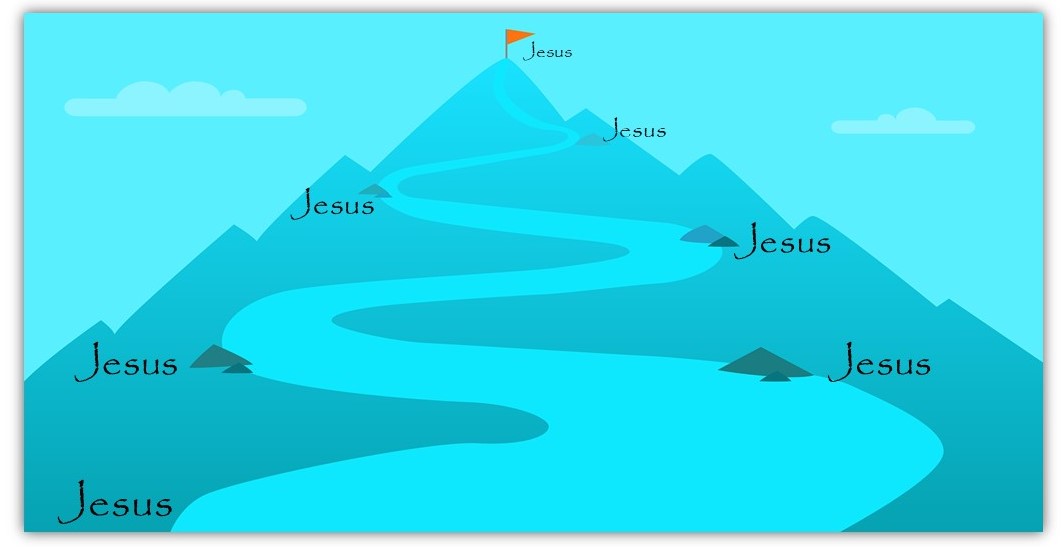
The trendy slogan “What Would Jesus Do” from the 1990’s has pretty much faded away, yet the principle is true. The principle is good. Following what Jesus did is always the safest, the smartest, the most impacting—the BEST way to go.
Peter knew this.
Jesus.
Jesus is told by an agonized father; that his daughter is very sick (Mark 5). Soon, some men from Jairus’ house came with the news, “Your daughter is dead. Why trouble the Teacher any further?” Taking Peter, James and John, Jesus goes with them to Jairus’ home. There was a great commotion with loud weeping and wailing. Sending them all out (ah…quiet) Jesus took just the mother, the father and the three disciples. Taking the little girl by the hand, He said, “Little girl I say to you, arise.” Immediately her life was restored. All were overcome with amazement (vv22-42). Peter was there—he watched Jesus.
Peter.
Peter was in Lydda when he was sent for (Acts 9). Tabitha, a good woman, a disciple of Jesus has died. Peter went to Joppa. When at the home where Tabitha’s body lay, he asked everyone to leave the room, the loud mourners were sent out (ah…quiet). “Tabitha, arise” he said. Her life was restored. Taking her by the hand, he helped her up. He called the friends and family back in, seeing her, the news spread throughout the village, and many believed in the Lord (vv 36-42).
When the situation seemed hopeless, Jesus went. Peter too. Jesus told the noise to leave. Peter too. Jesus declared “Arise!” Peter too. Jesus extended His hand. Peter too. In both scenarios, life was restored.
Jesus was Peter’s pattern.
A pattern is a model or design used as a guide. When Jesus called His disciples, He said, “Follow Me.” Jesus—the ultimate Guide.
Life can be filled with twists and turns. Known and unknowns. Joy and frustrations. What a gift God gave us to watch and learn from Jesus as He navigated the roller coaster ride of humanity. He was quiet when needed. Spoke boldly when required. Slipped away for Father time. Loved unconditionally. Pardoned the guilty. He confronted the lies. Taught among confusion. He led with righteousness.
This year, may we look to and reach for THE Pattern. Choose our steps, make our decisions, speak, love, confront, slip away for Father time—as Jesus did. Impacting. What grace was gifted to us, may we extend the same to others.
In Him, DeDe (“Let us consider how we may spur one another on toward love & good deeds” – Hebrews 10:24).
Peace

Have you ever felt a shrug of heart, you know that “Blah” feeling? Perhaps the blah is leading to anxiety or even agitation. The only way to put it into words is “I’m off, just… off.” May I offer, something may have shifted. Shifted from the sidelines to the seat; something/someone is now sitting on the throne of our heart. This, my dear friend is found deep in the factory setting in the design of man, a component known as the Peace Barometer. (Okay, maybe not—but that is what I call it).
Peace.
In the Old Testament, the word for peace (Hebrew) is shalom. In short, meaning tranquility, harmony, wholeness. It has been referred to as evidence of not having strife or war. I would define peace not necessarily in what you do not have, but in what you do have. Let’s give a nod to the New Testament: The word for peace (in Greek) is eirene, which literally means “to set at one.” The picture is something that was once set in place has either been removed or toppled over (think of the game Jenga, remove foundational pieces and over it goes) chaos, strife, irritation even war are the results. Once it is set back in place—PEACE reigns.
Here’s a brief (VERY brief) explanation: Remember God and man (and Eve) in the Garden, their relationship was good and whole (peace-filled). Then there was a sin outbreak, the relationship was broken—toppled over. For generations (begetting) generations there was a missing element, what was, is no longer. Later Isaiah speaks of the coming of the Prince of Peace and the government resting on His shoulders (9:6). Fast forward to Luke chapter 2, the angels announce, “Glory to God in the Highest and on earth peace…” (v14). Peace was back on earth among man. Jesus is the missing piece (peace). He came bridging the gap (which was big and ugly) between man and his God. He set it all back in place. Relationship restored. God the Father planned it. God the Son accomplished it. God the Holy Spirit applied it. The God package delivered. PEACE REIGNS.
Paul writes, “Let the peace of Christ rule in your hearts…” (Col. 3:15). Here’s where the peace barometer comes in: If God is not ruling on the throne of our heart, be assured another will occupy it! We will know peace to the degree that we YEILD to Christ, the Prince of Peace, if NOT—chaos, strife, irritation.
Paul again, “Do not be anxious about anything, but in everything by prayer and petition, with thanksgiving, PRESENT YOUR REQUESTS TO GOD, and the peace of God which transcends all understanding will guard your hearts and minds in Christ Jesus” (Phil. 4:6-7, emphasis mine). Presenting to God means, we are NOT to go looking for solutions elsewhere. If we do, we can potentially be placing things on the throne that shouldn’t be there. Our peace barometer will TILT if Jesus is not the center of our life, the One residing and reigning on the throne of our heart. Peace is not about peaceful circumstances; it’s about yielding to the presence of Christ. Let’s cut to the chase: God doesn’t come to take sides (help sort out our stuff) He comes to TAKE OVER. It is His design, His throne.
“May the God of Peace who makes everything… holy and whole, make YOU holy and whole, put you together–spirit, soul and body” (1 Thess. 5:23, paraphrased, The Message). God the Maker—God at the center—God on the throne.
How is our peace barometer? What is the condition of the throne of our heart? What is there? Who is there?
Peace.
In Him, DeDe (“Let us consider how we may spur one another on toward love & good deeds” – Hebrews 10:24).
God is in the Not
Expectation. “A strong belief that something will happen” (so says Webster’s Dictionary). I’d offer, we generally take it further. We not only believe it will happen, but we list out HOW, WHEN, and WHERE. We define the outcome. Once the occasion has come, we hold it up to our expectations and scrutinize as if looking at a counterfeit bill with squinted eyes.
Our expectations (although good at times) can be a distraction.
Recently I went through some health issues, and still recovering. What an amazing learning season. As I was preparing for an upcoming surgery, I was rather anxious. Taking Paul’s divine inspired words to heart, “Do not be anxious about anything, but in everything, by prayer and petition, with thanksgiving, present your requests to God” (Phil 4:6, NIV). I prayed. I prayed specifically. I prayed the surgery would be “textbook.” I prayed with heartfelt longing. I wanted God’s best. I wanted Him.
Thanking God—off we went.
Following the surgery, the surgeons came in and said everything went well, one stated (without any prior prompting) “It was textbook.” (Check √). As some time went on, I grew exhausted. In my exhaustion, I picked up my “expectation list” and began to review it. Running my finger down the list, I was looking for that warm—wrapped—in—blanket—presence of God. I didn’t sense it. I had in the past. Where were You God? Where are You?
When we ask God pointed questions, be ready for an answer.
“Besides the textbook surgery (I can almost see God winking) … How was your pain level, were you in pain?” No, I was not. “Were there complications?” No, there was not. “Are the doctors concerned for the outcome?” Nope, they are not. “Will there be any long-term limitations?” No—not.
God is in the not.
So often we look for highlighting moments worthy to write in our journals. Things, events that stand out as extraordinary (There WILL be those). But, how often we fail to see, in the quiet, tucked behind our personal hype—God working. God orchestrating like only He can.
Through all this, I have asked God to move me beyond MY expectation, to true anticipation: awaiting, preparing, longing to see how HE moves. King David wrote: “Let the morning bring me word of Your unfailing love, for I have put my trust in You. Show me the way I should go, for to You I lift up my soul…I hide myself in You. Teach me to do Your will, for You are my God; may Your good Spirit lead me on level ground” (Psalm 143:8-10). Putting my trust (unconditionally, without my advice) in God, WILL enable Him to “show me.” Giving myself, hiding myself in Him, enables Him to “teach me.”
THIS has been a “write in my journal” (if I had one) moment. Highlighted. Circled. Underlined. “Positioning ourselves according to OUR expectations distracts us, potentially missing God in the process.”
God is in the not.
Please know, YES, there are times we need to contend, to move beyond an appearing “No” (prayer, fasting, spiritual warfare) but there are times, we need to accept God working, giving Him glory.
In Him, DeDe (“Let us consider how we may spur one another on toward love & good deeds” – Hebrews 10:24).
A Reason for Thanksgiving

Turkey, dinner rolls, mashed potatoes, gravy, green beans, salad. (Breathe) Dinner plates, napkins, silverware, glasses, AND centerpiece. THANKSGIVING! I love this holiday. Food, family, and football. A set time to pause, consider and ponder what we are thankful for.
There are seasons when it may be difficult to pull forward on the shelf of our life something to be thankful for. We may have just lost a job or a loved one. Or our bank account matches our emotional bucket of strength—empty. Yet there IS something to be thankful for. You have a REASON for thanksgiving.
The great Psalm of thanks opens with, “Give thanks to the LORD for He is good” (136:1). The Hebrew language renders a beautiful word picture, “Give thanks…” painting the idea of reverent acknowledgment and of worship—with extended hands.
“His love endures forever.” The author found it needful to repeat this phrase twenty-six times throughout the rest of the Psalm. This word love (in Hebrew) is “hesed.” We know it biblically as mercy, goodness, loyalty and steadfast love and even—grace. What a pivotal word.
This mercy-filled love is enveloped in personal involvement and commitment to relationship. That is our God. He is pleased when it is reciprocated “For I delight in loyalty (hesed) rather than sacrifice, and in the knowledge of God rather than burnt offerings” (Hosea 6:6, emphasis mine). Our God desires faithful love in relational awareness of Him.
His lovingkindness is precious (Ps. 36:7) marvelous (Ps. 17:7) undeserving (Ps. 103) abounding (Ps. 86:5) reviving (Ps.119:159) satisfying (Ps. 90:14) and everlasting (Ps. 103:17). Thankful yet?
David’s well known and beloved Psalm 23 (v6) “Surely goodness and MERCY will follow me all the days of my life.” Mercy is hesed. This “follow” is not a mere tag along behind, but—PURSUIT. David knows the concept of pursuit. God’s unending, steadfast love, full of mercy, pursued David. He pursues us! He pursues YOU. He is unrelenting. Aren’t you GLAD He does not let up, let go! Reason for thanksgiving indeed! “Give thanks to the Lord for He is good. His love endures forever.”
As we share around the table amongst the laughter and love, the blessing of health and family, may we too declare, “Oh give thanks to the LORD, for He is good, For His lovingkindness is everlasting. Let the redeemed of the LORD say so…” (Psalm 107:1-2a)
From our table to yours. Thankful.
In Him, DeDe (“Let us consider how we may spur one another on toward love & good deeds.” – Hebrews 10:24)
Encourager

Encouragement, we all could use it now and then. Whether in the form of a kind word, loving gesture or standing along side us in troubled times.
Recently I was studying the conversion of Saul (known later as “Paul”) in Acts 9, when I ran head long into Barnabas. I love this guy. When Saul went to Jerusalem and attempted to have fellowship with the disciples, they were afraid and would not accept him. They didn’t believe him to now be a true disciple (a learner, in this case, a learner of Jesus, one who positions himself to understand, accepting the instruction given and makes it his rule of conduct). Saul’s prior “conduct” was contradictive of the teachings of Jesus. What was this man’s angle? The man who “breathed out murderous threats” (9:1), who now claims to be a Jesus follower and wants in their ranks.
- We tend to fear what we don’t understand, what we don’t see. They hadn’t seen any true evidence —yet.
“But Barnabas took him and brought him to the apostles” (v27). Barnabas, (Joseph) a Levite, he is first mentioned in Acts 4:36. He is nicknamed by the apostles “Barnabas” which means “Son of Encouragement” which is quite fitting as he introduced the newly converted Saul to the circle of believers. Barnabas also stood up for the young John Mark when Paul did not want to take him with them on their missionary journey (15:36-39).*
What did Barnabas see in Saul that the others didn’t? We can speculate till the cows come home, yet it seems to be Barnabas’ nature; he was an encourager (one who invokes courage with presence and action). After all, he did take Saul to the apostles, testifying that Saul HAD an encounter with Jesus and Saul “preached boldly in the name of Jesus” (v27b). I doubt Saul went kicking and screaming, but what a bold act for Barnabas, putting his own relationship/reputation on the line with the spiritual leaders for the former persecutor of the church now turned promoter.
Not only was Barnabas an encourager, but he was also a reconciler. Placing Saul before the church leaders, was an act of reconciliation, for Saul AND the leadership and the believing church. Reconciliation where there was once strife, hostility, and of recent, misunderstanding.
Jesus said, “Blessed are the peacemakers, for they shall be called the sons of God” (Matthew 5:9). Many read that quickly and interpret it as “peacekeeper.” There is a difference between maker and keeper.
Peacekeepers listen, notice, pay close attention and draw others in (Group hug). Peacekeepers tend to the comfort of others, embracing both sides of an argument—equally. Attempting to please both sides, hoping to not rock the boat—playing a balancing act. But peacekeepers can make themselves small and keep their own voice quiet to avoid conflict, settling for a false peace in hopes of avoiding relational fallout.
Peacemakers promote God’s peace, (total well-being and wholeness through the redemptive work of Jesus) with “whatever it takes” tactics. It is active, intentional, and discerning. They engage in messy, back-breaking, work—and they don’t care so much whether anyone is comfortable (including themselves). Their goal is God’s goal. Bring what has been toppled over back into its slotted place, erecting God and God stuff at the center of it all, which is true peace.
Barnabas was an encourager, reconciler, and peacemaker. May we all have a “But Barnabas” in our life. May we all BE a “But Barnabas” for others.
In Him, DeDe (“Let us consider how we may spur one another on toward love & good deeds” – Hebrews 10:24).
* Paul later sees the good (and God) in Mark and makes mention of him (Col 4:10; 2 Tim 4:11; Phm 1:24).
Seasons Unaware

I love autumn, the crisp morning air, the weather changes from hot sunny days to now wrapping yourself in your favorite quilt. Oh, and those vibrant yellow, orange, and red leaves. I find it fascinating that so much beauty can come from a season of change.
Seasons.
With so much uncertainty in the world, there is however a guarantee, according to God’s design. There WILL be another season. Fall and eventually winter. Winter turns to spring, where again it carries new life bursting forth.
The Lord has shown me that just as the atmosphere changes (often it is packaged within the holiday season) we too can personally experience a change of season. This season comes with a potentially entangled set of habits or life patterns and not to mention (but I will) a set of emotions.
For some of us our season is lingering. The cold emotional winter drags on, and on and on. Or perhaps something triggers you and an unhealthy season reappears. A season of your life you were confident had passed. A season when you chose quite unwisely, and the memories haunt you like a hungry hyena. Or you flip the calendar page and there it is – THE month. The one you dread. The month you experienced betrayal or the death(s) of a loved one. *
I experienced something similar a few years ago. It was a beautiful sunny fall day. I was driving to my granddaughter’s school to pick her up. Once in the parking lot, backing up, parking, stepping out—instantly I stopped—feeling complete dread and sorrow. Then again walking towards the school. I asked God, “WHAT is this?” He reminded me, the same scenario; sunny day, cool and crisp, orange, and red leaves, school buses, and it was HERE! Here, I received a phone call with very traumatic news. Sorrowful news – stop in your track’s news. News that tore my family to its very core. It was all so familiar, in a way that I was not aware.
With this revelation, I knew this needed to be broken! “In Jesus’ name!” I couldn’t go through life filled with sorrow whenever the leaves changed. So, I took authority over the familiarity, over the dread, the sorrow. Breaking the emotional AND spiritual hold. The fall season still gives brief twinges of pain, but no longer holds its pain-filled traumatic grip on me.
God does not want us living in the past. Each new day is a gift. If we keep our hands full of the old stuff — there is no room for the new. And folks we got us some stuff. And if we are not certain what it is that is overwhelming us—ask God!
Times and seasons CAN be broken! Daniel praised God saying: “Praise be to the name of God for ever and ever. Wisdom and power are His. He changes the times and the seasons; He removes kings and raises up kings; He gives wisdom to the wise. And knowledge to those who have understanding. He reveals deep and secret things; He knows what is in the darkness, and light dwells with Him” (2:20-22).
Pray with me: “Father, may You reveal to us the seasons we may not be aware of. Seasons we only feel the effects. Show us. Perhaps it is time to lay a few things down, some habits, patterns and emotions. Empty our hands as we wait in expectant joy as You “… change the seasons.” Break the familiarity in JESUS’ NAME! Free us. Let there no longer be “stop in our tracks” unaware – but moving forward with each new day. With NEW stuff in our hands. Good God stuff. Your stuff. All for YOUR glory. Amen.”
Please know, we don’t forget. However, we allow ourselves to be freed from the heavy blanket of the past. God has new, restoring, healed, and healthy seasons.
- He changes.
- He removes.
- He gives.
- He reveals.
- He KNOWS!
*For my brothers, Jeremy and Jeff—when the fall season hurts. Yet, God!
He brings the new.
In Him, DeDe (“Let us consider how we may spur one another on toward love & good deeds” – Hebrews 10:24).
Selah, Pause & Praise

Our lives tend to ramble from one crazy thing to another in quick motion. Our pockets buzz with Twitter, Instagram, texting and of course Facebook. All the while #hashtagging each moment of each day. Our lives—on the go.
Fast.
Busy.
Tired.
I have one word, Selah.
“But Thou, O LORD, art a shield for me; my glory and the lifter up of mine head.
I cried unto the LORD with my voice and He heard me out of His holy hill.
Selah” – King David, Psalm 3:3-4
Selah is used seventy-four times in the Bible. All but three are in the Psalms, the others are in the Prayer of Habakkuk (3:3,9,13). The purest meaning of the word really is uncertain. A common thread however conveys Selah to be rendered from two Hebrew words: salah —to pause. The other, salal, meaning to praise.
Scholars creatively speculate: Selah, due to its poetic usage in the Psalms can refer to a musical or worshipful note indicating a transition. “Here, take a breath, here” (before moving on). It can be a crescendo (the high point in the gradual increase of intensity). Or it can be a musical interlude; a pause designed to disrupt or to draw attention (may I offer) draw attention in the pause. Pause leading to rest and reflect on the preceding words. Meditating on the depth of insight.
The Psalm above was written when David was being pursued by his “seeking the throne for his own” son, Absalom. He opens the Psalm with, “O LORD, how many are my foes! How many rise up against me! Many are saying, “God will not deliver him.” Selah.” Can you hear the earnest tone, the anguish of heart? Verse 3: “BUT YOU are my shield around me, O LORD, YOU bestow glory on me and lift up my head. To the LORD I cry aloud, and He answers me from His holy hill. Selah” (emphasis mine).
How many of us need to gracefully transition from one circumstance to another? Selah. Perhaps take note and appreciate the high point. Selah. When was the last time we stood still and took a breather, a serious breather —we paused and praised? Selah. When was the last time we rested and truly became aware of Who God is and what He is doing?
But You, O LORD. Selah.
An amazingly beautiful word. May we too find selah among the poetry of our lives. Pause and praise.
In Him, DeDe (“Let us consider how we may spur one another on toward love & good deeds” – Hebrews 10:24).
Intentional
Being intentional is defined as being committed to giving our attention to what is important to us. What we prioritize we are eager and ready to address.
King David was intentional when bringing the ark of God back to Jerusalem – the second time. The first attempt didn’t go so well. Things went terribly wrong. They loaded it up on a cart and headed out (2 Samuel 6). The oxen stumbled, Uzzah reached out to stabilize it, but “the LORD’s anger burned against Uzzah because of his irreverent act” – Uzzah died. He was not authorized to touch it (see Numbers 4/see also Leviticus 10:1-2, regarding “unauthorized”). The narrative states that David was not only angry but was also afraid – and now not willing to proceed. So much went wrong in that first attempt. Yes, David was zealous (ready & eager) but zeal alone, zeal without knowledge and what doesn’t have God’s approval – makes for a terrible mess. (Anyone? Or is it just me?)
David soon finds out that where he left the ark (with Obed-Edom) he and his whole family is being greatly blessed. David realizes perhaps the ark is not the problem. The problem was his transporting method. There was God-given instruction to be followed (Exodus 25:12-15, leave the poles in the rings, so that there would be no mistake on HOW to carry it – see also Joshua 3:3, the Levites carry the ark). David prioritized the ark of God and again committed to bringing it to Jerusalem, but this time he did it the right way. He was intentional. “It was because you, the Levites, did not bring it up the first time that the LORD our God broke out in anger against us. We did not inquire of Him about how to do it in the prescribed way” (1 Chronicles 15:13). The prescribed way. There was consecration, sacrifices and worship. They brought the ark to Jerusalem. The story goes on to say after all this, “The LORD had given him (David) rest from all his enemies around him” (2 Samuel 7:1).
David was also intentional about God’s presence, “I have set the LORD always before me. Because He is at my right hand, I will not be shaken” (Psalm 16:8). He was intentional about God’s word, “I seek You with all my heart; do not let me stray from Your commands. I have hidden Your word in my heart that I might not sin against You. Praise be to You, O LORD; teach me Your decrees” (Psalm 119:10-12).
Being intentional is prioritizing with a plan and putting that plan into practice.
One of the greatest enemies of the heart is regret. Disappointed over something that has happened or a missed opportunity. Regret what we did. Regret what we “didn’t.” May we all like King David, be intentional about the things of God. Our relationship with Him and with others. If needed, make some adjustments. Stay focused. Don’t get distracted. Do it His way. Be purposeful of His presence –His word. What a heartache if we heard the whispered “If only I had…” escape from our lips because we were not –intentional.
Intentional is the word for the year at our church. I love it. I have embraced it.
In Him, DeDe (“Let us consider how we may spur one another on toward love & good deeds” – Hebrews 10:24).
Ishmael Issues

Have you ever had a goal and then do a course alteration? But in doing so, you find there were huge ramifications with the change?
So it was with Abraham* of the bible. “The LORD had said to Abram, “Leave your country, your people and your father’s household and go to the land I will show you. “I will make you into a great nation and I will bless you; I will make your name great, and you will be a blessing. I will bless those who bless you, and whoever curses you I will curse; and all peoples on earth will be blessed through you” (Genesis 12:1-3, NIV).
So off he goes. Through some trekking and delays, he and his wife, Sarah* and Lot, his nephew, end up in Canaan. It was here God said, “To your offspring I will give THIS land” (v7, emphasis mine). He was home. Abraham built altars to the Lord and pitched his tent in many places within Canaan. Soon a famine comes. Abraham loads everyone up and leaves and goes to Egypt in hope of finding provision. He goes without God telling him to. You can almost hear God say, “Wait, where are you going?”
Once in Egypt, Abraham prompts Sarah to say she is Abraham’s sister (a half truth, she is his half-sister). Due to Sarah’s beauty, Abraham was safer as her brother, than her husband (as husband, he’d likely be killed). Sarah was taken into Pharaoh’s palace. Pharaoh at first treated Abraham well, because of Sarah. He gave Abraham sheep, oxen and donkeys. He also gave him male and female servants (Genesis 12:16). Personally, a gift certificate would have worked (just kidding).
This is where it gets interesting. Pharaoh finds out Sarah was Abrahams’ wife. Just in time. God protected Sarah (and her future offspring to be only from Abraham). They were sent out of Egypt with all Abe had acquired while there. Abraham acquired “female servants” – one was named Hagar (Genesis 16:1). To make a long story short: God had promised Abraham descendants, (Genesis 15:1-6) yet he and Sarah had no children. So, Sarah gave Hagar to Abraham to bear her a child (as was the custom of the day). Ishmael was born.
But Ishmael was not the true heir. Isaac – Abraham and Sarah’s birth son was the true promised heir of God (Genesis 17:15-21; 21:1-7). Ishmael and Hagar are later sent away and the Ishmaelites grow into the Arab countrymen we know today, which the majority (not all) make claim to follow Allah (which is NOT Yahweh) within the Muslim religion. Since then, there has been friction between the Jewish nation (and Christians) and a large community of Arab Muslim practicing people. The Muslims claim that their ancestor Ishmael was the heir to the promise (but the holy scriptures of the Bible state otherwise).
Course alteration.
If Abraham had stayed put in Canaan and trusted that God would take care of him, provide and protect him and not flee to Egypt – where he tried to fix things on his own, he would not have brought back Hagar. There would not have been an “Ishmael Issue.”
I find it fascinating that when Abe and crew were in Canaan, Abraham built altars to God (symbolic of worship) but while in Egypt there is no mention of altar building. Shouldn’t THAT have been a red flag for Abe? His situation, his location, his heart motive didn’t constitute worship for his God. He wasn’t where he was supposed to be – worship didn’t flow from it. If we can’t worship God where we are – we are in the wrong place. Abraham did go back to Canaan, where he again built an altar to the Lord (Genesis 13:12,18).
How many times do we try to fix things ourselves? Go where we are not directed to go. Even if the detour is meant to be temporary, anything away from God’s will, can prove disastrous. Endanger others. Perhaps go and bring back what was not intended for us. When we do, we too have Ishmael Issues. Consequences. Hardships. Even birth friction where not needed. True obedience is doing what God says, when He says, and how He says to do it. Any course altering is ultimately, disastrously, sadly – disobedience.
Course alteration.
In Him, DeDe (“Let us consider how we may spur one another on toward love & good deeds” – Hebrews 10:24).
*Abram’s name wasn’t changed until chapter 17, for familiarity’s sake I used Abraham. The same for Sarai, changed to Sarah.
Note: Canaan was the Promised Land – we see the history of the Israelites took quite a few detours and delays to get back home.

 Inspired Fountain