Latest

Make Every Effort

Our greatest weakness lies in giving up. The most certain way to succeed is always to try just one more time.” Said Thomas Edison. Who, after a thousand attempts, succeeds with the invention of the light bulb. Try just one more time!  

The four guys carrying the paralytic in Mark chapter 2 understood this. Jesus is preaching to a packed house (literally). “Since they could not get him to Jesus because of the crowd” the story continues with the guys making an opening on the roof and lowering their friend right-in-front-of Jesus. Jesus seeing their faith, He heals buddy number five, because they kept going—creatively going, one more time!

We are lazy people (in general) we give up quickly or keep our efforts minimal at best, after all, we wouldn’t want to exert ourselves (Phew). We take this into our God walk as well. Peter wrote, “By His divine power, God has given us everything we need for living a godly life” (2 Peter 1:3, NLT). He continues, “In view of this, MAKE EVERY EFFORT” (v5a, emphasis mine). Give all diligence in making good use of what God provides, apply it—apply yourselves! Peter goes on, saying add to your faith; moral excellence, knowledge, self-control, steadfastness, godliness, brotherly affection, and love (vv 5-7).

Make every effort. I would liken it to the Israelites in the wilderness. God provided the manna to survive.* They were to go out and gather it, (yes, they had to work to get it) diligently they worked, adding to their jar each lil flake (Exodus 16). They wanted to eat, continue to endure? They needed to put forth the effort to obey and get what God provided.

YEARS ago, we played a computer game (without graphics—GASP!). The game was a journey where we had to make numerous decisions to lay down what was in our hands, to pick up something that benefited a successful journey. It is the same in our God walk.  What are we going to lay down?  What are we going to surrender to pick up what God has for us (moral excellence, knowledge, self-control, steadfastness, godliness, brotherly affection, and love).

Do WE put forth an effort to get the God stuff? Do we make time? Make room? Make it a PRIORITY to be in His word, talk to Him—obey Him! Or do we mess around, give lil effort or quit altogether. Our very thriving existence depends on the effort we put into it!  One more time. Today.  One more time. Tomorrow. (Repeat).

Oh, and as for the guys and his lowered down friend? At Jesus’ word, he jumps up, grabs his mat and walked through the stunned onlookers. “They were all amazed and praised God” (Mark 2:12). Those not giving up men with their (one more time) determination to get to Jesus, positioned all for a miracle. That miracle amazed the folks—which initiated praise. God doing a miracle in our own lives WILL catch the attention of others—to the glory of God.

Make every effort.

In Him, DeDe (“Let us consider how we may spur one another on toward love & good deeds” – Hebrews 10:24).


*God also provided quail (meat) in the evening.

Speak to the Corners

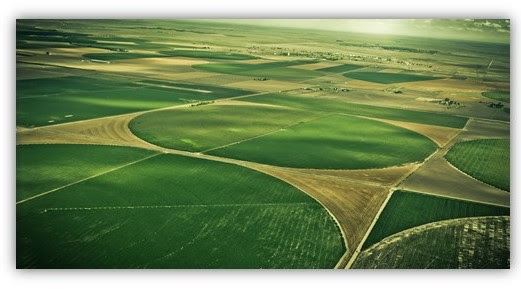
I am reminded in this season of life of a trip I took few years ago, traveling across parts of Oregon heading to a family wedding. There was plenty of time to watch the scenery pass on by. Observing the geographical change from plush green, to gorge, to dry, to waves of fields of wheat. Quietly, I sensed the Lord whisper to my heart, “Speak to the Corners.”  Hm.  Speak to the corners?  Having no idea what He was referring to at first, I asked Him to SHOW me the corners. 

I was made aware of the circular irrigation systems of the fields just outside my window.  Studying those, I saw the corners. Green stalks of young corn, grown in a circular pattern. Then there were the dry, intentionally unattended corners of the fields.  Assuming the farmers “did the math” and determined it wasn’t cost-effective to plant or water there.  I sensed God say, “THIS is not what I intended for your heart. No hidden, unhealthy, unwatered, unproductive, unfruitful—corners.”

I asked the Lord to show me the corners of MY life.  Gently (please!) point to things I have tucked back, WAAAAY back into the corners of my heart. Corners, where hidden, nothing healthy and good can grow there.  Concepts, perspectives, views of myself and unhealthy views of God.  Stuffed places of wrongdoings, habits or mostly—hurts.  I am again challenged with this.

As I pursue this, I am drawn to 1 Samuel 24. 

King Saul is in hot pursuit of David. David and his men are hiding in a cave.  Far back, in the corner (if you will) they sat quietly.  Saul comes into the cave for some privacy, to relieve himself.  David’s men encourage him with hushed whispers, “THIS is your chance!  Go ahead!” (I paraphrase). Can you imagine the split-second thoughts that may have run through David’s mind?  “Yes, you are right, I am called to be King, I end this NOW!  This man has lashed out at me!  What have I done to deserve this?” 

But NO!  There, in the dark corner of the cave, David instead, stealthily crept forward, cutting off a small corner of Saul’s robe.  In this, David was quickly convicted of what he had done, (*cutting at the lineage of Saul’s family, see below). I am learning, Godly conviction can be a tremendous gift. Do not deny or avoid it—lean into it!  David proceeded telling the men he was wrong to do so, and they too were not to harm Saul.  Taking it further, he stepped out into the light. He called out and revealed his presence to the King.  In short, Saul is humbled by the “I chose not to” opportunity by David. Saul genuinely shares, “May the LORD reward you well for the way you treated me today.  I know you will surely be king” (vv19, 20).

May we too be rewarded well for the choices we make in the corners.  Sure, there may be brief missteps here and there. Yet may we consider our thoughts, motives and actions, and make quick adjustments (like David). Knowing God knows our corners—watches our responses, awaits and invites (may I again use David’s example) healthy stepping into the light—into the Presence of the King

God knows ALL.  Regardless of how well we try to deny the reality of our corners and tuck it, shove it, even barricade it way in the back.  Until one day and it will­—it all spills out!

God boldly states, “Can anyone hide from Me in a secret place? Am I not everywhere in all the heavens and earth?” says the LORD” (Jeremiah. 23:24, NLT). And the Pastor of Hebrews wrote: “Nothing in all creation is hidden from God. Everything is naked and exposed before His eyes, and He is the one to whom we are accountable” (4:13).

Corners.

May we speak to our corners. Our intentionally unattended corners.  May we echo the tender words of King David, “O Lord, You have examined my heart and know everything about me” (Ps. 139:1).  He continues, “Search me, O God, and know my heart; test me and know my anxious thoughts. Point out anything in me that offends You and lead me along the path of everlasting life” (vv 23,24).  

God wants ALL our heart, corners and all!  He wants it healthy and profitable, fruitful—all for His good pleasure.

Corners count. 

*The hem: It goes way back to ancient(er) days. God instructs the Israelites to wear garments with specifically designed borders, hems or fringes also known as tassels. (Nu. 15; Deut. 22; Ex 28). These fringes came to represent authority, personality, their place in society and even lineages were sewn into the hem. Noblemen of the day would sign their name, authenticating, by lifting their robe and pressing the hem into wet clay tablets—specific stitching indicating family and function.  Scholars believe David was convicted because he CUT Saul’s lineage and symbolically cut the identity and authority of the Lord’s anointed. It was not God’s instruction. It was not God’s timing. Saul and David understood what had just taken place.

Speak to the corners.

In Him, DeDe (“Let us consider how we may spur one another on toward love & good deeds” – Hebrews 10:24).
Left-Handed

Happy “International Left-handers Day.” Yes, it’s an annual celebrated day, established in 1976.  Studies suggest that approximately 10% of the world’s population is left-handed. 

Lefties…

  • Use the right side of the brain the most.
  • Twice as likely to be a man.
  • Better at multitasking.
  • Of the eight most recent U.S. Presidents, four have been left-handed.
  • Less able to roll their tongue than a righty (fun facts to share with your friends).

Yes, and there’s a verse for that! What does the Bible say about being left-handed?  In the Hebrew “left-handed” is itter and only mentioned two times in scripture (Judges 3 & 20) and literally means “not of the right hand”—thus, left-handed.

Judges 20 (Brief summary). There was a very icky situation and due to it, war broke out between the tribe of Benjamin and all the rest of the tribes of Israel.  “Among all these were 700 chosen men who were left-handed” (v16).  These lefties were in addition to 26,000 gathered men of the tribe of Benjamin. “Chosen” is a keyword. The Benjamites went looking for left-handed men.

WHY?

Back up to Judges 3. Israel had again went about doing “evil in the eyes of the Lord” (Boooo!) God allowed the bad king Eglon of Moab to help teach the Israelites a lesson. A lesson through warfare.  Israel cried out to God, and He sent Ehud (of the tribe of Benjamin) who just happened to be left-handed. Left-handed Ehud goes on to defeat the bad king. (YAY!) Moab became subject to Israel and there was peace in the kingdom for 80 years. (Ahh!) All of Israel knew the story of the left-handed Benjamite—Ehud! 

THAT is why the Benjamites went looking for lefties—in hope of having a military advantage.  They were known for being able to “sling a stone at a hair and not miss” (Judges 20:16). But the Benjamites, however, did lose the battle. Guess the lefties missed. (Oops!)

Although interesting left-handed facts, what a lesson for us, a true principle to help guide us. We can’t always reach from our past in hope that what worked before will work—now.  God used the left-handed man to show the Israelites that when they are in fellowship with Him, He takes the least (one man) and makes the MOST (because HE is involved).  His lessons take on a new angle with each battle. Left-handed or right-handed, new battle, new battle plan. God’s plan.

Side note: Throwing in Jewish custom/culture: Right opposed to left: When offering a blessing, the right hand is extended (I.e. Genesis 48, Jacob blessing Joseph’s sons, he crossed his arms). Also, the “right” parts of the body play an important role in sacrifices (see Leviticus). Such as the right thigh, right ear, right thumb. The “right” generally expressed strength such as the “right hand of God” (Ex. 15:6, 12; Isa. 62:8; Ps. 17:7) and which was worthy of the Psalmists’ praises (Ps. 98:1; 118:15, 16).

If the left is considered weak (as opposed to the right/strength) it is quite ironic that after the Israelites turned back to God, He chose the weak handed man Ehud to deliver them.

*Empathetic Disclaimer: Please know, being left or right-handed does not determine value!  Left vs right is more symbolic than anything.

Happy National Left-Handers Day.

In Him, DeDe (“Let us consider how we may spur one another on toward love & good deeds” – Hebrews 10:24).

By Design

Solomon wrote, “Guard your heart above all else, for it determines the course of your life” (Proverbs 4:23, NLT).  Good words, wise words.  Solomon was stinkin wise. First Kings 4:31, makes mention of his wisdom and lists those (by design) he was wiser than. In this list, among others, we find Ethan the Ezrahite. Can you imagine going down in permanent history, basically being said of you, “Ethan, oh he’s one of those not so wise guy Dudes!” Overshadowed by another, someone—something other than him? 

We live in a society where there are comparative views of just about EVERYTHING.  “This tastes better than that. Over there it is more spacious than here. He sings better than him. She is prettier-thinner-gifted and smarter than her. They have much more than us.” 

Comparison.

Even though Solomon was granted wisdom and a discerning heart by God (See conversation in 1 Kings 3) reading this narrative of Ethan, we can’t stop there! Scholars believe Psalm 89 is attributed to this same Ethan the Ezrahite. He is divinely granted canonized parchment space of fifty-two verses.  He writes of God’s steadfast love.  Of His faithfulness of covenant, with strong worshipful words, “I will sing of the LORD’s great love forever; with my mouth, I will make Your faithfulness known through all generations” (v1).  He goes on to declare “You have made … established… crushed… scattered … founded, and created…”  THAT is some engaging declaring!

Overshadowed Ethan?  I think not.  Yes, perhaps not as wise by design as Solomon. But his words are gripping and stirring. He was declaring, worshiping—Ethan.  Might I add, Ethan was his own man! And, YES generations later he is still making God’s faithfulness known!

Through the scriptures we see folks standing out, sometimes very quietly. By design Bezalel and Oholiab worked skillfully on the construction of the Tabernacle. By design courageous Abigail intercepted a revengeful King Daivd.  By design Hosea set an example of redeeming love. By design Dorcas did good and helped the poor. By design, John outran Peter at the tomb (HA!)*

Those in my personal life; By design, Kathy has a welcoming heart of hospitality. By design, Lori is artsy and creative. By design, Deanna has a gift with preschoolers. By design, Nancy shares her Godly wisdom found in experiencing Jesus. By design, Dorothy has a flair for texting emojis (HA!)

May we be so inspired. Our skills, God-given abilities and accomplishments MATTER! It is not a matter of comparison, but one of living by design. His design. May we celebrate God’s design with one another!  

Who can we celebrate this week?

In Him, DeDe (“Let us consider how we may spur one another on toward love & good deeds” – Hebrews 10:24).

*Exodus 36; 1 Samuel 25, Hosea 3, Acts 9, John 20.

Obedience

It shall come about, if you listen obediently to My commandments which I am commanding you today, to love the LORD your God and to serve Him with all your heart and all your soul” (Deuteronomy 11:13, NASB).

The narrative continues to explain the blessing and cursing of obedience or the lack of. Moses conveys the importance of what God is saying about obedience with repeating himself, (in the Hebrew) “shama, shama” (listen obediently). In the Hebrew culture, hearing and obeying are synonymous. I appreciate the wording of one study resource, “It behooved them to be careful to attend to His commandments and to obey them.” We need a whole lot more “behooving”* in our current culture.

What comes to mind is the foreign concept (hear and obey) to the average pre-teenager when instructed to clean their room. (Anyone?) Soon emotional declarations are made that they HAVE heard, yet the room sits seemingly neglected with items thrown to the four corners. However, I guess often, I too do the same thing in my obedience (with just a bit less hormonal energy).

How well are we (I) hearing God? Are we actually doing what we’ve heard? What we’ve read in scripture? Is it a thorough obedience? How often is our obedience to God contingent to convenience.  Conditional to our perspective. Determined by the emotion of the day (or the moment). Or our obedience happens when favored only with our preference.

Recently I sat down with a lovely God-loving couple.  They, being married fifty years, shared their differences, likes and successes. From their depth of maturity and love for God and His word—challenged me!  They spoke of trusting God. Trusting God on a level I am faced with is only found in boatloads of surrender. Surrender. Surrendering that HE cares so much more! Trusting HE is working!

I believe Moses’ words above, speaking of obedience, leans heavily with the principle of surrender.  To love God with ALL our heart and ALL our soul comes only when we choose to sidestep self and focus fully on God—obeying Him.  Jesus addresses this, “If you love Me, you will obey what I command” (John 14:15). We say we love, but … Lips and life must always match! (OUCH! Painfully, OUCH!)

Challenge indeed.

When we think of our heart, we usually think of the cutsie red shaped object sent on Valentines Cards. Yet cutsie, in reality, it is not. God was serious when designing the human heart. When the scriptures speak of the heart, it refers to the entire disposition of the inner person. Our seat of emotion and the center of our understanding, describing the place where the rational thinking process occurs.  The soul is not only the mind, will and emotions as well, but conveys the person as a whole.  Our love for our God is to permeate to everything—from everything within us.

With the challenge to surrender, trust and obey, I personally am reaching back and borrowing from Solomon’s answer when God said, “Ask Me for anything.” Solomon’s response, “Give me an understanding heart so that I can govern Your people well and know the difference between right and wrong for who by himself is able to govern this great people of Yours?” (1 Kings 3:9, NLT). I may not have a people to govern, but I DO have myself to govern and govern well—according to God’s word, enabled by His Spirit. (Not prioritizing my convenience, perspective, emotion or preference). While understanding is a gift of God, it does not come automatically. The possession of it requires persistent diligence.  

How about you?  Does your obedience track record look like a pre-teen’s room? There may be somewhat evidence of an attempt but in all honesty, your hearing and obeying only lends to stuffing things under and in and tossing to corners.

May we all keep surrendering, pursuing understanding, and trusting Him—from everything within us.

Obedience.

In Him, DeDe (“Let us consider how we may spur one another on toward love & good deeds” – Hebrews 10:24).

Resources: The Complete Word Study Dictionary–Old Testament, Bible Knowledge Commentary, Theological Word Book of the OT, ESV Commentary Notes, NET Bible Commentary Notes, Matthew Henry Commentary, Precept Commentary, KJV Pulpit Commentary, Websters Dictionary 1828 and any other biblical geeky place I looked at and forgot to jot down.

*Behoove: To make it advisable or necessary and proper to do so, for their own good or that of others.

Rest

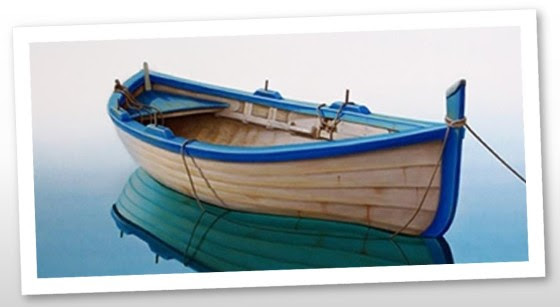
Jesus sends the twelve disciples out to minister without Him (Mark 6:7-13) to put into practice what they’ve been learning being with Him. When the disciples had returned from teaching, healing and delivering the people, they were exhausted. In their sharing of the events, there was so much activity, they didn’t even have time to eat. Jesus tells them, “Come with Me by yourself to a quiet place and get some rest” (v 31). They get in a boat and head to a solitary place. Notice Jesus was very specific. He didn’t say “Go away—take some time off, I’ll see you on the other side in a few days.” He wasn’t offering options. He said, “Come with Me.” It was a now invitation.

The narrative doesn’t say it, but can you almost imagine the boat ride over. They, being weary and already gave their report to Jesus: there was no joking, no exclaiming of dustless sandals (see v11 below) and no telling the ever so energetic Peter to sit down. Just quiet and the lapping of the water on the boat—and Jesus.

Presence.

Perhaps YOU are exhausted, exhausted from the stuff.  Worn out from routine, serving and loving.  Rest.  Follow this example: “Come with Me by yourself to a quiet place and get some rest.”  

By the way, we can’t stop there. That solitary place? Before they even get to shore, thousands of folks show up. Jesus having compassion, teaches the crowd. As it gets late, and folks are hungry, He instructs the disciples to gather the MANY in an organized manner. After praying, He takes what little food they found and hands the broken bread and fish to the disciples to feed the multitude.

Rest, getting ready for the next BIG thing. Take the invitation of quiet and Presence when you can!

For our growth and His glory.

In Him, DeDe (“Let us consider how we may spur one another on toward love & good deeds” – Hebrews 10:24). 
V11 “And if any place will not welcome you or listen to you, shake the dust off your feet when you leave, as a testimony against them.” (Part of Jesus’ instruction when sending the disciples out).

* Photo credit: Horacio Cardozo

Valleys

Isn’t it interesting that we strive for the mountain tops? But once there, we immediately turn and gaze back down at the now declared most beautiful valley below. What a great view! Pictures are taken, and images are set to memory.

Even though we long for and greatly desire the mountain tops, (both physically and metaphorically) there is beauty in the valley (or so I am anticipating). It is there, in the valley, water flows down to and thus pools for refreshment and teams with life. From there, in the valley, sunrises and sunsets are seen most spectacularly across the mountain range. It is from the valley that we can only look up. 

Charles Spurgeon said, “We find that most men confess that God is God of the hills, but they forget that He is also Lord of the valleys.” 

Although I personally want to pack the ever so carefully previously surveyed—color coded map of the valley (large print, so I don’t miss a thing) with all the twists and turns identified and labeled (Ok, I’m dreaming).  Yet, in the valley, I am learning as I seek my God and work through His word, Biblical valleys have amazing principles:

Valleys are to be explored: Spies are sent out into the unknown, where it “Flowed with milk and honey” and upon return, carry large clusters of grapes, found in a valley (Numbers 13).

Valleys are a place to wage war: David and GoliathWar in the valley. Where all David’s training confirms useful, and he realizes the battle is the Lords’ as he fought in the name of the LORD Almighty (1 Samuel 17). The giant defeated.

Valleys are for fresh water: Amid a great feminine, and trouble from neighboring people, Isaacs has favor when water is found in digging new wells in a valley (Genesis 26).

A valley is a place of rebuilding, repairing and restoring: AFTER Manasseh got his act together, he rebuilt the outer wall (v14, in the valley) allowing opportunity to repair the altar and restore sacrificial offerings (2 Chronicles 33).  

There is victory in the valley: With unconventional means, (trumpets, torches and clay pots) Gideon and crew creatively beat the Midianites (Judges 6 & 7) in a valley.

Valleys help mark boundary lines: Once finally occupying the Promised Land, they divide up the portion for each tribe (Joshua 15 & 18) valleys used as boundary lines.

Valleys are a place for dwelling: Isaac moved away from the Philistinian King (Genesis 26:17) to the Valley of Gerar and dwelt there (if only temporarily).

Valleys are a place to destroy idols: King Josiah ordered the Asherah poles to be taken down and “burn them outside Jerusalem in the fields of the Kidron Valley” (1 Kings 23:4).  An idol is anything replacing the One True God—it is a matter of the heart and mindset: leading to worship, behavior and lifestyle. (Destroy it!)

Valleys are not to be feared: King David, (scholars believe) wrote the beloved Psalm 23 in his later years. Once a shepherd—he too was shepherded. He declares, “Even though I walk through the valley of the shadow of death, I will fear no evil” (v4). Regardless of danger or anxious filled moments or what may lurk about—Do not fear! (Note to self, write THAT in large letters!)

Miracles happen in the valley: God challenged Ezekiel to speak to the dry bones (in the valley). He did and they came alive! “This is what the Sovereign LORD says: Look! I am going to put breath into you and make you live again” (Ezekiel 37:5, NLT).  I am contending for the breath of God to breathe new life, where once it was dead.

Valleys are not to be admired only from the mountain top—life happens there (and so much more). May we not always be looking beyond our valley, staring off and miss what God has for us here: Exploring, fighting, digging, rebuilding, establishing boundary lines, dwelling, destroying, anticipating miracles, breathing new life and NOT fearing and rejoicing in the victory. 

If you find yourself in a valley, take pause before great attempts are made to climb out, you may have some work to do. “Be strong and take heart, all you who hope in the LORD” (Psalm 31:24, NIV).

Valleys.

In Him, DeDe (“Let us consider how we may spur one another on toward love & good deeds” – Hebrews 10:24).

Walking the Deck

I sat quietly reading in my comfy chair when my son called out rather energetically. “Mom hurry I NEED you!” As I came into the living room, he handed me a controller to Playstation (Like I know what to do with it). Excited, he begins to yell out commands, which I assume I am supposed to be following. I took a seat and thus began the hysterical game playing. I was laughing so hard, I began to wheeze, tears were filling my eyes and the controller nearly falling out of my hands as I bent over.

We were playing Star Wars (I feel so hip just saying that). He kept saying “Follow me!” I was TRYING! I didn’t know which buttons to push, so I pushed them ALL. Somehow, I was supposed to get my man up on that scooter thingy. Much to MY own amusement, I kept crashing into trees. My job (as I found out later) was to be a distraction so his guy could be successful and finish his mission. Before I knew it, Matthew said, “Ok, you can stop now.” Had I even begun? The theme to Star Wars came on and I knew he was victorious. This was years ago, yet still makes me laugh (out loud).

Amazing what part we play in others’ lives isn’t it? A great example are those massive ships in the military. One in particular is an aircraft carrier. There is a department that is lovingly called the Yellow Jackets (Flight Deck Officers). These are men and women who, yes, wear yellow jackets and spend much of their time directing pilots as they prepare to take off and in their landings. One of their duties is known as “walking the deck.” As a pilot is either preparing for takeoff or landing, they and many other personnel line up across the deck and slowly–meticulously look for any debris. The debris if left on the flight deck could be very hazardous to the plane, pilot–the mission.

I find it very interesting as I liken it to our own relationships found in the Kingdom of God. We have many roles we play in others’ lives: Cheerleader, counselor, confidante, mentor, teacher and friend. But we are also to “walk the deck” (if you will) and do our part helping to remove any debris or obstacles along the way. Do lovingly what it takes to help another to be successful in their journey with Jesus. We are called to encourage. Much of the time our encouraging a brother or sister takes action.

Paul shares in, 1 Thessalonians 5:11 “Therefore encourage one another and build each other up.” Encourage meaning to come along side, to aid with help, even to beseech with a stronger force.  We are to admonish, exhort to better things in God.

May we too, put on yellow jackets (metaphorically speaking of course) link arms with others and join the heavenly forces. May our words of encouragement be met with our acts of love. May we love enough to point out, pick up, and remove any debris, even wave them off if the next maneuver is deemed unsafe. I am fully persuaded there WILL be times when it is messy, but it is worth it–to see them soar! Perhaps we too would hear the theme to Star Wars, (well personally I prefer the theme to ROCKY!)

Walking the deck with and for others.

In Him, DeDe (“Let us consider how we may spur one another toward love & good deeds” – Hebrews 10:24).

If You Say So

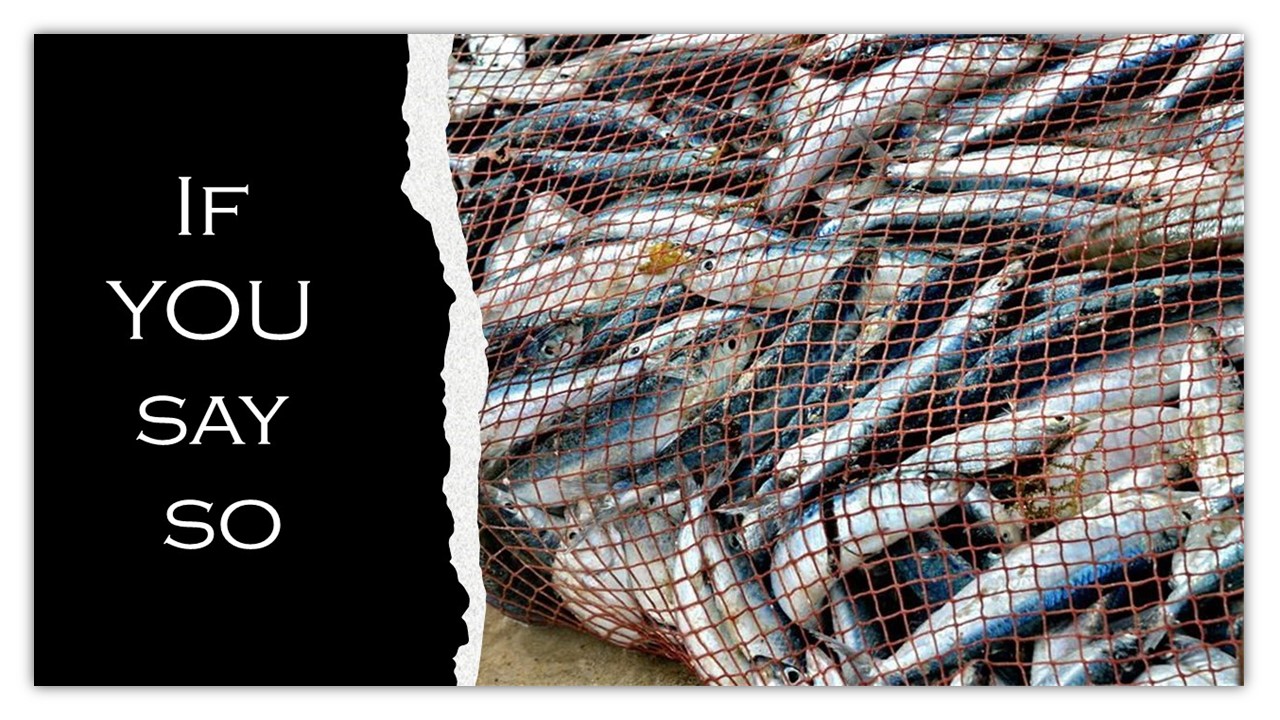
After Jesus had taught from Simon Peters’ boat, (Luke 5) He told him to cast his fishing nets out where it is deeper.  Peter responded they had already fished all night, “But if You say so” (v5). They went out and put their nets in deep water. The catch was so large, the nets began to break.  Peter had to get other fishermen and their boat to help. Both boats are now full. This miraculous catch caused all those observing to be in awe.  Two of these awestruck men were the brothers, James, and John.  Going ashore, they all left everything to follow Jesus.

WHAT IF? (For the sake of making a point).

What if Peter had declined to do what Jesus said, “It’s ok, I’m a professional fisherman, I got this” and went about his business?  Ignoring the Master’s instruction.  What did he miss? (What did the others miss?)

WHAT IF? 

Peter delayed his obedience?  Delayed it an hour or two?  I’ll get to it; I’ve got something I need to do first.” Perhaps by then James and John (in the other boat) would have been out of ear shot or too far away to help and the nets would have broken. The fish, the great catch, slipped away back into the deep.  Perhaps their delay missed the school of fish that now travels in another direction. A divine encounter missed. A missed opportunity.

WHAT IF? 

Peter didn’t go all the way out into deeper water, stopping short, dropping the nets in shallower water.   Yes, he had let down the nets, but NOT in the deep water.  Reluctant to fully obey—devaluing Jesus’ words (thinking he knew better).  Full obedience expresses value to what is said, and to whom said it. Partial obedience is disobedience. (OUCH!)

There is a strong principle for us: OUR obedience to Jesus does not just load up our boats of blessing—it causes opportunity for others to be blessed and in awe. Awe of Him.  Our listening and doing what Jesus says (now) can lead others (and ourselves) in divine appointment. Our obedience is not for us alone.  

May we not decline, delay or devalue what Jesus says.

But if You say so” (My Lord, I will…)

Point to Ponder.

In Him, DeDe (“Let us consider how we may spur one another on toward love & good deeds” – Hebrews 10:24).

Mis-Give What Belongs to God

The Nazirite vow.  The Nazirite lifestyle. Generally done by individual choice (See Numbers 6) and according to the Mishnah, (Ancient written collection of the Jewish oral traditions) it states the vow lasted for at least 30 days.  Scholars believe this may be what Acts 18:18 is referring to when Paul was “in Cenchrea he had his hair cut, for he was keeping a vow.”

However, two Old Testament guys, Samuel (1 Samuel 1:11) and Samson (Judges 13:1-5) were presented to God by their parents with evidence of Nazirite elements—tying them to a lifetime of service to God.   In the New Testament—John the Baptist (Luke 1:13-17).

We are most familiar with the Nazirite, Samson.  He was conceived within Nazirite conditions and raised a Nazirite, set apart from birth.  He was to abstain from anything grapes. Have no contact with a corpse and not cut his hair (Numbers 6:3-5). At the end of the vow, he was to offer his long hair at the temple as a sacrifice to God (v18). All this was to be a lifestyle for him (not just the mindset of a weekend fast) “the boy shall be a Nazirite to God” (Judges 13:7).

He knew.  Samson knew better than his behavior.  He ate honey from a carcass (and gave some to his folks). THEN hung around Delilah from the Valley of Sorek (which means, the Valley of the Vine). RICH vines, producing purple grapes. Samson, a Nazirite—WHAT is he doing messing around the Valley of Vines!

DUDE!

We do see God bless him with strength. Mighty strength. However. Samson, seduced by Delilah’s sweet voice, offered his hair to her (rather than God) by telling her the secret to his strengthShe had it cut off. His vow was fully broken.  He sacrificed improperly. Which led to his lack of strength and ultimately his death. (You can read his whole story in Judges 13-16).

Just like the Nazirite vow, we too, as Christ followers, the redeemed, are called to a set apart lifestyle—a holy people consecrated to God, calling us to a holy life (1 Pet 1:15; 2:9-12).  Being set apart does not (NOT) mean playing with the line drawn in the sand (or playing in the vineyard) and seeing how close we can get without crossing it, touching, or sampling it.  Or playing with our calling like a toy and tossing it around.

Oswald Chambers wrote, “The first thing we realize when we come to Jesus is that He pays no attention to what we prefer. We have the idea that we can choose what to consecrate to God” (My Utmost for His Highest). God is holy and sovereign, He is “other.”  The lifestyle of being “set apart” (consecrated) is just that, set apart, all in, to—other. REGARDLESS of what the world does, what the world says. Regardless of seducing voices. Voices that offer options, choices, and redirected desires that are contrary to God, and His word. 

Peter wrote, “Stay alert! Watch out for your great enemy, the devil. He prowls around like a roaring lion, looking for someone to devour” (1 Peter 5:8, NLT). Peter is painting an ugly picture of an adversary with an extremely malicious intent on devastating and destroying lives. Devour means to swallow (to gulp down) yet conveys also to assimilate, absorb, to overwhelm—to take in and incorporate as one’s own. “Stay alert! Watch out for your great enemy!”

May we be ever so careful and learn from Samson. Be alert, our behavior match what we know, discern voices and not mis-give and mis-live what belongs to—God.

Side note: Additional “mis-giving” – When the Israelites gathered their gold ear rings to help Aaron with the golden calf.  Later, they were instructed to bring their gold to help build the Tabernacle (God’s dwelling place).  Wonder how that felt when some were empty handed due to their mis-giving.  (See Exodus 32 and 35).  Mis-giving what belongs to God. 

Point to ponder.

In Him, DeDe (“Let us consider how we may spur one another on toward love & good deeds” – Hebrews 10:24).
Slow Down

A couple of years ago, I had the opportunity to help teach a discipleship class on Bible translations and offer a brief overview of how to study the bible.  Hermeneutics is one of my favorite topics. What? (Google is your friend). I wanted to come out of the gate with a fist full of lists of the most excellent and current resources Amazon can provide!  “And you too can have it delivered right to your door!” But instead, I opened with “S-L-O-W  D-O-W-N!

We are a grab and go society!  We fly into circumstances and jet out just as fast. We do the same with our devotions and study time.  We seem more concerned with that glorious moment of checking the box in our daily reading list that we actually miss understanding what we’ve read.  Missing important details. Those details paint God’s wonderful love story. Details that boldly tell us what pleases Him. Instead, we offer up a hurried pit stop and then we close the Book, put our half-drunk (now cold) coffee on the counter and head out into our day.  If we think of it (just maybe) there is a quick over the shoulder glance with a rushed “Thanks Lord.”

Slow down. 

The Bible is a spiritual book, not to be all-mystic and such, but it is— spiritual.  Paul says it is “God-breathed and useful for teaching, rebuking, correcting and training in righteousness” (2 Timothy 3:16). Folks, it’s our manual.  As the Pastor of Hebrews declares it is “living and active… it judges the thoughts and attitudes of the heart” (Hebrews 4:12). Why rush the divine process. Giving Holy Spirit opportunity to speak to our alignment with His Word, like when a banker holds up to the light a $20 bill, looking for counterfeit markings. His word is our standard.

Slow down.  

Pray before we even open The Book and invite the Author to walk us through it.  Pray while reading, “Show me Lord, speak, teach, grace my heart to hear and heed.”  In doing so, we not only read the Word, but we allow the Word to read us! 

I would offer, if possible (without creating too much anxiety with the NEED to check that box) —read smaller portions. Read as if once we close the book, we are now going to share with someone (in our own words) what we just read. THIS will help us read differently. Look for details differently. Hear differently. God designed His holy writ to be interactive.  The Psalmist repeated multiple times in the beloved Psalm 119, “Teach me” as he describes his love for God’s word. 

As we close that wonderful Book, pray too, asking Holy Spirit to wallpaper our heart with what we just read. May it be our heart’s view for the day.  Tomorrow?  With great anticipation and expectation—we will do it again.

Slowing down.

In Him, DeDe (“Let us consider how we may spur one another on toward love & good deeds” – Hebrews 10:24).

Don’t Sabotage

I once heard the story of a study group of Rabbinical Hebrew students, as the session came to a close, one student handed a friend a black book and said, “Read this and tell me what you think.” Later that evening the friend remembered the book. Reaching for it, he sat down. Opening it, he began to slowly read. Immediately frustrated, he stopped reading. After a quick pause, he looked down and began again. This time, he rose and said out loud, “In the beginning God created the heavens and the earth. PERIOD” He exclaimed with great conviction, “No!  He’s not finished yet!” 

The black book he was reading was the English King James Bible.

You see the original Hebrew manuscripts had no chapter or verse divisions, and no punctuation as well.  It was/is custom and tradition to read until the action or thought was complete.  In this case, “In the beginning God created the heavens and the earth…” (no period) they would have read on through to “…By the seventh day God had finished the work He had been doing; so on the seventh day He rested from all His work (Genesis 2:2). I so appreciate the focus.

By principle, how often do we too attempt to put a period (completing an action or thought) where God is NOT finished yet.

What may seem to be a mess to us—God is still working. 

Recently I have taken up walking again for exercise, but as I get a block away from the house, I find I have a slight limp. In 2021 I experienced a fall that tore my hamstring.  It wasn’t just a bruise, or strain or sprain. It tore.  Painfully, black and blue, couldn’t walk—tear!  It was such an impressive tear the orthopedic surgeon had to get an associate to come and look, turning my appointment into an instant show and tell.

After a time in the wheelchair and camping out downstairs in our living room with my husband, I began physical therapy.  My therapist said something to me as she watched me walk across the room, I will never forget.  “Stand up straight. Don’t limp. I know it may hurt, but you need to train the muscle to work the way it was designed.” Even though it may not have healed correctly or completely, as I walk today, I am not faking it as I focus on this, I am “faithing” it. Assured there is healing in the training.

So, it is with life. I am learning there may be incomplete or incorrect areas that need healing.  God isn’t finished yet. Paul wrote, “Being confident of this, that He who began a good work in you will carry it on to completion until the day of Christ Jesus” (Philippians 1:6, emphasis mine). Genuine spiritual progress is rooted in what God has done, is doing, and will do.1

Believe Him. 

Don’t stop short. May we not attempt to put a period where God is not finished yet or attempt to sabotage our healing because it is too much work and too painful. 

God is still working. 

Yet, He’s counting on us doing our part as well. I can almost hear His whisper as He watches our walk, “Stand up straight. By faith, don’t limp. I know it may hurt, but you need to train and follow My design.”  

In Him, DeDe (“Let us consider how we may spur one another on toward love & good deeds” – Hebrews 10:24).

The above is an excerpt of my recent teaching when I had the honor of speaking to the women of Abundant Life Center in Jefferson, Oregon.

___________________________________

1 ESV commentary on Philippians 1:6

Wait! There’s More!

I am remembering a time when I was visiting a church when the pastor, full of Pentecostal energy, shared vigorously from Psalm 136.  Twenty-six times the Psalmist declares, “His mercy endures forever.” Some translations, “His lovingkindness endures forever.” Oh, it does!  God’s mercy is unending. Matchless in every way. It can be seen from the beginning of mankind’s existence and has no vanishing point in the future.  Within the twenty-some minutes of sharing, the pastor repeated the blessing of God’s mercy, then “In closing…”  He said, “His mercy endures forever.”  As the folks stood to leave, preparing for the trek home to the roast in the Crockpot, I wanted so BADLY to stand to my feet and yell, “Tell them!” (All eyes on the crazy visitor lady in the back.)   “Wait! There’s more! Pastor! Don’t stop here!”  

Tell them that the Hebrew language is full of imagery. YES mercy! But there is more.  Just like there is “sunrise” with just a glimpse of a sliver of light peeking over the horizon, then there is SUNRISE with colors so vibrant you stare in unbelief at the magnitude of His creation. Colors spilling over each other as it dances across the sky in tones that if we are still enough, so very quietly still­—it could almost be heard.  Today, with the Pastors’ sharing, we were just—peeking.

His mercy endures forever. Mercy is “hesed” (in the Hebrew).  Scholars find it extremely difficult to translate into English because there really is not an equivalent word. The English Bible uses many different words in an attempt to express its meaning in each context.  Words such as lovingkindness, steadfast love, goodness, favor, loyal love, kindness, faithfulness, truth, justice, righteousness, mercy and yes—grace. 

Mercy and grace. God’s mercy is withholding what we do deserve, where His grace is giving us what we do not. One hand pushes forward in giving, while the other holds back in restraint.  The ultimate divine coordination—THAT is our God!  Because of His love for us, His commitment to covenant, and His value of relationship, our God interacts with hesed. It is deep, wide and continuing.

Agape (love) is the New Testament (Greek) equivalent to hesed. Paul wrote;
  “I pray that you, being rooted and established in love, may have power, together with all the saints, to grasp how wide and long and high and deep is the love of Christ, and to know this love that surpasses knowledge–that you may be filled to the measure of all the fullness of God” (Ephesians 3:17-19, NIV). 

Jonah knew God’s hesed, saying “O LORD, is this not what I said when I was still at home? That is why I was so quick to flee to Tarshish. I knew that You are a gracious and compassionate God, slow to anger and abounding in love (hesed), a God who relents from sending calamity” (Jonah 4:2, emphasis mine).  Ok, maybe Jonah needed an attitude adjustment, (Thus the large fish story) but he knew, he understood, and observed how God operates.

God’s lovingkindess is His willful, purpose-filled direction toward man.

Yes indeed, it is worthy of repeating in twenty-six verses, “His mercy (insert all those words describing His amazing character here) endures forever.”  What a challenge, to be aware and be in awe of God. It is enough to make us close our eyes, bow our head and sit quietly and take in His brilliant sunrise!

His hesed endures forever.

In Him, DeDe (“Let us consider how we may spur one another on toward love & good deeds – Hebrews 10:24).

Celebrate

We are all image bearers.  In Genesis chapter one, it says God created mankind in His own image and likeness, male and female (vv26-27).  Image is form (appearance) likeness is function. We were originally designed to look and act like our Creator. This last Mother’s Day weekend, we celebrated moms.  We celebrated the God nature in us.  We are physically designed and spiritually designed to nurture and guide.

Yet, I’d like to take the banner and run further. Regardless of where we (women) fall on the feminine spectrum:  Princess to tomboy.  Small to large.  Young to old.  We are women, we are female (regardless of the world’s confusion).  Proverbs 31 (don’t groan) gives examples of a Godly woman. It can be overwhelming and exhausting reading the list.  BUT.  It is not a job description.  It is a—celebration.  (Stay with me, this is good).

Proverbs 31, at first glance it is strongly assumed it is written by a man. Well, it is … kinda. Most jump straight to the popular verses, beginning at verse ten and neglect the opening (vv1-9).  It is a man telling what his mom taught him.  One Jewish tradition claims (many scholars agree) the mom may have been Bathsheba teaching this to her son, Solomon.  But we really don’t know. Yet, this mother tells her son to not waste himself on wine.  Don’t be passive, be bold, speaking up for the poor and helpless.  She tells her son not to spend himself on women (plural).  THIS is what a king does. 

Mom goes on to say, but this “woman” (singular) she is worth far more than valuable jewels. A woman who is faithful, kind, prepared, charitable, hardworking, smart and confident, as the following verses declare.

Verse 10, (paraphrasing) “Who can find such a woman of virtue.”  Many translations say, “wife” due to the context that she has a husband.  In the Hebrew (virtue) “chayil” (pronounced with a guttural “high-el”) can mean brave, excellent and noble.  It conveys a military tone as well, “one of war” —a warrior.  A warrior fights for a cause, for a standard, even if the standard is as basic as “God said.

Of the 235 times “chayil” is used in scripture, all refer to either God or men or a man.  All except—three, three women.  Isn’t it interesting that scripture uses the same word to describe both a man of valor AND a strong woman.

Of the three, first, here where Mom tells the son, a good God-fearing woman, a kind, STRONG woman is worthy of your interest, and of your strength.  The second is found in Proverbs 12:4 “A wife of noble (chayil) character is her husband’s crown.”

The third, Ruth. In Ruth chapter three, just before Boaz is about to begin the process of taking her as his wife, he says the people of his village know her to be “eishet (woman) chayil.” “You, Ruth, are a woman of strength.”  Your reputation speaks highly of you. Ruth, unlike the Proverbs 31 gal, when this was said to her, is not married (she was, he died).  She does not have any children. 

Ruth goes on to marry Boaz and together they have a son named Obed.  He had a son named Jesse – he had a son named David.  This “woman of strength” was King David’s great-grandmother.  David went on to have a son named Solomon.  Not to mention (but I will) according to Jesus’ genealogy (in Matthew 1) Boaz’s mother was Rahab.  Take a moment and let that sink in. Rahab is part of the redemptive story!

A Godly woman of noble character as described in scripture, (beyond the stereotyped Proverbs 31) is both married AND single (and a widow).  She has children, while others do not. Some have a messy past that God has redeemed, a past He can redeem.  All women are to be celebrated.  Do not allow others to define you or frame you.  Ladies, we tend to be our own worst critic. May we stop comparing and begin celebrating. What a WIDE variety of women we are.

Be blessed in your image bearing—to the glory of God.

In Him, DeDe (“Let us consider how we may spur one another on toward love & good deeds” – Hebrews 10:24).

(I shared the above on Mother’s Day Sunday at Abundant Life Center in Jefferson, Oregon. If you’re ever in the area, come see us—a great group of Godly folks).

Please note: It is the Jewish young men who are encouraged to memorize Proverbs 31, NOT the young gals.  It is also tradition: at the Shabbat meal the men sing the Eishet Chayil (traditional Proverbs 31 song) to the matriarch and the women of the family, they celebrate them—weekly.

What is in Your Hand?

I will praise You as long as I live and in Your name, I will lift up my hands” (David, Psalm 63:4). “Hands” literally means the palm, emphasizing the EMPTY hand. “Be still and know I am God” (Psalm 46:10). “Be still” in the Hebrew conveys the imagery of letting something drop, cease striving with fisted hand. The hand that was once tight fisted, holding on to stuff—we let it go! Giving God room to move, to fill and to use.  God won’t pry it out of our hand. He waits.

What is in our hand? It could be a literal holding of something we need to give up honoring our love walk with Jesus. Or metaphorically speaking those things we hold tight, whether a mindset, attitude, or heart condition. What do we need to let go of?

Another consideration of the hand; Remember God asked Moses “What is in your hand?” (Exodus 4) He was carrying his staff.  Something of purpose, useful to Moses.  God used it (many times).  I love books, mostly geeky theological books, yet I appreciate a good CLEAN historical fiction novel as well. God can use those (in my hand).  May we be aware of what we choose to put in our hand.

Not to mention (but I will) may we be aware of what we reach for. I love meaningful symbolism. I wear a small simple gold ring on my right pinky, I have for many years. Being right-handed, I wear it to remind myself to be aware of what I reach for. “He who has clean hands and a pure heartwill receive blessing from the LORD” (Psalm 24:4-5). A true challenge to integrity—integrity of motive and action.

The empty hand raised heavenward in prayer and worship symbolizing our surrender and longing to receive.  Our raised hands with the sincere intent, indicating God is high above—over all we are, all we have, all we want. Also, our hands purposefully filled at times and willingly commissioned for God’s use.

What is in your hand? 

In Him, DeDe (“Let us consider how we may spur one another on toward love & good deeds” – Hebrews 10:24).

Additional Note: The phrase kept coming to mind for me, “Caught red-handed.”  “Red-handed” has its roots in the 15th Century in Scotland, when first referenced, meaning literally being caught with blood stains on your hands after a crime. Hm. So much spiritual application can be made.
