
Know Your Weeds

Weeds. A weed is defined as a plant growing where it is not wanted or intentionally sown. A plant that competes or interferes with the activity of deliberately placed plants.
Weeds. God has been speaking to me about the weeds in our life.
Jesus speaks directly to the thorny weeds in the Parable of the Sower (Matthew 13, Mark 4, and Luke 8). A parable is a simple story used to illustrate a moral or spiritual lesson. The narrative states Jesus was teaching a large group of folks. His story telling of these four different scenarios would most definitely encompass them all. In this story, although mightily important, the Sower is not the focal point, he goes about sowing, scattering the seed at will. The seed, although powerfully essential, it too is not the prominent point. The point is the receiving ground.
Four Seeding Scenarios: First, the seed fell on the path, where it was trampled and became bird food. The second, the seed fell on rocky ground, where it sat in shallow dirt, exposed, receiving no nutrients or moisture, and dried up. The third, the seed was among the thorny weeds, the thorns choked out the seeded plants. The fourth, the seed fell on good ground, matured, producing fruit.
Notice the first two seedings don’t really hit the soil, they are on the path and rocks (external). The second two are “soiled” (internal). The seed, which Jesus explains is the Word of God, it is taken in – into the heart.
Yet. Weeds.
In that area, Palestinian weeds like these thorns can grow up to six feet in height and have a major root system. Regardless of the Godzilla size, the weeds compete for nutrients. This competing-choking literally means to suffocate. To suffocate is to halt the ability to thrive, to breathe, to live. Fascinating. The Word of God is “God-breathed” (2 Timothy 3:16).
Jesus goes on to explain, “The seeds that fell among the thorns represent those who hear the message, but all too quickly the message is crowded out by the cares and riches and pleasures of this life. And so they never grow into maturity” (emphasis mine, Luke 8:14, NLT).
Cares, riches and pleasures AND the word of God. Yep. Sounds crowded. Our worries, cares easily bleed into anxiety, which brings disruption to the mind, the heart and yes, the soul. Riches can be defined as seeking hard after “having the wants.” And pleasures, those distractions that pull our look elsewhere for gratification. Individually they are not bad. But. When they take time, effort and attention away from the Word, we end up having no time for it – no time for God.
Yes, weeds. “But all too quickly” they suck the ever-loving God stuff right out of our life. Our receiving ground starts strong – but the distractions come, the concern for spiritual things are crowded out by material things. The potential of fruit has just shriveled and never matured.
Weeds. What worries suffocate you? What are you seeking hard after? God, His word, or stuff? What distractions have you looking – what has your attention?
Know YOUR weeds.
How are weeds established? Literally, they are poop droppings (eewwWW) or they are blown in by the winds. They are brought in with fill dirt. How are they destroyed? They are pulled. They are dug deep and pulled, making sure you get the whole root, if not, the remains will continue to grow. They are pulled out before they have a chance to flower and reseed – multiply.
Weeds. Competing or interfering with the activity of the deliberately placed Word of God. Watch your dirt. Protect the seed. Do some weed pulling.
In Him, DeDe (“Let us consider how we may spur one another on toward love & good deeds” – Hebrews 10:24).
*Thank you to my Master Gardener friend Kathy B for your insightful advice on tending to weeds.
You Thrill Me

Thrill seekers, they go, they do. They do again. Just for the sake of experiencing something out of the ordinary. They fly high. Jump as to free fall. There are those who desire speed. Much is spent to seek this out and usually at a high price, which is only for a fleeting, temporary, high adrenaline – moment.
Life alone can be like a roller coaster ride. The ups and downs and hairpin turns. The un-expectancy of it all. No one needs to throw me out of a plane! I have, however, been on a wild ride. It doesn’t require a ticket or weeks of planning. BUT it does cost something. Me. All of me. This journey with God is a dandy. It offers excitement where not expected. Views I would not normally see and experiences only He can give.
One of my favorite bible verses is found in Psalm 92:4 “You thrill me, LORD, with all you have done for me! I sing for joy because of what You have done” (NLT). “You thrill me, LORD” pause and think on this for a moment, even say it out loud! It is the result of the past, the present and a request for more. When was the last time we got excited about God and knowing Him?
Peter writes “Grace and peace be yours in abundance through the knowledge of God and of Jesus our Lord” (2 Peter 1:2, NIV). This knowledge, this knowing Jesus is not only to recognize Him, as if to point and declare. This goes beyond what is more commonly (biblically) rendered knowing as to see, to discern. Peter is stating we find favor and experience peace when we become fully acquainted with Him. He exhorts us to heart knowledge. To literally experience Jesus.
This generation seems to think that just because they have seen it done (Thank you YouTube) or read about it or talked about it or know someone who has, they too have experienced it. There is a big difference between watching, reading, and talking about flying a B52 Bomber Jet and actually crawling up into the cockpit and strap yourself in and pilot it.
Experience.
How are we with our knowing Jesus? Are we still just talking and reading about Him? Or watching others enjoy Him? I for one, want Jesus to go beyond my head and captivate my heart!
Join me. YOU seek Him. YOU strap yourself in for the ride of your life!
“Grace and peace be yours in abundance through the knowledge of God and of Jesus our Lord” – Let Him THRILL you!
In Him, DeDe (“Let us consider how we may spur one another on toward love & good deeds” – Hebrews 10:24).
*The picture of the lil guy above, I have no clue who he is or who took it. He has challenged me for years. He is thrilled.
Lovingly Intentional
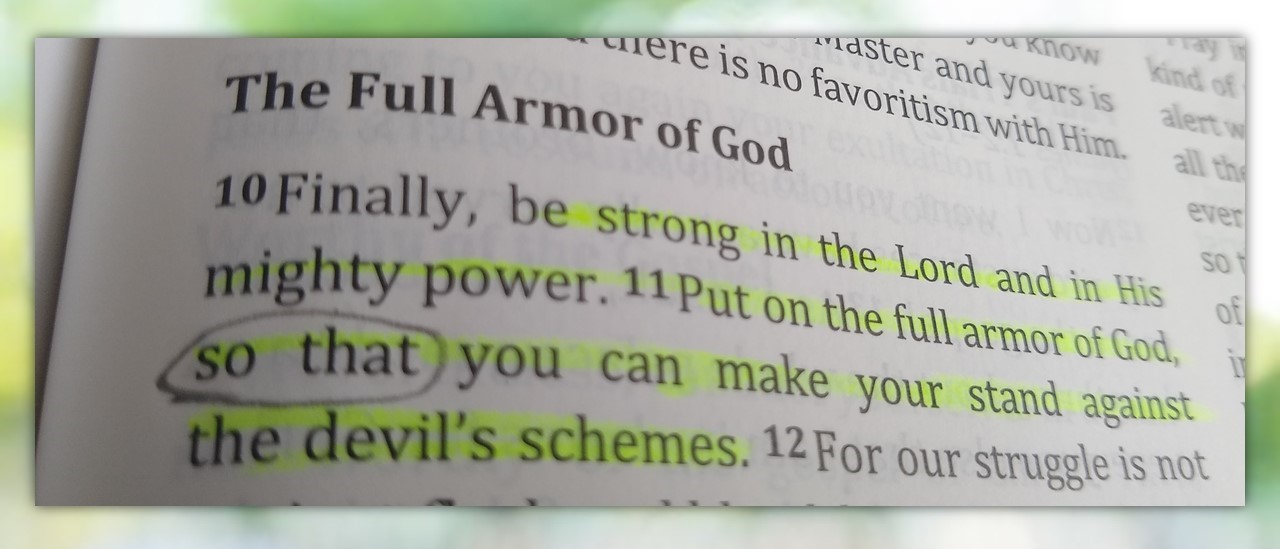
In my quiet time, I have been reading through the book of Galatians. I am fascinated by Paul explaining his encounter with Jesus. He, zealous in the traditions of his forefathers, advancing ahead of his colleagues, and once a persecutor of the Christians – “But when God…” (Galatians 1:15, see key verses below). Don’t you just love it! We all need us a “but when God” in our life! Paul goes on to say God called him by His grace and revealed His Son in him.
The word Paul chooses to use for reveal is thought provoking. There are two uses for this Greek word. One is used to describe something given to the mind; God reveals to the intellect of man. However, here Paul uses the other usage. Within the context this revealing is done to the senses. To sight, hearing, feeling, touching, and smelling. Meaning, when Jesus presented Himself to Paul (remember the bright blinding light) He knocked Paul on his backside and was appealing to his senses NOT his intellect. Paul was a highly educated man, a thinking man. Perhaps God was getting past his head, so he could NOT attempt to rationalize the encounter, (thus three days of blindness, see Acts 9). The verse goes on to say, all this was done “so that” he might preach Him.
I appreciate the word of God is so practical. The phrase “so that” not only gives us insight, but also is powerful – “this is why.” Good godly cause and effect. Not that God needs a reason, but graciously inspired the writers to include it. “Walk in the ways of the LORD your God so that you may live and prosper” (Deut. 5:33). “All Scripture is God-breathed and is useful for teaching, rebuking, correcting and training in righteousness, so that the man of God may be thoroughly equipped for every good work” (2 Timothy 3:16,17). Paul prays “I keep asking that the God of our Lord Jesus Christ, the glorious Father, may give you the Spirit of wisdom and revelation, so that you may know Him better” (Ephesians 1:17). Boldly Paul declares, dress appropriately, “Put on the full armor of God so that you can take your stand against the devil’s schemes” (Ephesians 6:11).
I too have experienced a strong “so that.” In all my growing up years, I was challenged (an understatement) with reading. I suffered from Comprehension Deficit Disorder. I could (s-l-o-w-l-y) read the words but had really no clue what I just read. It all got lost somewhere. I graduated High School with a 4th grade reading level. Stepping into my plans of being a graphic artist, God called me out. When He did, in all honesty, I laughed. I did a Sarah. He was calling me (the gal who couldn’t read) to a book – THE Book! Long story short. I ended up at Bible College. It was there He healed my mind. I know beyond any doubt, He graciously healed me “so that” I would teach His word. In my lacking all those years, God was training me. He trained me to listen for the details. Paying attention to detail is important. The who, what, where, how and why. It isn’t me. It is Him through me (to the glory of God). My life response is dedicated to His calling, to His word, to Him. To the One Who opened my mind.
May we spot the so that’s in scripture. Knowing there is a reason, and the reason is intended to be known. May we also spot the “But when God… so that…” in our own life. Perhaps He addresses us intellectually or He does a Paul, getting our attention and puts us on our backside.
He is in the detail. He is lovingly intentional. He is faithful.
So that.
In Him, DeDe (“Let us consider how we may spur one another on toward love & good deeds.” – Hebrews 10:24)
Key Verses: “I want you to know, brothers, that the gospel I preached is not something that man made up. I did not receive it from any man, nor was I taught it; rather, I received it by revelation from Jesus Christ. For you have heard of my previous way of life in Judaism, how intensely I persecuted the church of God and tried to destroy it. I was advancing in Judaism beyond many Jews of my own age and was extremely zealous for the traditions of my fathers. But when God, who set me apart from birth and called me by His grace, was pleased to reveal His Son in me so that I might preach Him among the Gentiles, I did not consult any man” (Galatians 1:11-16 NIV).
Positioning for Passion

Passion. When you read that word what first comes to mind? That passion or zeal we have that compels us – makes us –forces us to places of the heart that we HAVE to have more! Does our desire for more include more of … GOD? More of His word. More time spent in His presence. Passion is our response to being completely, utterly, astonishingly captivated by Him.
A while back, I had a gal express that she was amazed at my passion for God and His word and compared it to (I will summarize what I heard) her lack of desire, discipline and delight in her relationship with God. Instead of those three, she found herself basically surviving in the doldrums found in duty of relationship. I’ve been there – done THAT! (Still do at times).
I would offer, if we lack passion – ASK FOR IT! God will “give you the desires of your heart” (Psalm 37:4). Then we seek discipline. We are putting feet to our desire. We want more, so now we are going to position ourselves for just that. If we want more of His word, then we set aside time to read His word, study it and think on it, most importantly, have the word–study us. It is “living and active” (Hebrews 4:12). God’s word is designed to be engaged. This takes discipline. This is the practical side of positioning.
We may need to address our alarm clock issue, so we can get up just a few minutes earlier. Or remove the other books on the nightstand and place only one Book there. Ask the Lord to show us creative ways to make way, make room for reading, talking and listening.
When Jesus says, “Love the Lord your God with all your heart and with all your soul and with all your mind and with all your strength” (Mark 12:30). He is saying our all is with completeness – no holding out! There is no dividing up our love, like a pie graph. We draw out a slice for this and for that and what is left is God stuff –God’s slice. No, He gets the whole pie.
Desire, discipline and delight for me, it paints a picture of getting in line, like that at the store. Our desire takes us to the line. We want the prize that is offered at the head of the line. Discipline keeps us in the line. We may be distracted by those walking by with other stuff, but we REALLY want what this line has to offer – so we stay. Delight is getting to the head of the line and so overwhelmed with the prize (JESUS!) that we RUN and again get back in line for MORE. THAT, to me is PASSION! The progression of passion: Desire, discipline, delight. May we find ourselves always in the line and always running back for more–of GOD!
It is up to US to take our relationship with the Lord seriously. Any relationship must be cultivated. Bible scholar and good godly guy, Charles Spurgeon said “To delight in God is as much a privilege as a duty.” Both delight and duty (a task or action required for responsibility) are part of knowing, loving and serving God.
Passion.
In Him, DeDe (“Let us consider how we may spur one another on toward love & good deeds” – Hebrews 10:24).
Be Still

Have you ever stood in the woods – just stood. Didn’t move. You listened. Quiet. Leaving the noise of the city for this contrasting quiet. It can be captivating can’t it? “Be still” conveys not only to “let drop” what is in your fisted hand, and stop striving, but too formulates a forsaking, an abandoning. May we abandon the chaos around us, the crazy wild noises that can forge our perspectives and let us settle in with the knowledge that HE IS GOD.
Quiet.
I Was Bold

Recently I had the honor to speak to our young adult women at our church, their ages ranging from 18 to 28(ish). I was given an hour to share my heart, a blueprint on practical ways of being a Godly gal in this generation. As I looked into the eyes of each young woman, I truly knew the privilege and opportunity before me. I was honest. I was real. I was bold. I shared from God’s word and my personal experiences.
(In short) First, “Have a pre-determined answer.” How often do circumstances arise and demand a response from us and we tend to flounder – grasping for the right answer, the right behavioral response. When we do, we usually grab the closest and easiest and often comes in the form of compromise. We looked at Genesis 14, where Abram stood before the King of Sodom, refusing his offer of the spoils of war, “I have raised my hand to the LORD, God Most High, and have taken an oath that I will accept nothing from you. So that you can say “I” made Abram rich” (vv22-23). Immediately after this, God comes and tells Abe “I am your shield, your very great reward” (15:1). Abram had a pre-determined oath. He had his God answer. We too need to be prepared. Now is the time for preparation – don’t wait until you’re in the midst of the stuff.
Second, “Don’t get distracted.” Solomon, the wise guy wrote: “Look straight ahead and fix your eyes on what lies before you. Mark out a straight path for your feet; stay on the safe path” (Proverbs 4:25-26, NLT). We discussed “what is it that distracts you most – the quickest?” Be aware of this and apply the first element – have a pre-determined answer for your distraction. Stay the course. Follow Jesus. NEVER waiver.
This flowed right into the third element: “Position Yourself.” King David wrote: “I have set the LORD always before me, because He is at my right hand, I will not be shaken” (Psalm 16:8). You desire good God stuff? What – who have you set before you? Be intentional about placement. Where are you and what are you thinking and doing? Are you in church? Your friends, have you chosen wisely? Do you have some folks that will lovingly address your stuff? Are you reading God’s instruction manual? Also, has God told you something specific? What are you doing about it? Intentional positioning.
With the fourth point, we camped out there most of our time together. We discussed what it is to “Be a good family member.” When I was growing up, my dad was a businessman. He owned two grocery stores, one convenience store and two restaurants. We (myself and the sibs) heard dad often say. “Remember you’re a DeBus.” Meaning, we were expected to speak and behave in a manner that represented the family well. So it is with our God family. Not only be a good witness to Jesus’ name, but a good member to each other. Kind and forgiving.
Jesus said we are to love God with our all and love our neighbor (Matthew 22:36-40). Paul too wrote: “Be devoted to one another in brotherly love. Honor one another above yourselves” (Romans 12:10). Loving our neighbor, our brother (in particular) means we help protect them. We talked about our personal expression, about – modesty (in detail, I don’t think we forgot a thing). Our brothers have a responsibility for their own eyes, their own heart, their own disciplines and decisions – but why not help them out!
We closed the evening (being a good family member) with brainstorming how they (the younger folks) can connect with the older folks. There is a boatload of wisdom wrapped up in our older saints. Prior to this evening, I polled six women, (ranging in age from 30’s to 70’s). I asked them to please tell me, if they could reach back and speak to their younger (20 something) self – what advice would they offer. I read the list to the gals. It was impacting.
A great reminder for us all (myself included). Practical ways for good God stuff in this generation: Have a pre-determined answer. Don’t get distracted. Position Yourself. Be a good family member.
All for His glory. (In Jesus name).
In Him, DeDe (“Let us consider how we may spur one another on toward love & good deeds” – Hebrews 10:24).
Don’t Get Distracted

Recently I heard a most profound statement. While out blueberry picking, the farmer handed me a bucket and waved me off down the trail, pointing out beyond where I stood. He told me where the best picking was. He closed with “And don’t get distracted on the way.” Meaning, you’ll see berries, but if you want the BEST, and lots of them–keep going–stay focused!
It was true. As I walked the dusty aisles between the mounded rows of bushes, yes, there were beautiful blueberries scattered here and there. But as I took a closer look, they had been picked over. I could tell other folks stopped here, at the very beginning of the field and picked. So did the next picker and the next. They didn’t journey out, they stopped at the first sight of berries. I would venture to say, some may have grown frustrated, thinking, the berries weren’t ripe yet (since primarily only green berries were left where they stood) and not going forth caused their perspective of the field to be lacking.
As I picked handfuls of plump berries (at the other end of the field) I thought about how true his statement was, “And don’t get distracted on the way.” We can apply this in our daily lives. How often are we venturing along and “Oh, looky there – ‘shiny.’”
Distracted.
Before we know it, we have dropped our (metaphorical) roadmap and we are all over the place. Distraction keeps us swerving and from the best!
King Solomon, the wisest biblical guy wrote: “Look straight ahead and fix your eyes on what lies before you. Mark out a straight path for your feet; stay on the safe path” (Proverbs 4:25-26, NLT). What wonderful imagery. The idea being conveyed is someone who studies what is ahead. It isn’t a quick glance; it is a taking pause and looking intently as to squint (“fix your eyes”). Once understanding what is ahead, the plan is weighed out and the best route is calculated (“mark out a straight path”). Solomon goes on to say, “Don’t get sidetracked” (swerve to the right or to the left) – distracted.
The Pastor of the book of Hebrews wrote: “…let us run with endurance the race God has set before us. We do this by keeping our eyes on Jesus, the champion who initiates and perfects our faith” (12:1b-2, NLT). THIS is our specifically designed “fix your eyes – mark out a straight path” plan.
Peter too adds with strong encouragement, “Discipline yourselves, keep alert” (1 Peter 5:8a). Folks there is a “roaring lion” out there ready, waiting to destroy your “everything.”
Don’t get distracted.
What is it that distracts us most? What distracts us the quickest? Do we too stop and begin picking and attempting to fill our bucket, all the while there is abundance further out in the field?
Point to ponder.
Look straight ahead, fix your eyes, mark out the straight path. Jesus.
In Him, DeDe (“Let us consider how we may spur one another on toward love & good deeds” – Hebrews 10:24).
Peace or Pit
Life. Life happens. Have you ever come out of a foggy situation, tattered, a little bruised, (metaphorically speaking)? Your heart aches with that familiar ache of disappointment in someone’s behavior? (Or is the behavior yours?)
Their pain, jealousy, hatred, and insecurity causing them to act out in anger. Pain and anger are very intricately linked, that the dividing line fades when actions are applied. If these words resonate even with some small hint of recognition, then you too can relate to Joseph of the Bible.
Joseph, an incredible story–the events that groomed him, the people that mocked him, and the God Who delivered him. One verse dances off the page as it defines his circumstance. Genesis 37:4 “When the brothers saw that their father loved him (Joseph) more than any of them, they hated him and could not speak a kind word to him.”
The word used, they “could not speak a kind word to him” seems to get lost in many of our bible translations. In the Hebrew, the word (kind) is shalom. The brothers due to their jealousy and hatred could not speak peace to Joseph. Peace, meaning health, prosperity, blessing and amazingly so, it can be rendered–safe.
Noticing on in the story of the brothers (turn tormentors) they see Joseph from afar. Their deceitful plan is forever etched in history. First, they plan to kill him. Nope too harsh, (don’t we ALL rationalize). Then they found what was convenient. A deep well. When in haste convenience seems to always trump wisdom!
It says they stripped him of his robe, one of many things that ticked them off, let’s start with the robe, the outward sign of our jealousy. They attempted to remove the evidence of his favored relationship–the gift from their father. I believe this was not done in silence. I bet there was a lot of taunting going on. Rude comments, jesting, a jab here and shove there. Then the final shove, leading to pit dwelling. Then their brother was sold into slavery.
Jealousy and hatred withhold peace. May we think of our own lives: Are we speaking peace to and over others, (regardless of how brief our time is with them). Are we allowing them a safe place in our life? Are we doing our part to help them prosper, stay healthy? Or not? Is there someone who has what we want? Oh, it may not be the enduring love of a father, but perhaps our jealousy stems elsewhere. At what cost does our lack of peace affect others? Is it worth it? Are we giving them the gift of peace or throwing them in a pit? (Ouch!)
I have heard it said, “Bitterness is like drinking poison and expecting the other person to die.” It actually hurts us in the long run. The story goes on that Joseph becomes highly successful while the brothers and family live in feminine. They ultimately end up going to Joseph for their very survival. So, who was it that ended up in the pit? The brothers or Joseph?
The Pastor of Hebrews exhorts, “Work at living in peace with everyone, and work at living a holy life ” (Hebrews 12:14a, NLT). Yes, work it WILL be. It won’t be easy and not pretty at times. Yet peace is what we are called to. Paul states in Galatians that the fruit of the Spirit–the qualities of having Jesus in our life are “love, joy, peace, patience, kindness, goodness, gentleness, faithfulness, and self-control” (5:22,23).
Oh Jesus, we invite You, we need You, live in and through us! May it begin with us. May we be Your ambassadors of peace.
Peace or a pit? For us and them.
In Him, DeDe (“Let us consider how we may spur one another on toward love & good deeds” – Hebrews 10:24)
Anticipation of Him

In the final days and moments before Christ’s death, Jesus instructs Peter and John “Go and make preparations for us to eat the Passover” (Luke 22:8). Jesus goes on to explain the plan, and the disciples go and do as He says. This, the beginning of an incredible time between the disciples and the Lord.
Preparation.
Joshua too gave preparation plans. They were at the edge of the Jordan River, ready to cross over into the Promised Land. Men were sent to each encampment telling the Israelites that when they saw the priests with the ark, they were to move out and follow it, (but keep your distance) “then you will know which way to go, since you have never been this way before” (3:2-4). Joshua tells the people, “Consecrate yourselves for tomorrow the LORD will do amazing things among you” (v5). The priests and the Ark (God’s presence) were to stand in the Jordan and eventually remained standing in the middle until everyone was on the other side. God parted the river, allowing His people to cross over to the much awaited, highly anticipated, it’s finally yours–Promised Land.
Preparation and positioning.
Other instances when folks prepared? Noah (enough said). David, bringing the Ark back (Take 2) he prepared and implemented the instructions (Ex 25:13-15; Nu 4:15; 1 Chron 15:15; 2 Samuel 6). And “the LORD gave him rest from all his enemies” (2 Samuel 7:1b). Jesus, He told the disciples to stay put and wait for the Presence and the power (Acts 1-2).
This preparing for God, has the Hebrew picture of adjusting. Picture if you will– straightening your shirt. Brushing the hair out of your eyes. Patting the dust off your pants. Standing ready. Head bowed. Possibly even taking your shoes off–for this is holy ground. Jesus and the disciples, their preparation carries the same exact meaning, to make ready, to adjust. The disciples, through obedience, adjusted their plan, their direction, their focus. The opposite of prepare? Neglect. It even goes to the extreme as to overlook, NOT by accident, but intentionally ignoring.
WOW! If we too had such anticipation–excitement for God to move in our midst! What would we do to prepare? Would we intentionally obey or ignore it? The people were called to consecrate themselves, simply put, step aside. Step aside, withdraw from (worldly things) and step to (God). It often meant to clean up and abstain from certain behaviors. Out of obedience, perhaps we too need to adjust our plan, our direction and focus. For some of us, just showing up is a clear starter. Listen. Listen for His instruction. *
Preparation and positioning – anticipation of Him.
*Many years ago, while in a very dry place spiritually. I asked the Lord what I needed to do to prepare for Him to move in my life. He was faithful and gave me precise instructions. I was to get up early (O dark hundred early) and read ONLY from a certain Bible that didn’t have any (not a one) note in it. No study notes, no handwritten notes. Just His word. Out of obedience, and anticipation, I prepared and positioned myself. I read and read and prayed. Just me and Him and His word. After a couple of months doing this, I ended up on the floor, face down – He moved. It was finally after six months I felt released to study again. One half of a year. One hundred and eighty-one days. Prepared and positioned in obedience.
In Him, DeDe (“Let us consider how we may spur one another on toward love & good deeds” – Hebrews 10:24).
Find us at Inspired Fountain
Obedience

Moses. He led the people in the wilderness for forty years. Forty long dusty dry years. The time was full of murmuring and complaining among the people. Multiple times the narrative states Moses (and Aaron) went to their faces before God. Could it possibly be that they were ducking? Ducking the wrath of God? Just a silly (putting myself in the story – thought). I can’t imagine the frustration Moses may have experienced. On one occasion, they need, want–DEMAND water. Moses goes to God. God told Moses to strike the rock and water gushed forth (Exodus 17). God miraculously provided in the wilderness.
Further in the story; another place and time in the wilderness; they needed, wanted–DEMANDED water (Numbers 20). The same exact scenario. But was it? Moses was given a different set of instructions. Take the staff, gather the people – speak to the rock. Moses summoned and spoke to the people (not the rock) “Must we bring you water out of this rock?” He raised his staff and struck the rock not once–but twice. Water did gush out. All the people, including the animals got their fill.
God tells Moses because of this; he wasn’t going into the Promised Land. Not only did Moses take credit for the miracle water, but it is painfully interesting that God says his disobedience was “breaking faith” (ESV) and he did not esteem God holy (Numbers 20:12 & Deuteronomy 32:51-52). Moses’ behavior conveyed he was not satisfied with what God instructed and his altered actions were more forceful and terrifying, thus not giving a proper representation of God.
“You shall not go.”
How harsh was that! We all make mistakes. Poor choices. Stupid behavior. But. God gives specific instructions for–a purpose. Often, it is detailed. Sometimes, a general point. But it is His purpose. We may not or cannot see it and may never know–why.
When we read throughout the bible, we see God’s redemptive story from the moment God asks the man in the Garden, “Where are you?” all the way through to last “Amen” of scripture. So much foreshadowing of Jesus. Jesus, Himself declares the scriptures speak of Him (Luke 24:26-27).
Moses’ disobedience messed with God foretelling of Jesus.* Do not mess with the message! You see, Jesus is our living water (John 7:38) and Paul spoke about when the ancients were in the wilderness and God provided food and water (speaking both in the natural and the spirit) they “drank from the spiritual rock that accompanied them, and that rock was Christ” (1 Corinthians 10:4, BSB). Jesus, our Rock was only struck once–at Calvary. If we want the living water, we need only to “speak” to Him in prayer.
How often do we truly consider our (dis)obedience? Do we too alter our response by behaving differently, our choices, thinking we know better? Does it only affect us? Our family? Our church? Our community? Or perhaps delay a work of God? Do we, like Moses, offer an improper representation of the Lord? Do WE mess with the message! Regardless of our frustration we are to obey.
Point to ponder.
We can’t leave Moses there. This failure did not break his relationship with God. He continued to lead the people forward. He did make it. He made it to the Promised land. Fast forward, Mark 9:2-8: Mt of Transfiguration: Jesus, Peter, James and John with an appearance of Elijah and Moses. Moses initially asked to see God’s glory (Exodus 33) God said, “You can’t handle it” not here, not yet (paraphrased) but here on the Mt he saw His glory – Jesus. (John 1:14).
In Him, DeDe (“Let us consider how we may spur one another on toward love & good deeds” – Hebrews 10:24).
*Many things in the OT were what is known as typology. A symbol, a representation of something yet future.
The Lifting of the Hand

The human hand, an unbelievably intricate part of the body. Consisting of twenty-seven bones and movable joints. With the bones, there are thirty-four muscles and over one hundred ligaments and tendons. (Pause) Look at your hand. Wiggle your fingers. Magnificent design! The hand is known to be one of the most utilized parts of our anatomy. The hand is the gentle brush against the cheek of a peacefully sleeping infant. The confident grip of a firm handshake. The welcoming wave to a friend across the aisle at the store. The hand resting on a shoulder as to comfort. It is valuable moving parts to our daily lives.
The hand.
But the lifting of the hand, is where the heart connects in worship to God. I’m not just speaking of and to the Pentecostal pews. Abraham, “I have lifted my hand to the LORD, the Most High God, Possessor of heaven and earth” (Genesis 14:22, ESV). Out of commitment, Abram (his name not yet changed) declares, in conversation with the King of Sodom, saying a hardy “No” to his offer of the battle spoils (read the story of Sodom & Gomorrah in Genesis 18:16-33, 19:1-29). His response is due to his predetermined value, a standard (an oath) by which he was to conduct his life and that of his family – to worship God and God alone. Worship involves our lifestyle. Our choices. Our giving and taking. The hand.
The Israelites. After returning from Babylonian captivity to Jerusalem, when rebuilding the walls of the city, the Law was brought out before the people. When opened and read, “Ezra blessed the LORD, the great God, and all the people answered, “Amen, Amen,” lifting up their hands. And they bowed their heads and worshiped the LORD with their faces to the ground” (Nehemiah 8:6). Worship is our response to God’s word.
King David worshipped even in the hardship of the desert (Psalm 63). Scholars believe he may be referring to his troubles in 2 Samuel 15, when running from Absalom. “Because Your loving devotion is better than life, my lips will glorify You. So, I will bless You as long as I live; in Your name I will lift my hands” (Psalm 63:3-4, BSB). Worship is reaching beyond ourselves, beyond our circumstances. To Him. Regardless.
The hand.
The Hebrew words used in these verses is the open hand, (in context) the palm. Not a fisted hand. Not closed, holding the stuff of this world. Closed as to withhold from God. Open, conveying surrender. Allegiance. Honor. Awe.
Worship is just being overwhelmed with Who He is. “I will exalt you* my God and King and praise your name forever and ever. I will praise you every day; yes, I will praise you forever. Great is the LORD! He is most worthy of praise! No one can measure his greatness” (Psalm 145:1-3, NLT). There are times I cannot get my hands high enough. My arms seem too short. To exalt Him over my life, over the stuff that seems big at times. To place Him up higher – a representation of my heart’s love, my reverence to a Holy God. My hands in the direction of the One worthy of my adoration.
You?
The lifting of the hand.
*Exalt (Hebrew, “ramam”) to extol, to raise, to lift up. Indicating something is literally raised up high.
In Him, DeDe (“Let us consider how we may spur one another on toward love & good deeds” – Hebrews 10:24).
More

Our neighborhood has a resident peacock. Kevin doesn’t belong to anyone, (the kids named him from the bird in the movie “Up”). He lives in the thin line of woods behind the houses and often appears on rooftops. We only hear him three to four months out of the year in the late springtime. It is in his created design to call out for a mate. When I hear him one block over, it makes me smile. It reminds me of the God given desire within us – for Him. To long for more. More than this world can offer.
I’ve heard the phrase, “Where’s the MORE!” (In a frustrated tone) in regard to the Christian life. We all want more. More joy. More happiness. More love. Even more – stuff. But do we want PRESENCE? That is the key. God is the key.
Some use King David’s words from Psalm 37 as if to rub a divinely ornate bottle, treating God like a genie: “Delight yourself in the LORD and He will give you the desires of your heart” (v4). “I’m delighting God” (rub, rub) “Where’s my stuff, give me what I desire” (extensive rubbing). Give me more. More money. More possessions. More. More. More. (Ok, who just thought of the girl in the old Willy Wonka movie “I want it NOW!”).
There is a design for more. Genesis 2:7 “And the LORD God formed man of the dust of the ground and breathed into his nostrils the breath of life and man became a living soul.” Our bodies were made of the dust – earth – biological. The soul was not made of the earth. So, earthly things cannot quench the hunger of the soul. It is ONLY the breath of God that feeds and nurtures the spiritual man! It is divinely birthed and divinely maintained. (Brilliant design!) How often do we seek things, people, position and even events to satisfy our deep longing and cravings? Without God’s breath and presence in our lives, (His Word, see 2 Tim 3:16-17; Hebrews 4:12) we are an empty vessel. God initiated this for mankind, now we by invitation in turn – seek that breath. We seek Him!
HE is the more.
I love how Paul prayed over the Ephesian church, he got right to the heart of it. He, by God’s grace and mighty power was given the privilege of spreading the Good News and to pray, “I ask Him to strengthen you by His Spirit, not a brute strength but a glorious inner strength, that Christ will live in you as you open the door and INVITE HIM in. And I ask Him that with both feet planted firmly on love, you’ll be able to take in with all Christians the extravagant dimensions of Christ’s love. Reach out and experience the breadth! Test its length! Plumb the depths! Rise to the heights! Live full lives, full in the fullness of God. God can do anything, you know, far MORE than you could ever imagine or guess or request in your wildest dreams! He does it not by pushing us around but by working within us, His Spirit deeply and gently within us” (Ephesians 3:16-20, emphasis mine – paraphrased – The Message).
MORE! Exceedingly abundantly above all. The fullness of God. Enjoy Him. Enjoy the more.
The world is looking for more. Go share – the more. Him.
More.
In Him, DeDe (“Let us consider how we can spur one another on toward love & good deeds” – Hebrews 10:24).
Meet Kevin the peacock

The Mountain

The hills of life often turn into a mountain of challenge. Ever feel that way? One more heap of this or that and it continues to grow. We’ve all had a mountain put in our path these last few months. I have asked the Lord to tell me about the mountain. What a journey. I have found that if we sit at its base and do nothing, nothing is attained (goals). Nothing obtained (possessions). Nothing is conquered (battlefield untouched).
In God’s word there are different mountains and different aspects of His character met at each mountain.
In Genesis 8-9, as the flood waters swirled around Noah, it says “God remembered Noah”. God caused a wind to blow, and the waters began to subside. Noah and crew ended up on a mountain top. There, was the place of new beginnings, the place where God’s covenant was birthed (9:9).
Genesis 22, God calls Abraham to the mountain – to sacrifice. There was the laying down of a deep love, yet in obedience – he offered. It says, “God called out to Abraham”. He again, is faithful. In His faithfulness He provided.
Exodus, Moses is taken to the mountain, God gives His word. His word becomes their guidance.
1 Kings 18, the show down on Mount Carmel. Elijah against the false prophets of Baal. While all of Israel watched, (with their ever-changing allegiance). God brought fire down, consuming not only the sacrifice, but the wood, stones, the dirt and all the drenching waters. God proved powerful. “The LORD, He is God!” (v39)
Matthew 5, “Jesus went up on a mountainside and sat down and He began to teach them” (v1-2). For three chapters, one hundred and eleven verses He taught them. The crowds were amazed at the authority of His teaching (7:28-29).
Matthew 17, the Mt of Transfiguration. He takes Peter, James and John with Him, as He unzips His humanity, showing His glory. How powerful to be in such Presence. What a glorious invitation. Jesus is faithful to show Himself.
Yes, each of these scenarios were with or to certain people, yet each one waves an eternal God quality at us. God is faithful. He remembers us. He remembers YOU. He calls out to us; He gives His word; He is powerful; He teaches us, and He invites us into incredible revelation of Himself.
What is YOUR mountain? What do you need? (Point to Ponder). Get up and conquer, attain and obtain the good things of God. The remembering, calling, word, power, teaching, and revelation of God!
The mountain.
In Him, DeDe (“Let us consider how we may spur one another on toward love & good deeds – Hebrews 10:24).
Thrill On

Thrill seekers, they go and do just for the sake of experiencing something out of the ordinary. They fly high, they jump as to free fall and there are those who desire speed. Much is spent to seek this out and usually at a high price. A price for an exhilarating, yet fleeting, temporary – moment.
I personally do not do adrenaline, nope, not me. But I have boarded a wild ride and this one causes my hands to be thrown in the air, with shouts of joy. It does not require a ticket or weeks of planning. BUT it does cost me something – all of me. There is an option to get off – but I won’t. I settle in and hold on! It offers excitement where not expected. Views I would not normally see. Experiences only this ride can give.
One of my favorite verses in all the Bible, “You thrill me, LORD, with all You have done for me! I sing for joy because of what You have done” Psalm 92:4 (NLT).
God is my wild ride.
“You thrill me, LORD…” conveys results of the past. The present. It also is a request for MORE! When was the last time we got excited about God and knowing Him?
Peter writes “May grace and peace be lavished on you as you grow in the rich knowledge of God and of Jesus our Lord!” (2 Peter 1:2, NET)
Peter isn’t talking about head knowledge. The word in the Greek points us to personal investment – involvement, experiencing God firsthand. See the process Peter lays out? Grace and peace will be attached (lavished on you) “as you grow in the rich knowledge of God…” We are not bystanders, or observers. We are participants. Participating and wanting – more. Growing in personal rich knowledge of Him.
Will it always be peachy? No. Life alone can be a roller coaster ride with the ups and downs and hairpin turns. The un-expectancy of it all. But, if you long for something out of the ordinary, go for the extraordinary – ride with God Almighty. Now THAT is the wildest ride of your life. Wanting more? Invest yourself. Read His word. Pray. Praise. James wrote, “Draw near to God and He will draw near to you” (4:8a).
“You thrill me, LORD!”
Note: “LORD” is not me yelling (although worthy of loud declaration). In the original Hebrew text, it is YHWH, (the vowels added later). YHWH is referred to as the “Tetragrammaton” (Greek for the 4 letters) this is indicated in many translations of the Bible when we see LORD (all caps) distinguishing it as the covenantal name, Yahweh.
Thrill on LORD, thrill on.
In Him, DeDe (“Let us consider how we may spur one another on toward love & good deeds” – Hebrews 10:24).
Guarding the God in Me

The year was 1983. A young woman of 20 in her second year of bible college, kneels, while the men of God lay their hands gently on her head in a church service. Through prayer, they speak words of promise, hope and declarations of spiritual potential in her life. With anointing, they install a teaching mantle* along with… a warning. “You will protect yourself…”
That 20-year-old is now 58, that was me 38 years ago, (Gasp!) A lot has transpired in these many, many years. There have been (will be) hours and hours of study – preparation is positioning for the potential. There have also been stupid mistakes, which held hands with frequent lapses of judgment. There were attempts: some quiet, and some blatant, attempts to destroy me. Destroy what God wanted to do in and through me. I see the ever-increasing need to – protect.
What am I protecting? I am guarding the God in me. Guarding what He entrusted to me, and in me and what He will do through me.
Guarding.
Danger, in the spiritual realm, does not generally stand up and yell, while waving its arms, “Over here. Yep, HERE! I saved you a seat!” It is subtle. Evil watches for an opportunity to ensnare with no written invitation. Peter knew this: “Stay alert! Watch out for your great enemy, the devil. He prowls around like a roaring lion, looking for someone to devour. Stand firm against him and be strong in your faith” (1 Peter 5:8-9). Paul too strongly urges, “Put on the full armor of God so that you can take your stand against the devil’s schemes” (Ephesians 6:11).
In our guarding we are to be shrewd. Acute in our awareness and preparedness. “A prudent person foresees danger and takes precautions. The simpleton goes blindly on and suffers the consequences” (Proverbs 22:3, NLT). Other translations say when danger or evil is seen, the prudent person “hides”. In the original Hebrew, hide is repeated, emphasizing the action. Using the context, a prudent man sees the evil and “in hiding, he will hide.” Meaning it is active and progressive. You do, so you stay … doing.
Our hiding ourselves is not a game of “peek-a-boo”. Immature, “nothing can hurt me” games. Thinking we are hiding by merely covering our eyes and peeking out through our fingers. It is a case of running AWAY (run FAST). A running from – to. To God. Hiding in His presence. “He who dwells in the secret place of the Most High, shall abide in the shadow of the Almighty” (Psalm 91:1). Protection. We do this by staying daily in His word. Staying in fellowship with strong believers and staying under good biblical teaching. Precautions, positioning, boundaries and accountability. (You do, so you stay … doing).
Guarding.
Solomon also wrote, “Keep and guard your heart with all vigilance and above all that you guard, for out of it flow the springs of life” (Proverbs 4:23, AMP). One resource explains it: Guard the affections of your heart; the emotional attachments you make determine the course of your life. Those things and people I attach myself to – determine which way I go. (See Psalm 1:1). Which way do I want to go? God’s way. Oswald Chambers strongly adds: “Never become attached to anything that continues to hurt God. For you to be free of it, God must be allowed to hurt whatever it may be.”
Where do you need to become more vigilant? Guarding the God in you! Others are counting on it!
Guarding.
In Him, DeDe (“Let us consider how we may spur one another on toward love & good deeds” – Hebrews 10:24).
*In Bible days, a Mantle (as mentioned above) was an outer cloak used for additional covering and warmth, especially at night, like that of a blanket. From the idea of something that “covers” in the natural, a mantle represents spiritual covering as well. It usually refers to spiritual authority and anointing, we can see this in the story of Elijah & Elisha found in 2 Kings 2. A spiritual mantle can be wrapped as a scriptural metaphor (symbol) in a calling, gift, ability, anointing, skill set, or level of authority that God has given a specific person. God determines the mantle – we do not select it! It is established, designed and imparted by God. It is an anointing, to serve God in the capacity of our spiritual DNA, destiny and calling of God. It always has a cost. It always demands great responsibility.
Beyond What We Seem to Be

“Saul said to David, “You are not able to go against this Philistine to fight with him, for you are but a youth, and he has been a man of war from his youth.” (1 Samuel 17:33, emphasis mine)
I LOVE the story of David and Goliath. Big nasty dude yelling stupid things about God and God’s people. (Um, best not to do that). But one day a boy comes to camp. Goliath continues yelling, “This day I defy the armies of Israel! Give me a man and let us fight each other” (v10). Goliath is not just asking for any opponent; he wants a man. A grown, trained, mature – “give me a challenge” – man.
There is but one response. David. Scholars believe him to be about seventeen(ish) when he told King Saul “send me.” Saul’s response says, “you are but a boy, an adolescence.” The situation is beyond you, beyond what you are.
The rest of the story is amazing. Saul tries to get David to wear his suit of armor. Nope. “I cannot go in these…” (v39). There was no hesitation on David’s part. There was no “give me a minute while I figure this out.” He takes his sling, stick and smooth stones and RUNS toward Goliath. I must add to paint the picture correctly; Goliath’s shield-bearer was out there too (v41). Not so tough now big guy! David swung his sling, the stone hit the target. Down went the giant of a man. Goliath called for a man, King Saul declares a mere boy. A boy did what God called him to do, “…in the name of the LORD Almighty” (v45).
What is God calling us to?
May we too not hesitate when we are called beyond what we seem to be. Perhaps too young, untrained, too small, or possibly too big, too old. Do not let others measure us against what God can do through us! They will always come up short. When someone tells us, “You are not able to…. You are only…” Let us not begin a wardrobe change – try to fit into someone else’s stuff (armor). But take up what we know (sling & stones) and RUN toward what God calls us to, declaring as David did “…the battle is the LORD’s” (v47). I’m sure if you wish to yell, “For Narnia!” God will understand.
Now go…
In Him, DeDe (“Let us consider how we may spur one another on toward love & good deeds.” – Hebrews 10:24)
It is HIS WAY!

Paul stands before King Herod Agrippa explaining his encounter with the risen Lord Jesus:
“O King, I saw on the way a light from heaven, brighter than the sun, shining all around me… And when we had all fallen to the ground, I heard a voice saying to me in the Hebrew dialect, ‘Saul, Saul, why are you persecuting Me? It is hard for you to kick against the goads.’ “And I said, ‘Who are You, Lord?’ And the Lord said, ‘I am Jesus whom you are persecuting” (Acts 26:13-15, emphasis mine).
Jesus calls Paul (his Roman name) by his Hebrew name “Saul” and tells him “It is hard for you to kick against the goads.” What is THAT?
The bible is full of idioms (a common expression known to a specific culture or era). “Kicking against the goads” was a Greek proverb painting a picture the ancient culture easily understood. A goad was much like our current day cattle prod (minus the electric current). Farmers would use a pointed stick with a piece of iron on its tip to urge or prod a stubborn ox forward or along the guided path. Often the ox (in resistance) would kick against it. When doing so, the ox caused more pain for themselves. The Greeks used this saying to imply “ruinous resistance.” Paints a picture, doesn’t it? It narrows down to this: unyielding rebellion is the refusal to accept or comply resulting in self destructive habits.
Kicking against the goads.
Paul was a contemporary of Jesus’ time. Scholars believe they both may have been in Jerusalem at the same time, resulting in Paul hearing or seeing Jesus speak. Paul stood by as Stephen gave glorious testimony of Jesus. Paul had ample opportunities regarding Jesus. But he refused. Jesus rebukes Paul, telling him that he was only hurting himself in resisting the truth. Resisting Him. He had to learn the hard way – resisting Jesus is a losing battle. Not to mention (but I will) a losing battle that WILL (like Paul) knock you on your butt.
When reading the bible, we remember that there are specific words or warnings to specific people, yet in principle, it is for us as well. Jesus says this to Paul but packs a punch likewise for us. Are we actively in stubborn resistance? How often do we sabotage our own spiritual growth by opposing God? Like it or not. Resist it or not. God is sovereign. It is HIS WAY! Solomon wrote, “Stern discipline awaits him who leaves the path” (Prov 15:10a). Stay on the path!
Kicking against the goads may come in many forms. Jonah is a great example. God pointed in one direction – he went in another. His “goad” got him a dark smelly fish belly. What does your goad look like? Is yours a smelly mess? Or sharp jabs? Point to ponder.
Listen to the pains of consequences – by resisting God’s authority we are only punishing ourselves, “ruinous resistance.”
Kicking against the goads.
In Him, DeDe (“Let us consider how we may spur one another on toward love & good deeds.” – Hebrews 10:24)
The Heart

The Psalmist wrote, “I have hidden Your word in my heart that I might not sin against You” (Psalm 119:11). Many scholars believe King David wrote Psalm 119, being that Psalm 19 is attributed to him and holds much of the same language. They speak of the law, statues, precepts, commands and decrees of God. David’s desire to place God’s word in his heart conveys setting with intent to cover as to protect. Much like when God placed Moses in the cleft of the rock and covered him with His hand (Exodus 33:22). This hiding is to conceal something of great value.
While we are hiding God’s valuable word in our heart, we must be careful – so incredibly careful of what is hidden in alongside His word. David leans into this, “Teach me Your way, O LORD and I will walk in Your truth; give me an undivided heart, that I may fear Your name” (Psalm 86:11). God told the Israelites they were to have “no other gods before Me” (Exodus 20:3).
Decluttering the heart – removing the “alongside, other” stuff.
David’s son, the wise man Solomon also wrote, “Guard your heart above all else, for it determines the course of your life” (Proverbs 4:23, NLT). In the Hebrew, the guarding is in the “present imperative” tense. Meaning, it is a command calling for us to make this our habitual practice. We don’t just do it once, or now and then when seemingly needed. Seemingly is the key. How many times in hindsight we KNOW we missed an opportunity to do us some guarding? We are to do it always – we guard. Some translations state “keep your heart.” The heart is to be kept above all keeping.
The biblical heart is representative of our inner man. Where we think, feel and process our choices. God’s wisdom, His words of command. His insight to moral skill are not to be clouded – they are to be single. They are worth guarding – above all. For it is HERE (place the “X” here). Here is where the heart flows all the thoughts and words and choices of our life. Guard.
May we be like King David hiding God’s word in our heart – but may we be just as vigilant in guarding against what also may be hiding there.
The hiding, decluttering and guarding of the heart.
Point to ponder.
In Him, DeDe (“Let us consider how we may spur one another on toward love & good deeds.” – Hebrews 10:24)
Caught & Taught of God

I recently had the honor of speaking at our annual Women’s Conference. I spoke on “The Great Devotion” – the great devotion of God. I taught that King David had two responses to that devotion. Below is a small excerpt of that teaching.
Most scholars agree that King David wrote his beloved Psalm 23 at the latter end of his life. This was penned by an older David. A mature David. A wiser David. He writes of the Lord, his Shepherd; leading, guiding, making, restoring, and preparing for him. Anointing him. And there is comfort. These seen potentially from glancing over his shoulder, over the journey of his life and forward. His glance lands on the past, present and future. His past, his “was” helping to define his “is” and most definitely points to his “will.”
I can look back over the course of the last 42 years of my God journey and I too see He led me, beautifully restored me and most definitely put me in a few “time outs” with “making me lie down” scenarios. You?
David closes this six-verse beauty with “Surely goodness and mercy shall follow me all the days of my life.” (v6a) Goodness, that which is pleasing to the senses, both physically and spiritually. It is the sum total of who God is. He-is-good!
Mercy, in the Hebrew is “hesed” meaning and translated as love, UNFAILING and unwavering love. It is kindness, faithfulness, grace and loyalty. The description of all that hesed is, continues. But there is one more I want to emphasize. Devotion. If we were to take all the qualities of hesed and put them in a backpack, I would title the God pack – devotion.
King David continues saying the good God qualities “follow me all the days of my life.” Follow. This isn’t a mere tag along behind – it literally means PURSUIT (in Hebrew). To pursue with intent to overtake.
This isn’t in the text, just an observation (nor am I trying to translate). As I engaged heavily with this scripture and asked questions of the Holy Spirit, I came to this conclusion and offer to you: If David was being pursued with God’s goodness and the amazing mercy, love and great devotion of God, with His intent to capture him – what do you think David should do? (What did he do?)
Stop.
Pause and be caught of God.
There is a positioning of surrender – stop. Allowing all that He is to overtake us with His beautiful God package.
Be caught of God.
There is yet another element of David’s response to God’s devotion. David requested God teach him. Eighteen times in the Psalms David wrote “Teach me…”
Psalm 119:66 “Teach me knowledge and good judgement, for I believe in Your commands.”
Psalm 86:11 “Teach me Your way, O LORD and I will walk in Your truth; give me an undivided heart, that I might fear Your name.”
Psalm 143:10 “Teach me to do what pleases You, for You are my God. May Your kind presence lead me into a level ground.” (just to name a few)
David was positioning himself to be taught of God.
Teach me.
When we are learning, we are expanding our intellectual grid. When learning of God, we are expanding our spiritual grid as well. Think of an Archaeology site. An ancient city is being discovered. As they work meticulously over the detail, they map out a grid. In that grid, what they learn frames their understanding. So, it is with us, “Father expand our grid – teach us, show us more of YOU!” And folks, He answers (Is. 65:24; James 1:5; 1 Jn 5:14-15). It is so very gracious of God to give us insight into HOW to honor Him, how to please Him. When God spoke on the Mt of Transfiguration, while declaring His love for His Son, He said, “Listen to Him” (Matt 17; Mk 9; Lk 9). Teach me.
The devotion of God is not someone else’s story – it is YOURS! It is mine. You are not disqualified, turned aside, or sent to the end of the line. Nor are you forgotten. Yes, you may have made some stupid choices, (like I have). But God. All that God is (see His fabulous qualities listed above) He will continue to pursue YOU.
The great devotion of God is YOURS! Respond. Position.
Stop – pause – be caught of God. Ask to be taught of God.
In Him, DeDe (“Let us consider how we may spur one another on toward love & good deeds.” – Hebrews 10:24)
Breathe

I am reminded of a time a few years ago, when walking into church a bit tattered from the week that led to that day. I took my seat (5 rows back, first seat in). Placing my bible next to me, the first thing that captured my attention was the quiet melody playing over the sound system. It was familiar and soothing, “As the deer panteth…” It was then, I felt the Lord impress on me, “Just breathe!” As the worship began, we all stood. I closed my eyes and did just that: Took a deep breath. Overwhelmed with His presence, I was reminded of – the breath of God.
How often do we find ourselves in survival mode? Barely making it. You feel your existence evaporating with each step forward. As the day goes on you find yourself unsuccessfully reaching and grabbing for anything solid. Thinking, “If I can just make it through this day. Through this season. To the next paycheck. See that person. BE that person. Get this done, that done. Clean this. Lose this, gain that.” BREATHE.
Just breathe.
In pondering this, (it may sound totally silly) I began looking at our breath and the ramifications of the lack of oxygen that takes place physically. How it affects us and how long it takes for a body to die. Not to be morbid or anything, but I feel it has quite a few similarities to our spiritual man.
In all the medical jargon, I found this quote: “A lack of oxygen to the heart muscle can cause heart attacks, and even if the individual survives the anoxic event (complete depletion of oxygen), there may be damage to the heart that proves deadly.” This doesn’t even speak of the damage to the brain. There are also “quiet” symptoms that are attributed to a lack of oxygen as well: Depression, irritability, and irrational behavior. Anyone?
Just breathe!
Like that of our physical body, so it is with our spiritual man. We NEED to breathe. Without a constant intake of God, the ramifications can prove damaging if not deadly. I believe we all have people in our lives that once were thriving-active, God-loving folks. But somehow, somewhere along their spiritual timeline – they stopped. They stopped reading God’s word. Stopped fellowshipping with other believers. Stopped believing God and stopped breathing God. Now, where are they? (Or is it us?)
Genesis 2:7 “And the LORD God formed man of the dust of the ground and breathed into his nostrils the breath of life and man became a living soul.” Our bodies were made of the dust – earth – biological. The soul was not made of the earth. So… earthly things cannot quench the hunger of the soul, (regardless of how much kale we eat) nor can the soul continue to survive. It is only the breath of God that feeds and nurtures the spiritual man! Read that again. “It is ONLY the breath of God that feeds and nurtures the spiritual man!” It is divinely birthed and divinely maintained.
How often do we seek things, people, position, and even events to satisfy our deep longing, and cravings? Without God’s breath and presence in our life, we are an empty dusty vessel. God initiated this for mankind, now we by invitation in turn seek that breath.
Just breathe.
Paul spoke to this in 2 Timothy, “Every part of Scripture is God-breathed and useful one way or another—showing us truth, exposing our rebellion, correcting our mistakes, training us to live God’s way. Through the Word we are put together and shaped up for the tasks God has for us.” (3:15-17 – paraphrased, The Message). And the one who penned Hebrews wrote, “For the word of God is alive and powerful. It is sharper than the sharpest two-edged sword, cutting between soul and spirit, between joint and marrow. It exposes our innermost thoughts and desires. Nothing in all creation is hidden from God.” (4:12, NLT)
Just breathe.
Have we found we can’t seem to catch our spiritual breath? Are we low in emotion, irritable and even find our self being irrational or treating others unkindly? Are we apathetic about spiritual things? Or how about walking to the “frig of life” looking for something to satisfy us. If we are to survive, let alone THRIVE spiritually, we need God’s presence and His word to do so. When was the last time we quietly spent time with our God? Prayed, invited His presence? When was the last time we pursued Him, His qualities? When was the last time opened His word and really, truly saw beyond the printed pages, and breathed Him in?
Just breathe.
In Him, DeDe (“Let us consider how we may spur one another on toward love & good deeds.” – Hebrews 10:24)
Crossing the Line

It has been said throughout history, “Now you have really crossed the line.” Many, if not most often, was said to those who made stupid (STUPID) decisions. The line. You know, the place where good and bad stand facing each other. Ever find yourself there? Standing either on the line, straddling it or now – just inches beyond.
Crossing the line.
Aaron of the Old Testament was a line crosser. Exodus 32. Setting the context: Moses was up on the Mount with God; God was etching the Law on the Tablets (and giving the blueprint for the Tabernacle AND giving the instruction for the priesthood – for Aaron). While this was happening – chaos below. The people grew restless. Aaron was left in charge. Leadership was not new to him, being Moses’ brother, he was at his side confronting Pharaoh in Egypt. He was there when manna and quail was provided to the people, and when the rock gushed water. He, along with Hur, held up Moses’ arms in the battle against the Amalekites. Now. Now the folks come to AARON frustrated and lost, saying, “Do something… make us gods to follow…”
The line.
Aaron responds by instructing them to take off all their jewelry, handing it to him, the narrative says he used a tool and he (Aaron) shaped the image into a calf. (Heavy sigh on the part of the readers). Placing the idol in front of an altar and the people – chaos. He truly crossed the line.
God sent Moses back down to the people. Out of disgust, Moses carrying the Tablets, threw them, breaking them to pieces. Moses confronts all. Aaron still across “the line” states, “Do not be angry, you know how prone these people are to evil. They said to me, ‘Make us gods who will go before us. Then they gave me the gold, and I threw it into the fire, and out came this calf” (vv22-24). Hm … interesting. He actually went with the “Oh, looky there, a calf.” (*See note below of Moses interceding for the people and Aaron).
The line.
As the people ran wild, Moses stood at the entrance to the camp, declaring “Those who are for the LORD, come…” (v26). The line drawn. A new line for Aaron. Immediately ALL the Levites rallied to Moses. You see, here is where we pause – Aaron is a Levite. Aaron crossed the line AGAIN. He crossed back. The folks were instructed to grab a sword and about three thousand died that day. (There are consequences to running wild in and with the chaos).
What AMAZES me, Aaron crossed the line and made that HUGE bad, very icky bad decision. Yet. God. Forgiveness runs deep, so very deep. God chose him to be a priest. Going on to stand before the people, representing the holiness of God (See Lev 9; Nu 6:22-27).
How many of us have been where Aaron was, made some really STUPID decisions, crossed the wrong line, found our lives in chaos and not to mention (but I will) chaos too for those around us. God in His most gracious love offers “cross the line again” opportunities. Cross back to where we belong. His forgiveness running deep. Just like Aaron, the opportunity was there, he immediately stepped forward. God used him mightily. Perhaps you stand now rubbing your toe against the first line, wondering – just wondering, what’s on the other side?
Stop.
Life is not meant to be a hopscotch game, stepping and hopping from one line to the other, yet when the line is crossed – CROSS BACK!
I love Kings David’s Psalm 133. “How good and pleasant it is when brothers live together in unity! It is like precious oil poured on the head, running down on the beard, running down on Aaron’s beard, down upon the collar of his robes. It is as if the dew of Hermon were falling on Mount Zion. For there the LORD bestows his blessing, even life forevermore.”
A restored line.
Beautiful.
Have you crossed the line? God offers the most easy and soul fixing opportunity: John writing to Christians, “If we confess our sins, He is faithful and just and will forgive us our sins and purify us from all unrighteousness” (1 Jn 1:9). When we mess up, we come to God and get cleaned up (crossing back). Biblical confession literally means: to concede, come into agreement. In this case, agreement with God. Confessing is not only saying we are wrong, but we are also saying God is RIGHT. Crossing back, is coming into alignment with the rightness of God. (Let’s stay there).
In Him, DeDe (“Let us consider how we may spur one another on toward love & good deeds.” – Hebrew 10:24)
*See Deut 9:7-21 – a recap of the Exodus 32 calf scenario – God was very angry, “I have seen this people and they are a stiff-necked people indeed! Let me alone, so that I may destroy them… and the LORD was angry enough with Aaron to destroy him.” (vv13,14 & 20) – Moses interceded. May we be a Moses to those we love, who have crossed the line – intercede.
Is THAT in the Bible?

Once when perusing through Facebook, I came across a picture that looked to be taken from the pages of the Bible. The one who posted it thought it pretty, eloquent and held promise: “Behold, this is a choice land, and whatsoever nation shall possess it shall be free from bondage, and from captivity and from all other nations under heaven, if they will but serve the God of the land who is Jesus Christ…” (v12) “YES, let’s claim it!” WAIT! Not being a scholar by any means, but I don’t remember reading this. At first glance it sounds a bit Old Testament(ish) doesn’t it? After a lil research I found the verse to be from the book of Ether (2:12) and yes, I spelled that right Ether – it is from the book of Mormon. It’s the story of the Jaredites who were led by God to the Americas shortly after the Tower of Babel scenario (um…). It may be pretty – but not biblical.
How often do we refer to, strongly consider, or even quote what is NOT in the bible? Example, “Pride goes before a fall…” although close, prides ultimate end isn’t a scraped knee – but destruction, “Pride goes before destruction and a haughty spirit before a fall” (Proverbs 16:18). How often do we hear; “Well the Bible says, ‘Money is the root of all evil!’” Head hung, shoulders slumped; condemnation felt. NO, it’s the “LOVE of money that is the root of all sorts of evil.” (1 Timothy 6:10, emphasis mine).
Another, “The lion shall lay down with the lamb.” There is no mention of this in scripture. Many would say, oh sure it is – in Revelation. Nope. However, in Isaiah 11:6 (see also 65:25) it speaks of the wolf and the lamb will dwell and graze together, but no lamb sweetly nestled against the side of a powerful lion. And those with the rolling of the eyes while saying, “Hell hath no fury like a woman scorned.” As they continue urging, “It’s in Proverbs.” Again, nope. It comes from a line from William Congreve’s play, “The Mourning Bride.” The proverb they may have been referring to “It is better to live in a corner of the roof than in a house shared with a contentious woman.” (Pro 25:24)
The next time something questionable is seen or quoted to us, or perhaps sounds “good” or conveyed as trivial – seek it out YOURSELF. Charles Spurgeon said, “Discernment is not knowing the difference between right and wrong. It is knowing the difference between right and almost right.” It’s that “almost right” that causes us heartache. Trusting first in trivial things, leads to blind deception (See 2 Timothy 4:3-4). May we not be easily swept away by pretty, eloquent or what sounds promising. Go for the truth. Jesus said when praying to the Father, “Sanctify them in the truth; Your word is truth.” (John 17:17) And Paul wrote under the inspiration of the Holy Spirit, “All Scripture is breathed out by God and profitable for teaching, for reproof, for correction, and for training in righteousness, that the man of God may be complete, equipped for every good work.” (2 Timothy 3:16-17)
In Him, DeDe (“Let us consider how we may spur one another on toward love & good deeds.” – Hebrews 10:24)
Patience

“Patience is a virtue” they say. I’m not quite sure who they are, but as I join the applause and celebrate this God-quality, I am also very aware however, the closest we often get is “Hurry up and WAIT!” while possibly running a few folks over in the process.
In the New Testament there are two main kinds of patience mentioned, with a third quality attached. Paul states he had been praying that those in Colossae live a life worthy of God and please Him in every way “…bearing fruit in every good work, growing in the knowledge of God, being strengthened with all power according to His glorious might so that you may have great endurance and patience, and joyfully giving thanks to the Father” Col. 1:10-12 (NIV, emphasis mine).
Endurance, (hupomone in the Greek) is patience in circumstances. The quality of steadfastness. Some would say – staying power. This staying power is motivated by HOPE. It is the characteristic of a man (or woman) who is not swerved from their deliberate purpose, sustaining through to the end – regardless. Keep, keeping on.
Among the Fruit of the Spirit, there is love, joy, peace… patience. The word Paul uses here, is not hupomone (though defiantly a quality of the Spirit). BUT Paul uses makrothumia which is unlike hupomone, patience in circumstances, inspired by hope. Makrothumia is patience with PEOPLE, inspired by MERCY. Relational.
Jesus teaches this through the parable in Matthew 18, (I paraphrase). The King has a servant who owed a large sum of money, when the debt was called, the servant fell on his knees before the King. “Be patient (Makrothumia) with me!” he begged. The King offered mercy, holding back punishment, releasing him. As soon as the servant went free, he found a friend that owed HIM money. He too called the debt. The friend begged the same, “Be patient with me…” But the servant refused mercy and put the friend in prison. The King heard of this, summoning the servant, stating, “I gave you mercy, shouldn’t you have given mercy as well.” What an amazing picture! The unmerciful servant. Patience is motivated by mercy. May we too “remember when…” When God has patience with us!
Paul continues this thread, “Therefore, as God’s chosen people, holy and dearly loved, clothe yourselves with compassion, kindness, humility, gentleness and patience (Makrothumia). Bear with each other and forgive whatever grievances you may have against one another. Forgive as the Lord forgave you.” (Col. 3:12-13, again I emphasize, see also Eph 4:1-3) The “bearing” with one another, literally means “to put up with” – but not just that, it is holding back – to hold in. STOP! Good Godly interaction with others is not only about what we DO just as much as what we don’t – RESTRAINT. (May I just offer – “OUCH!”)
God’s mercy is withholding what we do deserve, where His grace is giving us what we do not. One hand pushes forward in giving, the other holds back in restraint. What divine coordination. God patiently bearing with us.
I am challenged to pray for patience, sounds a bit risky (in all honesty). Do I really want to point out, wave in the direction of patience? Yes (as I duck). Loving others can be messy, but perhaps kind patience could be the missing piece needed. While I am reminded of the patience and mercy and the most amazing grace God has for me.
Patience.
In Him, DeDe (“Let us consider how we may spur one another on towards love & good deeds.” – Hebrews 10:24)
What is the Yoke?

Paul wrote, “For freedom Christ has set us free; stand firm therefore, and do not submit again to a yoke of slavery.” (Gal. 5:1, ESV)
What is the biblical yoke?
The yoke figuratively represents the burdensome nature of slavery. It is a symbol of servitude (either by choice or forced). It suggests restrictiveness, yet this is but one aspect of the yoke. A yoke for the most part is an idiom (something known to a specific culture or era). Of the sixty-one times “yoke” is used in the Bible, all are metaphorical (apart from seven uses).
Stick with me, this gets good.
In the first century the yoke had taken on a unique meaning, a cultural meaning. The Jewish culture was a discipleship culture, a “we” culture (vs our “me” culture). Our western mindset focuses on “What does the scriptures teach me about me? Who am I? What do I do? The eastern mindset, “What does the scriptures teach me about the nature and character of God?” Disciples would attach themselves to a Rabbi, following close, listening and learning. The Rabbi would teach the disciple their interpretation and application of the scriptures. The phrase “sitting at the feet of a Rabbi” was cultural. Remember Paul said he was educated “at the feet of Gamaliel” (Acts 22:3). When Jesus taught in Matthew 5-7, what does the narrative say, “after He sat down… He opened His mouth and began to teach them.” (5:1) And in Luke 10, Mary is found at the feet of Jesus “listening to His word” (v39). Jesus allowing and championing for it (seen in the “Martha, Martha” conversation) was a radical move on His part – accepting a woman disciple so boldly.
Most Rabbis were “Torah Teachers.” These Rabbis spent most of their time in the synagogues, reading and teaching the written Law of God and taught only accepted interpretations (passed to them by their Rabbi). I would offer, many scholars believe these teachings were called the “yoke of Torah” or the Rabbi’s Yoke.
In Jesus’ day, Jesus’ world, every Rabbi (and Pharisee) had one. It was their collection of teachings. It was their theology and perspective on the scriptures: Who God is and what it means to walk with Him. Their disciples would accept it and emulate it, taking on the “yoke” (teaching) of their Rabbi.
Over the many years, many of the Rabbi’s (primarily Pharisees) inflated and added commands, making following them rather rough. To fulfill every command (interpretation) was difficult. Each Rabbi having their own emphasis.
Consider now, Jesus’ words in Matthew 11 “”Come to Me, all you who are weary and burdened, and I will give you rest. Take my yoke upon you and learn from Me, for I am gentle and humble in heart, and you will find rest for your souls. For My yoke is easy and my burden is light.” (vv28-30). In essence, consider my summary “Let ME be the one to show you who the Living God is – what He is like – what it means to follow Him!” Think now, how many times Jesus continued to point to the Father (i.e.) “I tell you the truth, the Son can do nothing by himself; he can do only what he sees his Father doing, because whatever the Father does the Son also does.” (John 5:19) And Jesus speaks only how and what “to say” from the Father (Jn 12:49). He speaks with authority from the Father.
Now THAT is a YOKE!
There was a smaller group of Rabbi’s – known to have s’mikhah – (pronounced Smee-KAWK … Hebrew throat slur). “Walking in the authority of God.” These Rabbis with s’mikhah (authority) could make NEW interpretation, application AND pass legal judgments. Many scholars (sharing what I found in my research) believe Jesus had taken on the authoritative Rabbinical role.
Matthew makes note, “When Jesus had finished saying these things, the crowds were amazed at his teaching, because he taught as one who had authority, and not as their teachers of the law.” (The Torah Teachers in the synagogue). (Matthew 7:28-29). Many times, the narrative speaks of people’s amazement at His authority.
Remember multiple times Jesus said, “You have heard it said – But I say to you…” Especially in the Sermon on the Mount. Jesus gave clear instruction, often quoting the Law, yet reaching beyond the interpretative mandates. Some teachers of the Law would step as close to the “line” of law, assuming to not break it – “You can look and lust, but don’t touch.” Jesus said, “It all begins in the heart” (summary).
Those hearing His words had never heard the scriptures explained like He did, with NEW insights, application – with authority. Jesus spoke of covenant – the NEW covenant – passing legal judgments. Authority indeed.
Jesus commissioned His disciples: “All authority has been given to Me in heaven and on earth. “Go therefore and make disciples of all the nations, baptizing them in the name of the Father and the Son and the Holy Spirit, teaching them to observe all that I commanded you; and lo, I am with you always, even to the end of the age.” (Matthew 28:18-20, NASB, emphasis mine).
Swinging back to the beginning, regarding Paul’s words in Galatians 5:1, Paul originally taught those in the region of Galatia the gospel is of grace through faith and not of works – Christ had set them free from Jewish ceremonial laws and regulations, those regulations heaped on its followers. Metaphorically, he had reached over and took the heavy burdened yoke off – yet they again had reached for the “yoke of slavery.” (See also Acts 15:10 “Now, therefore, why are you putting God to the test by placing a yoke on the neck of the disciples that neither our fathers nor we have been able to bear?” ESV)
Fascinating note: When researching the actual yoke and the training of an ox for more understanding, I found that fitting the ox with the yoke: It is BEST that the ox raises its head up into the yoke for the most comfortable and profitable fit. This comes with time and trust, that the animal is willing to voluntarily lift their head to the master. If forced down, the fit could cause irritation, causing the ox to lean, favoring one side, and possibly altering the direction of their steps. A “harnessed heart” is a true lifting of the head to the Master.
May we too be mindful of the yoke we raise up into – be it the yoke of Jesus. Being His disciple; following close, listening, learning, and taking on and emulating His teaching.
The yoke.
In Him, DeDe (“Let us consider how we may spur one another on toward love & good deeds.” – Hebrews 10:24)
Resources: “Rabbi and Talmidim” (except from “In the Dust of the Rabbi”) by Ray Vander Laan. “The Yoke” By Archdeacon Allan Paulsen. “The Yoke” The Messianic Prophecy Bible Project (Free.messianicbible.com). Prof Kristi McMelland, Professor of Biblical Culture, “Jesus & Women: In the First Century & Now“. The ESV Commentary. Barnes Notes on the NT: Galatians. Bible Background Commentary (Acts 15:10). And any other geeky place I forgot to jot down.

 Inspired Fountain